15 French Country Living Room Ideas Designers Actually Love
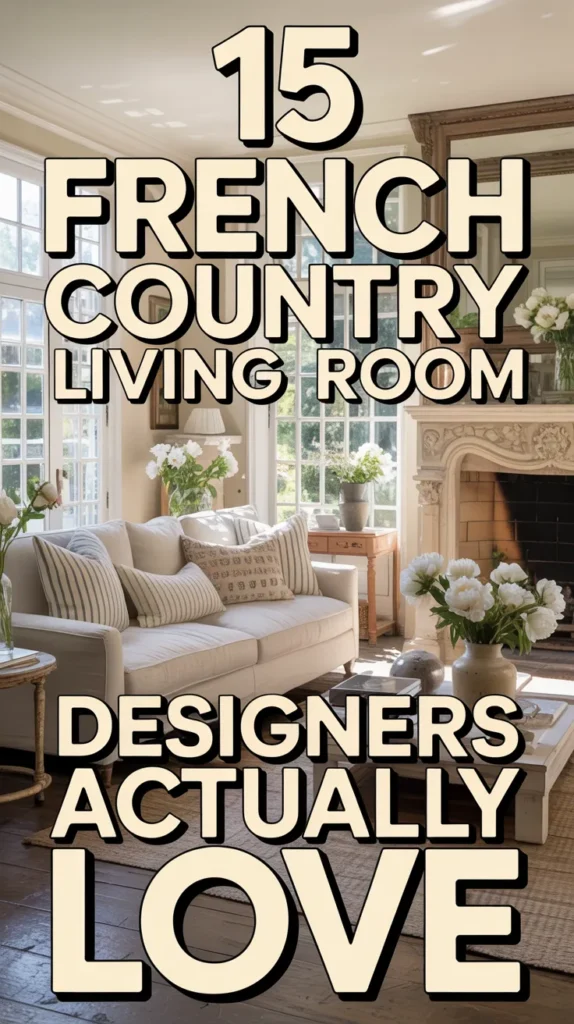
French country style never really goes out of fashion — it just quietly evolves. It’s cozy yet refined, rustic but elegant, and always warm without feeling overdone. The magic comes from balance: soft linen, aged wood, gentle colors, and pieces that look collected over time instead of perfectly matched. A true French country living room feels relaxed, welcoming, and effortlessly lived-in.
Instead of decorating around trends, this style focuses on texture, patina, and comfort. Think slipcovered sofas, faded rugs, warm neutrals, and natural light filling the space. If you want your living room to feel calmer, softer, and timeless without a full renovation, these are the details designers rely on again and again — and the ones that instantly create that unmistakable European charm.
1. Linen Slipcovered Sofas
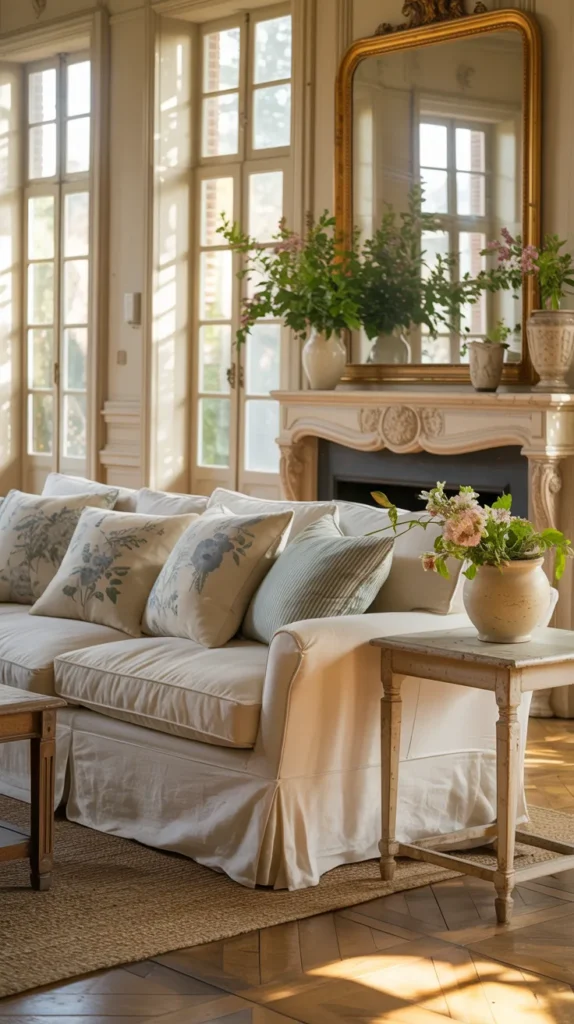
Nothing says French country living room faster than a relaxed linen slipcovered sofa. The key is that it shouldn’t look stiff or tailored — the slight wrinkles and soft drape are exactly what make it feel authentic. French interiors lean into comfort over perfection, so an ivory, flax, or warm oatmeal sofa instantly creates that lived-in European softness. When the fabric moves naturally and doesn’t cling tightly to the frame, the room immediately feels calmer and more welcoming.
Designers love these sofas because they visually soften everything around them. Pairing a relaxed textile with heavier elements like wood beams or stone fireplaces keeps the space from feeling heavy. Add a couple of casually placed pillows in faded stripes or subtle florals, and suddenly the entire room feels layered instead of decorated. The goal isn’t showroom neatness — it’s effortless comfort.
2. Weathered Wood Coffee Tables
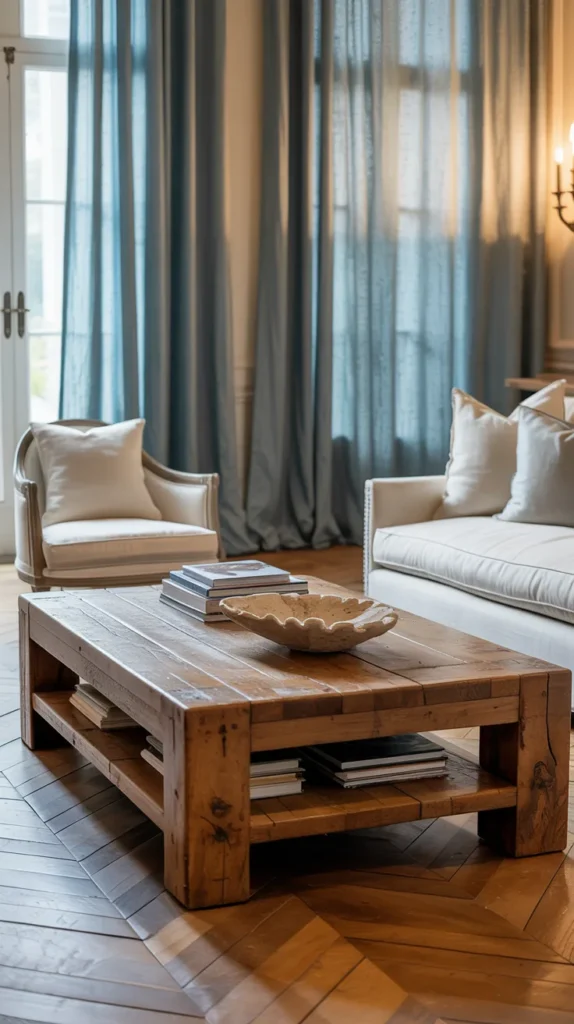
A French country room almost always centers around a weathered wood coffee table. Unlike modern glossy finishes, this style embraces visible grain, uneven color, and softened edges. The more natural and aged it looks, the more believable the space feels. Reclaimed oak, farmhouse planks, or chunky pedestal tables all work because they add weight and history to the middle of the room.
This piece grounds softer furnishings and keeps the design from drifting into overly delicate territory. Against a light sofa and neutral palette, a raw wood surface adds contrast and warmth at the same time. Designers often style it simply — stacked books, a ceramic bowl, maybe a small arrangement — because the table itself is meant to be the feature. In French country design, materials carry the beauty, not clutter.
3. Stone or Plaster Fireplace
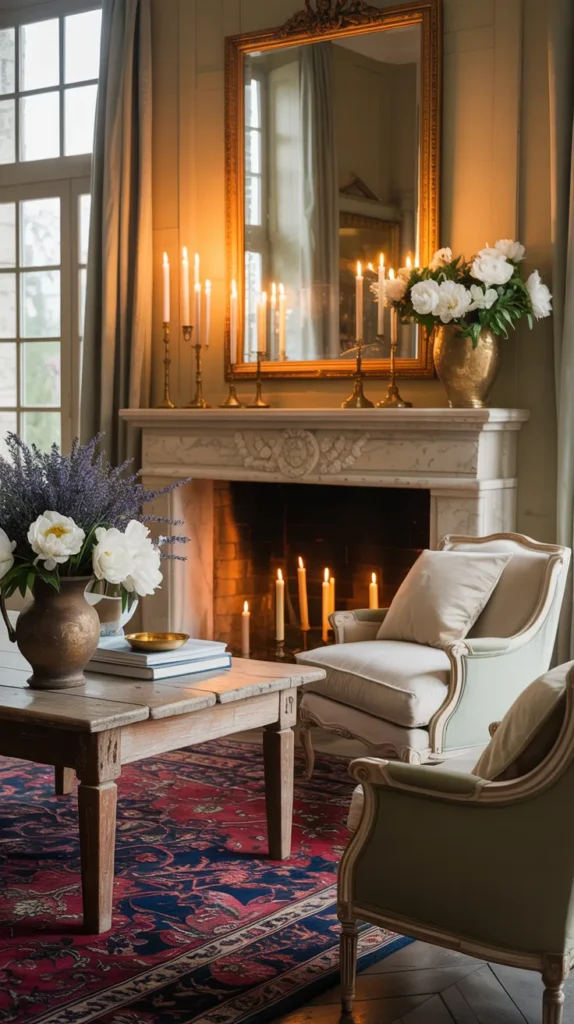
If there’s a focal point in a French country living room, it’s usually a stone or plaster fireplace. Smooth drywall rarely gives the same effect — texture is essential. Limewash, aged plaster, or uneven stone creates softness and architectural interest without needing decoration. Even in modern homes, adding this finish instantly shifts the room toward European character.
Instead of heavy styling, designers keep the mantel minimal so the material can breathe. A gilded mirror, small artwork, or a few candlesticks are enough. The fireplace should feel like part of the home’s history rather than a decorated surface. The imperfections are what make it beautiful — symmetry is less important than authenticity.
4. Exposed Ceiling Beams
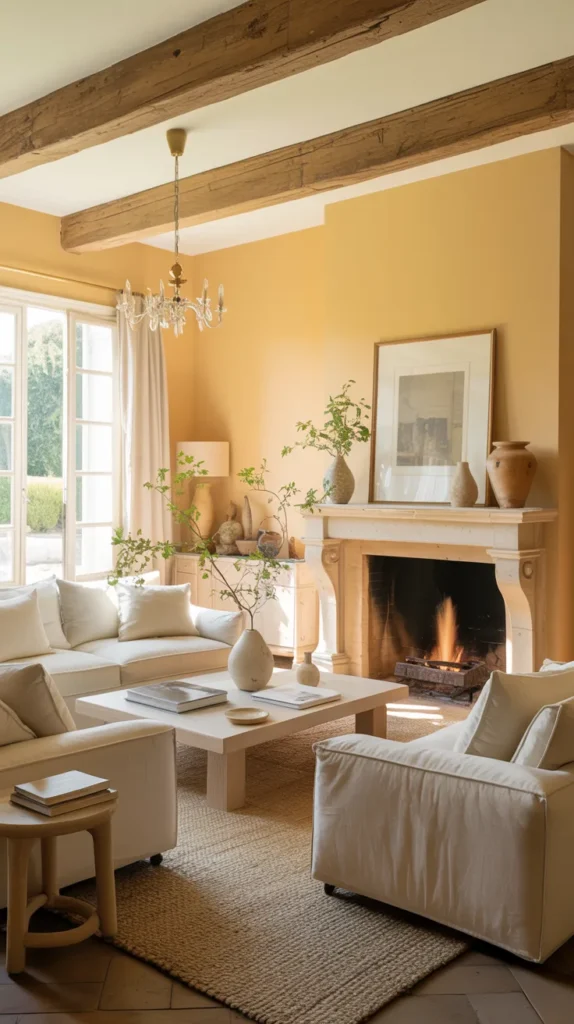
Nothing transforms a space faster than exposed wooden beams. They bring height, warmth, and structure while making the room feel rooted and grounded. Natural oak tones are the most classic, but slightly darker stained beams can add contrast against light ceilings. Even faux beams work because the visual architecture matters more than age.
Designers use beams to balance softness below. With upholstered furniture and flowing curtains, the ceiling adds a subtle rustic strength. The mix of refined comfort + rustic structure is exactly what defines French country interiors. Without that contrast, the room can feel flat — but with it, the space suddenly feels layered and intentional.
5. Curved Louis-Style Armchairs
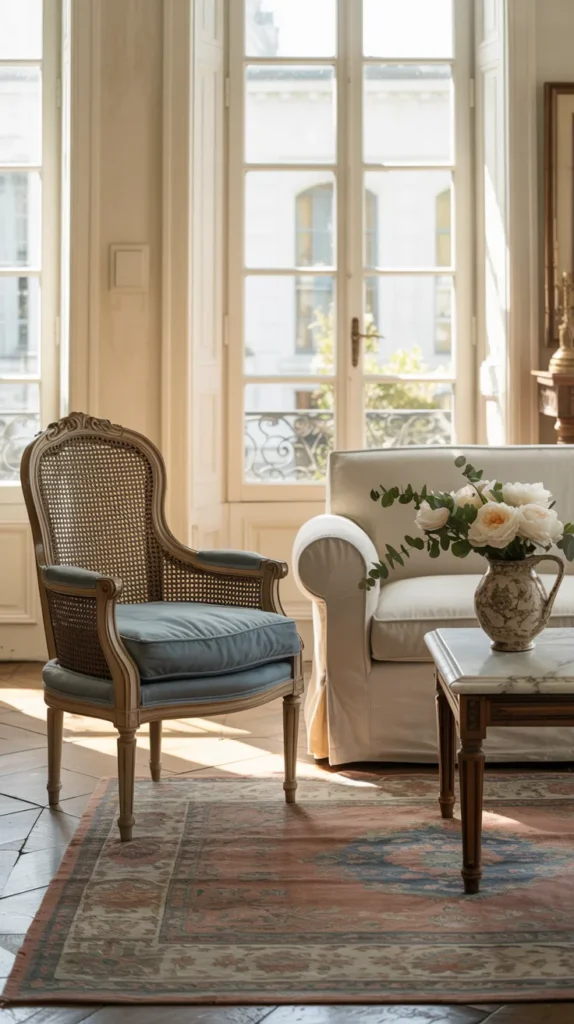
French country style always includes at least one piece that feels a little refined, and that’s usually a Louis-style armchair. The curved wood frame and soft upholstery add elegance without making the room formal. What makes it work is contrast — placing a delicate silhouette next to a relaxed sofa keeps the space from leaning too rustic or too polished. Cane backs, faded blue linen, or soft floral fabric all give that gentle European charm.
Designers rarely match these chairs perfectly to the sofa. Instead, they treat them as collected pieces, almost like they were inherited. A slightly different fabric or wood tone actually makes the room feel more authentic. That subtle mix of refined curves + casual comfort is what separates French country from farmhouse. One elegant chair instantly elevates the entire seating area.
6. Mixing Rustic and Elegant Pieces
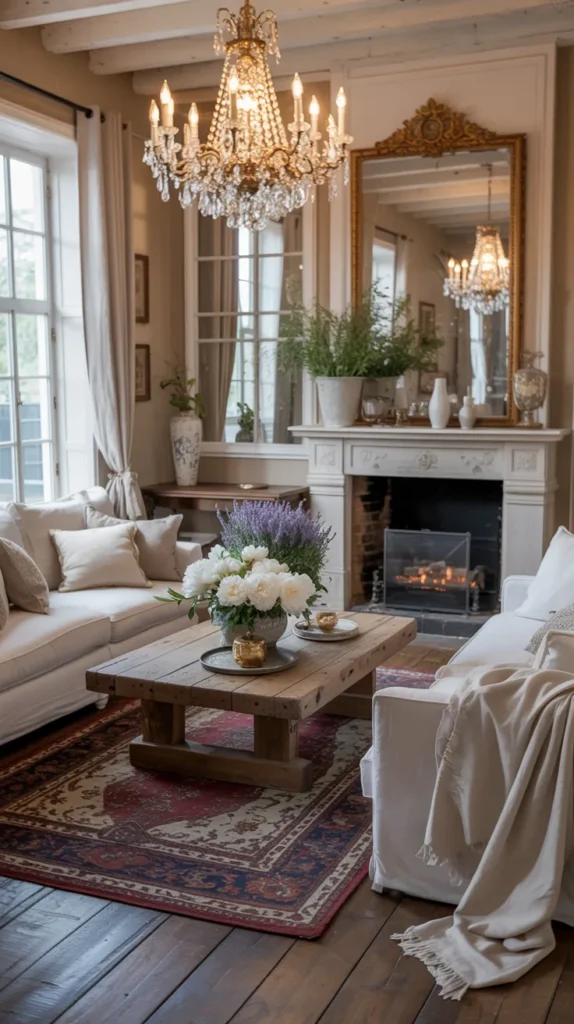
The real formula behind this style is balance. Every French country living room pairs something rough with something graceful — a chunky table with delicate seating, or plaster walls with a crystal chandelier. Without that contrast, the room either feels heavy or overly decorative. Designers intentionally layer rustic materials and refined silhouettes so neither dominates.
This is why the rooms feel effortless instead of styled. A carved leg next to a worn surface tells a visual story. You might see an antique mirror above a simple fireplace or a soft sofa beside an aged cabinet. The space becomes interesting because textures interact, not because objects match. The goal isn’t perfection — it’s harmony.
7. Cozy Conversation Layout
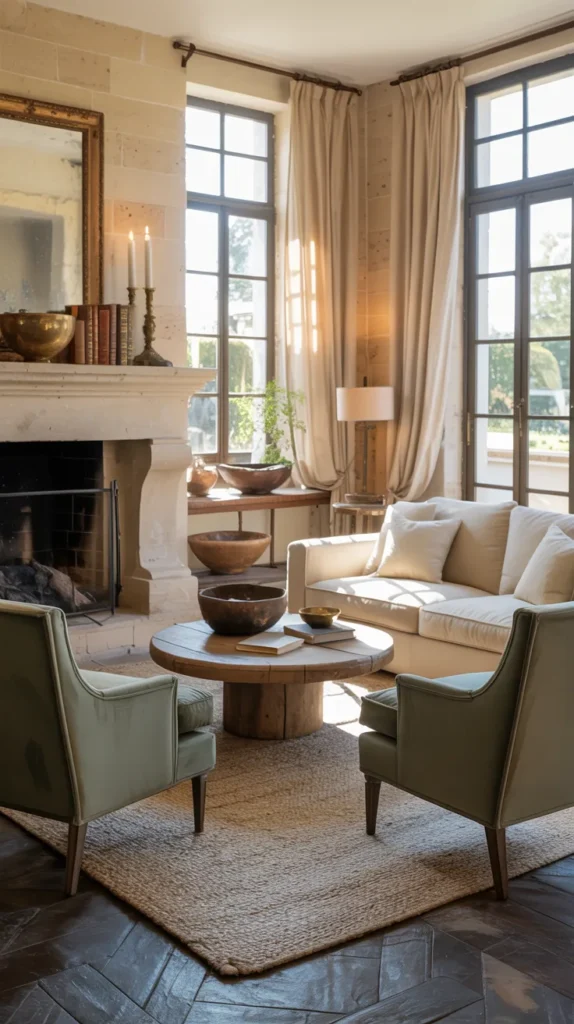
Unlike modern layouts where furniture hugs the walls, French country rooms are arranged for living. Seating is pulled inward to create a conversation grouping — chairs angled toward each other, a sofa facing the fireplace, and a table within reach of everyone. The space feels intimate even if the room is large.
Designers prioritize comfort over symmetry here. When furniture floats slightly away from walls, the room feels warmer and more welcoming. Adding a rug large enough to anchor everything helps create a unified center. This layout naturally encourages lingering, which is exactly why these rooms feel relaxed instead of staged. It’s designed around people, not the architecture.
8. Antique Trunks as Coffee Tables
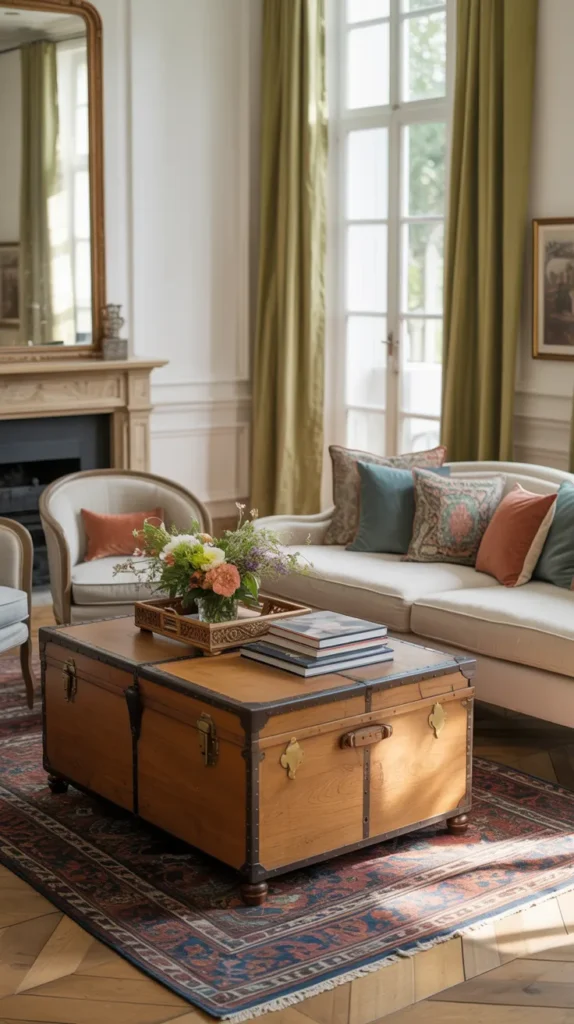
A French country living room almost always includes something that feels storied, and a vintage trunk does this instantly. Whether it’s leather, wood, or painted, it brings personality a standard table can’t. Scratches, worn corners, and patina make the space believable rather than decorated.
Designers love trunks because they add depth and function at the same time. They hold blankets, magazines, or seasonal textiles while acting as a focal point. Styling stays simple — maybe a tray and a small arrangement — so the age of the piece remains visible. In French interiors, character matters more than perfection.
9. Open Shelving with Layered Decor
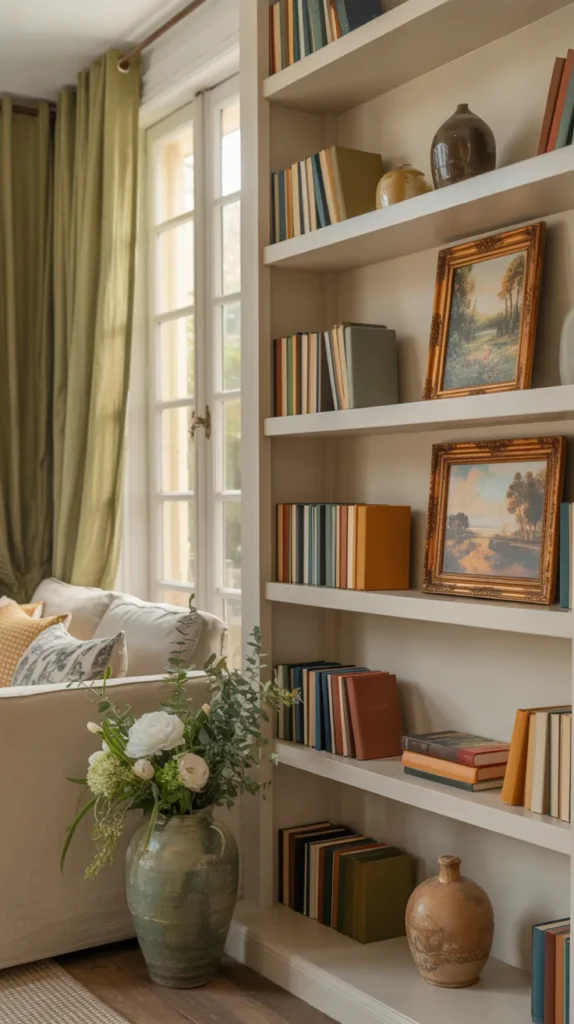
French country shelves are never minimal. Instead of a few spaced objects, they’re softly filled with layered decor — books stacked horizontally, small framed art overlapping, pottery tucked between items. The arrangement looks natural rather than symmetrical.
The secret is variety within a calm palette. Mixing ceramics, artwork, and greenery keeps the eye moving while maintaining softness. Designers avoid empty expanses and instead create gentle abundance. The shelves should feel like they’ve grown over time, not styled in one afternoon. That quiet fullness is what makes the room feel lived-in and welcoming.
10. Layered Linen Curtains
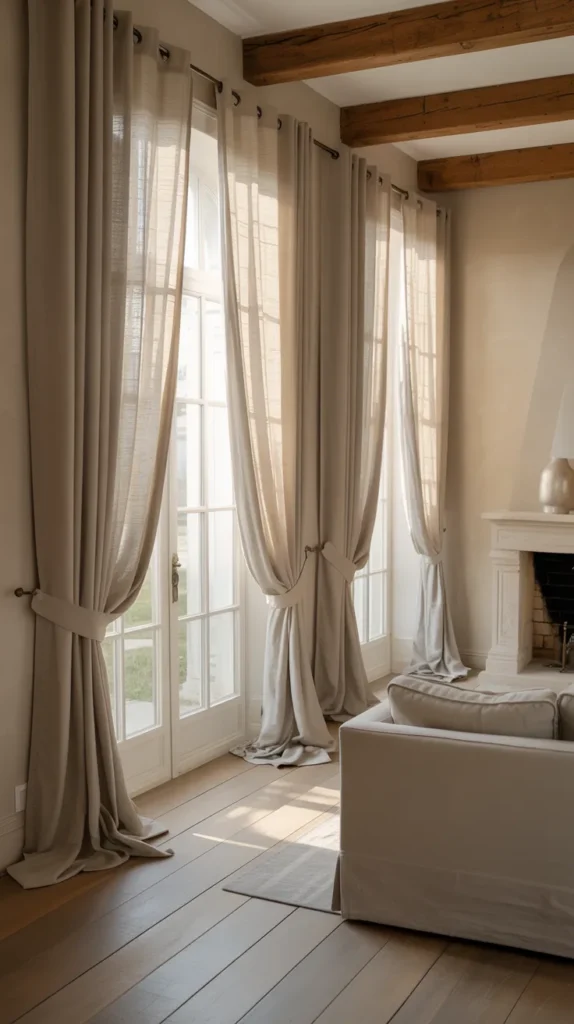
One of the easiest ways to soften a living room instantly is adding layered linen curtains. French country windows never look bare or sharply framed — they look filtered and gentle. Instead of stiff panels, designers choose airy linen that moves with light and creates atmosphere throughout the day. When sunlight passes through slightly sheer fabric, the entire room takes on that signature calm glow people associate with European homes.
The trick is letting them feel relaxed rather than tailored. Curtains should lightly touch or puddle onto the floor so the space feels comfortable instead of precise. Even modern French country homes keep this softness because it balances harder materials like wood and plaster. The moment windows feel diffused instead of exposed, the room becomes warmer and more inviting.
11. Vintage-Inspired Area Rugs
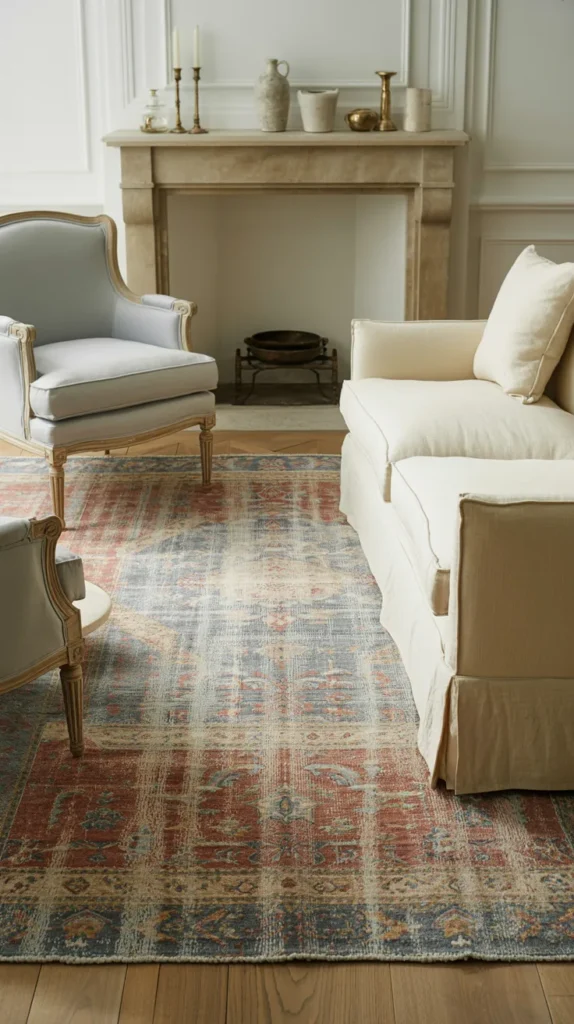
A French country living room rarely uses a plain rug. Instead, designers anchor the space with a faded vintage-style rugfilled with muted reds, blues, and warm tones. The worn pattern brings movement and prevents neutral furniture from feeling flat. Rather than competing with the room, the rug quietly ties every element together.
These rugs also create the lived-in effect that defines the style. Perfect patterns can feel staged, but softened motifs feel familiar and comforting. The key is choosing something that looks slightly aged instead of bold and new. That subtle imperfection makes the entire room feel authentic and layered without adding clutter.
12. Ticking Stripe & Patterned Textiles
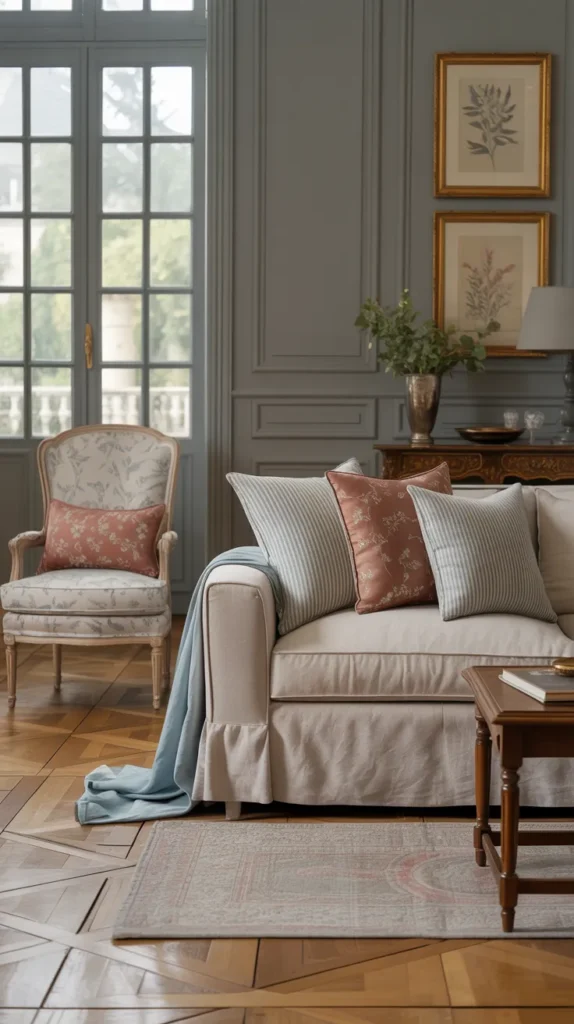
French country interiors always include gentle pattern — especially ticking stripe fabrics. Thin stripes, small florals, and understated prints bring life to seating without overwhelming it. When pillows vary slightly in scale and tone, the room feels collected rather than decorated.
Designers often repeat colors instead of matching patterns. A blue stripe might echo a rug detail while a floral pulls in warmer tones from wood. This layering creates visual richness through fabric rather than objects. The goal is a room that feels soft and interesting up close, yet calm from across the space.
13. Gilded Mirrors
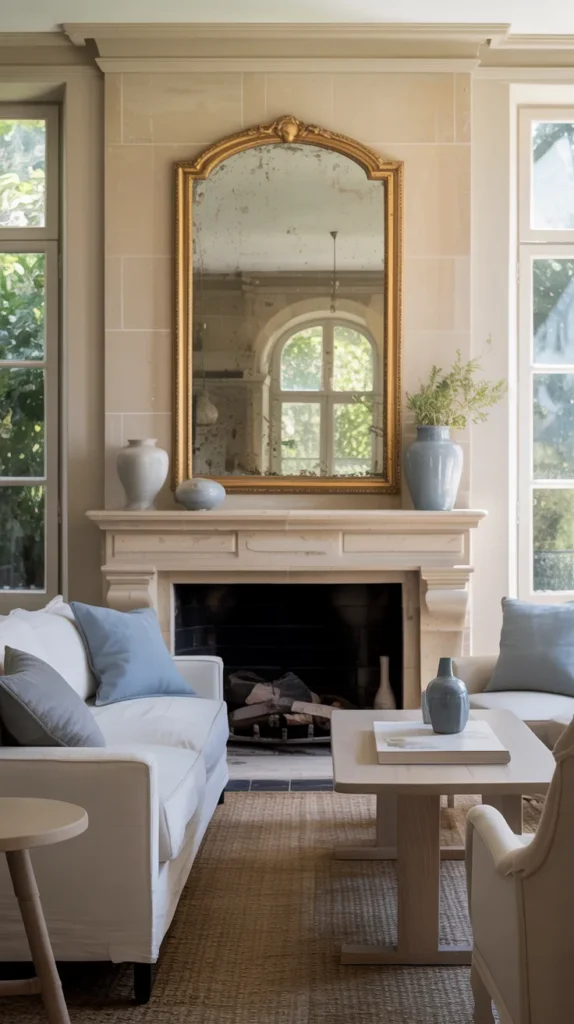
A slightly ornate gilded mirror is one of the most recognizable French country details. Even in modern versions of the style, a touch of gold introduces quiet elegance. The key is choosing aged finishes — brushed, antique, or patinated — rather than shiny glamour. It should feel like it has history, not like it was bought yesterday.
Mirrors also amplify natural light, which is essential in these interiors. Placing one above a mantel or leaning it against a wall expands the room visually while reflecting warmth throughout the space. That soft glow contributes to the relaxed atmosphere more than additional decor ever could.
14. Fresh & Garden-Style Florals
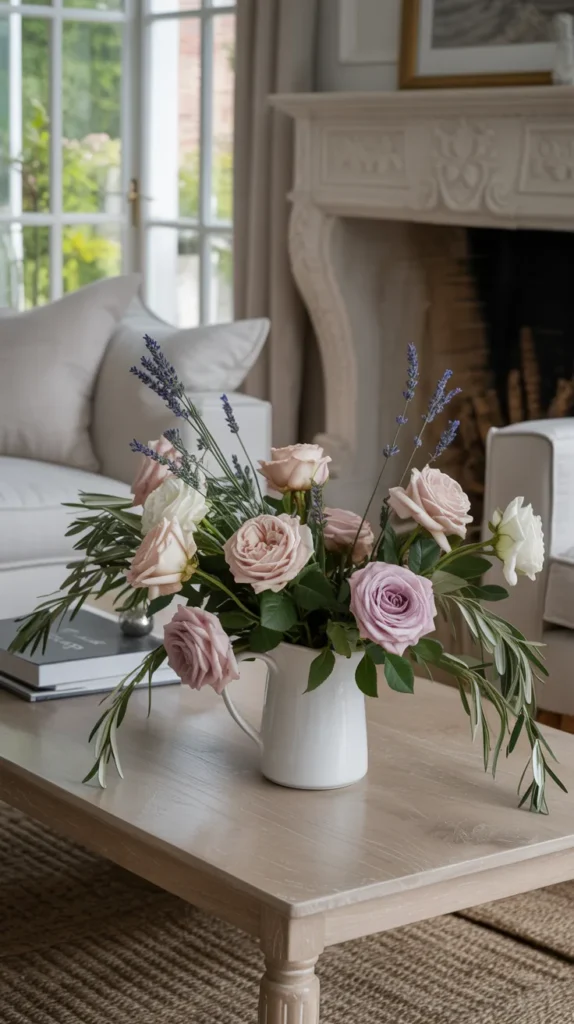
French country homes almost always include real or natural-looking florals. The arrangements aren’t tight or symmetrical — they feel gathered, like someone just came in from the garden. Loose roses, olive branches, lavender, or wildflowers instantly soften the room and add movement to still furniture.
Designers rarely overfill vases here. A single relaxed arrangement often looks richer than a large bouquet because it keeps the space breathable. Placing florals in ceramic pitchers or simple vessels reinforces the lived-in feeling. The goal isn’t decoration — it’s bringing life indoors.
15. Layered Artwork (Leaning, Not Perfectly Hung)
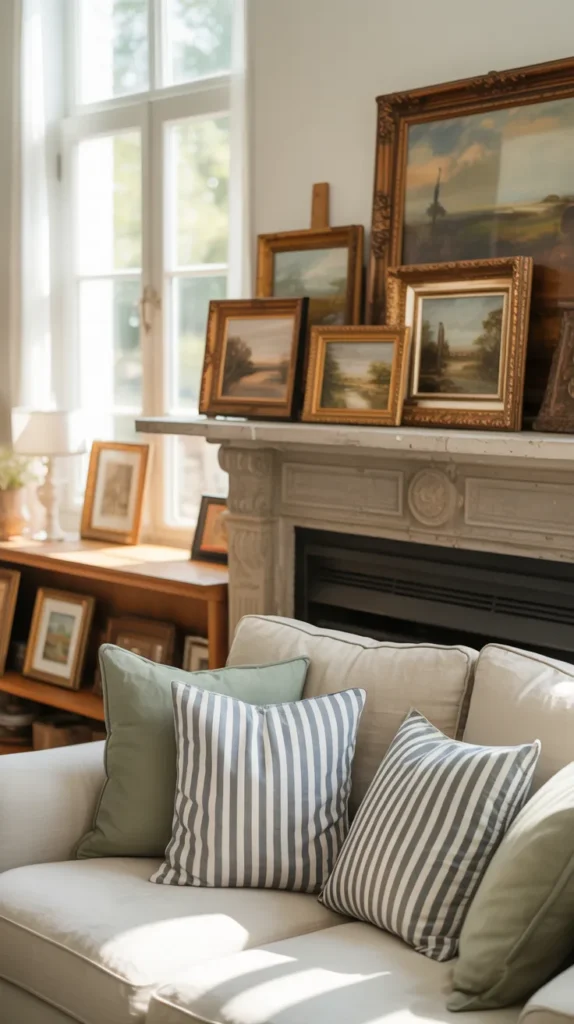
French country walls rarely look like a gallery wall grid. Instead, art is layered and casually placed — small paintings leaning on mantels, frames slightly overlapping on shelves, and pieces grouped organically. This relaxed arrangement makes the home feel collected over time rather than installed all at once.
The artwork itself usually stays soft and calming: landscapes, still life paintings, or muted portraits. Designers avoid loud modern prints because the atmosphere relies on quiet storytelling. Imperfect placement adds warmth and personality, turning walls into part of the room’s texture.