20 Stunning Living Rooms With Leather Sofas You’ll Want to Copy
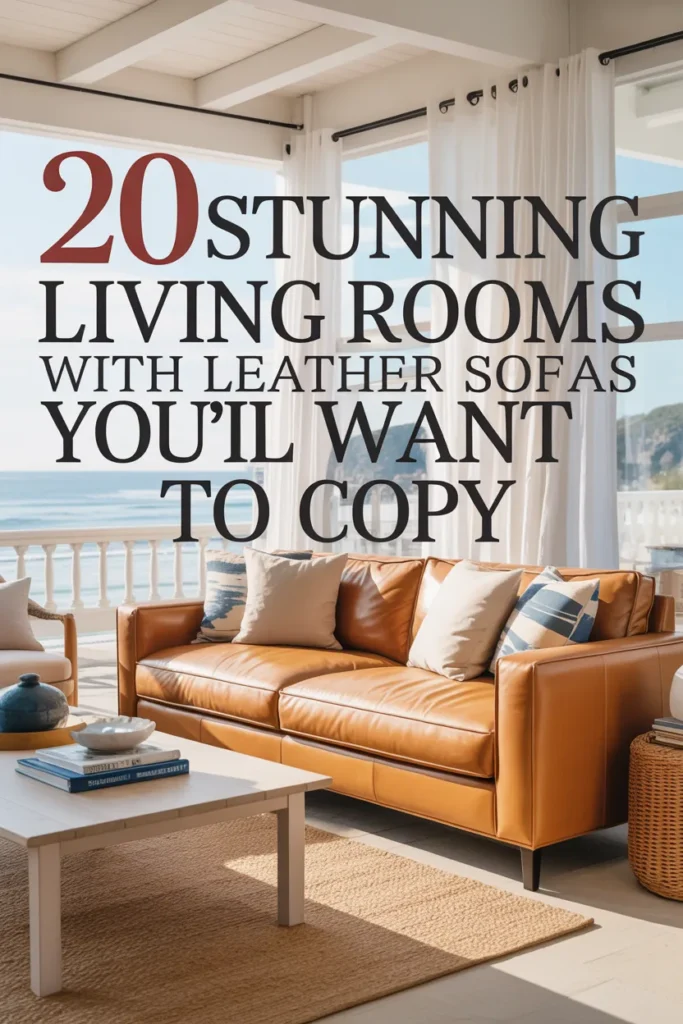
A leather couch is one of those rare furniture pieces that instantly changes how a living room feels. It adds depth, warmth, and structure — which is why designers often use it as the anchor of the entire space. But the difference between a leather sofa looking heavy versus high-end comes down to styling. The surrounding textures, lighting, layout, and colors determine whether it feels cozy and intentional or dark and overwhelming.
The good news is leather is incredibly versatile. The same sofa can look modern, rustic, minimalist, or elegant depending on how you decorate around it. Below are leather couch living room ideas that show exactly how to balance the richness of leather with softer elements so your space feels inviting, layered, and thoughtfully designed instead of flat or outdated.
1. Warm Organic Modern Living Room With Caramel Leather
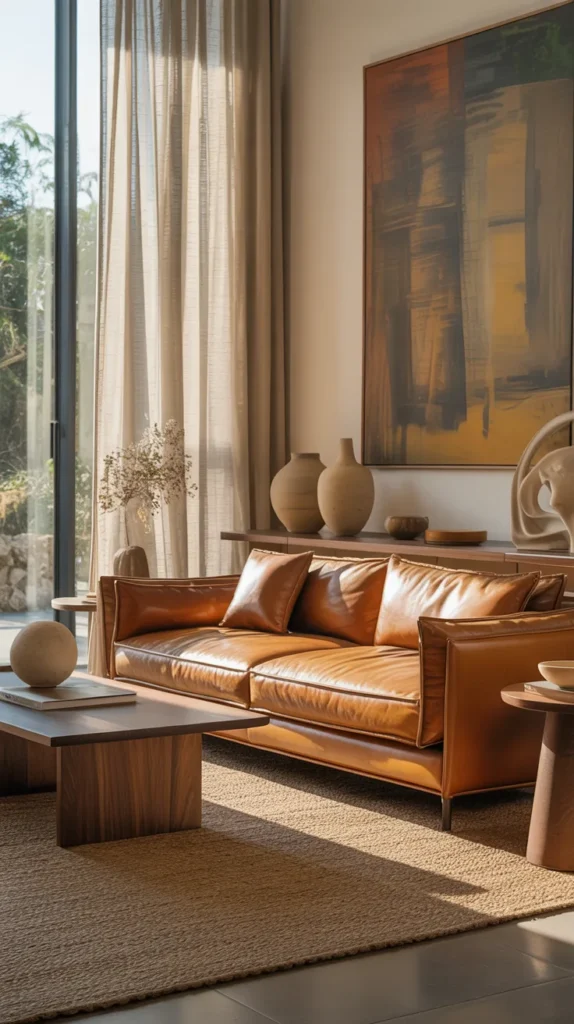
A caramel leather sofa almost automatically pulls a living room toward an organic modern aesthetic because it carries a natural warmth that painted furniture simply can’t replicate. The key is to avoid treating it like a centerpiece that everything must match; instead, think of it as the grounding element that allows softer materials to shine. Surround it with relaxed textures — linen curtains that move with the air, a slightly imperfect wood coffee table, matte pottery, and soft woven baskets — so the room feels layered rather than coordinated. Keep the palette anchored in warm earth tones like oat, sand, clay, and warm white so the leather blends into the environment instead of sitting heavily on top of it.
Lighting completes the effect more than people expect. Caramel leather reacts beautifully to filtered daylight, especially when sheer curtains soften the sun instead of blocking it. In the evening, warm ambient lamps should replace overhead lighting so the leather glows instead of reflecting glare. Limit accessories and go larger rather than busier — one oversized artwork, one sculptural vase, and one textured rug will look far more elevated than many small items. Organic modern rooms rely on intentional restraint, where each piece has space to breathe, creating a calm atmosphere that feels high-end but effortless.
2. Moody Apartment Styling With Black Leather Sofa
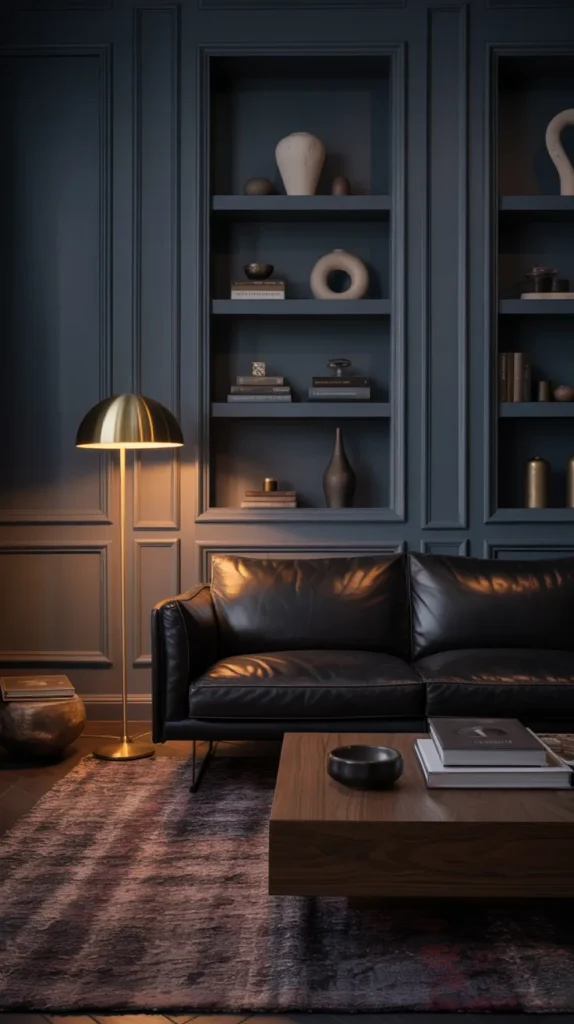
A black leather sofa naturally creates contrast, which is why it often looks out of place in bright rooms — the environment feels disconnected from the furniture. The solution is not to lighten the couch but to deepen the surroundings so the room becomes cohesive. Charcoal walls, espresso woods, darker textiles, and matte finishes allow the sofa to blend into a layered palette instead of dominating it. Once the room embraces depth, the leather reads sophisticated rather than harsh. The space begins to feel intentional, like a lounge rather than a living room struggling to be cheerful.
To keep the atmosphere inviting, warmth must come from light rather than color. Replace cool bulbs with warm ones and incorporate brass, smoked glass, and soft reflections so the space develops a gentle glow at night. Add tactile materials — a thick rug, velvet pillows, or textured curtains — to counterbalance the sleekness of the leather. This creates contrast through texture instead of brightness, which makes the room comfortable and intimate. Done correctly, a black leather sofa gives a refined, boutique-hotel mood where the darkness feels calming instead of heavy.
3. Cozy Rustic Space With Distressed Brown Leather
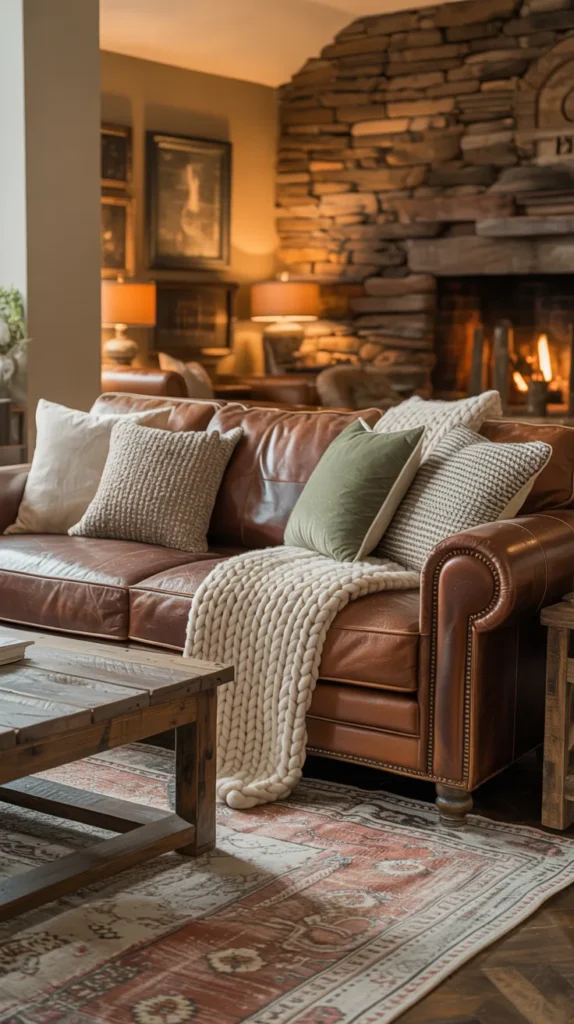
Distressed leather already carries visual history, so the room around it should support that authenticity rather than compete with it. Pairing it with polished modern finishes makes it feel accidental, but placing it among natural materials makes it feel intentional. Think reclaimed wood tables, woven baskets, aged metals, and stone or brick accents — materials that share the same organic character as the leather. The creases and patina become part of the story of the room, not flaws to hide, and the space gains depth that new furniture alone cannot create.
Comfort is what makes rustic styling successful. Layer throws, pillows, and rugs generously so the sofa looks inviting rather than formal. Soft textiles soften the strength of the leather and introduce visual warmth, balancing durability with coziness. Warm lighting, especially table lamps instead of overhead lights, enhances the atmosphere and prevents the room from feeling dark. The final effect should feel grounded and welcoming — a living room people naturally gather in because it feels lived-in, not staged.
4. Minimalist Living Room With Tan Leather Focal Point
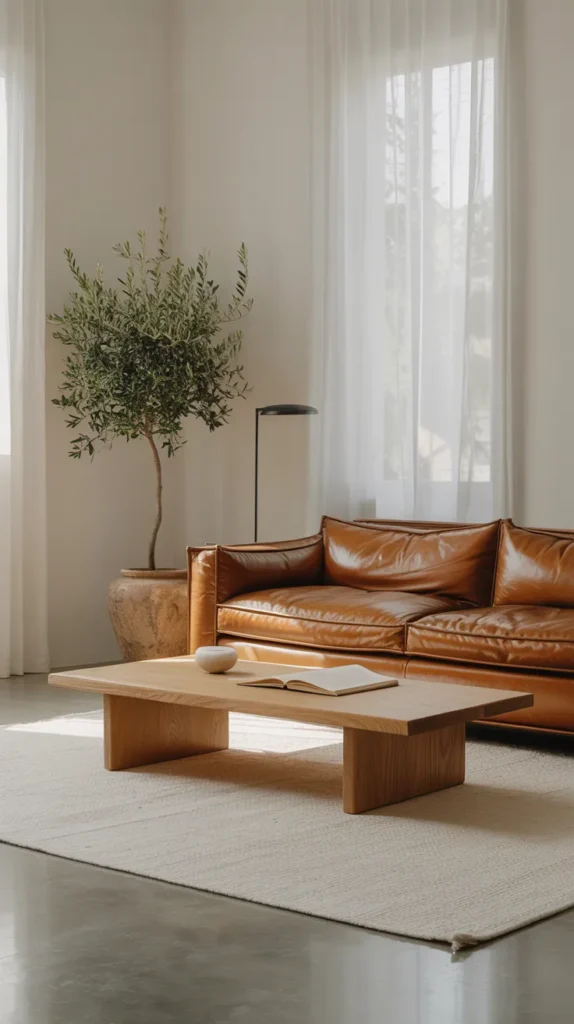
Minimalist interiors depend on clarity, which means every item must justify its presence. A tan leather sofa works perfectly because it provides richness without clutter, acting as the primary visual anchor in a simplified room. Instead of filling the space with decoration, allow open areas around the sofa so its form and color become part of the composition. The surrounding furniture should stay low-profile and clean-lined — a simple table, a single lamp, and perhaps one plant — so nothing distracts from the calm structure of the layout.
The warmth of leather also solves one of minimalism’s biggest challenges: sterility. Where all-white spaces can feel cold, leather introduces subtle depth and softness without adding visual noise. Natural light should dominate during the day, while warm indirect lighting maintains a relaxed mood at night. When done well, the room feels intentional and serene rather than empty, proving minimalism works best when warmth balances simplicity.
5. Scandinavian Airy Room With Light Leather Seating
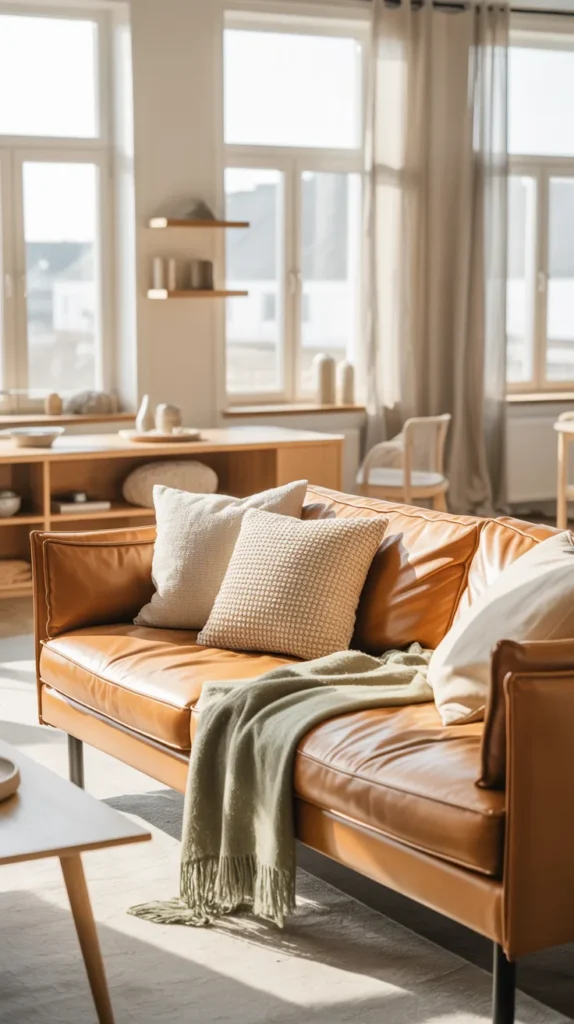
Scandinavian design focuses on brightness and comfort simultaneously, which is why pale leather — buttery tan or soft camel — fits perfectly into the aesthetic. The goal is to maintain openness while avoiding starkness, so pair the sofa with light woods, soft textiles, and gentle contrasts. The leather provides just enough richness to prevent the room from feeling flat while still preserving a clean, breathable atmosphere that defines Scandinavian interiors.
Texture layering is essential here. Add wool throws, boucle pillows, and soft rugs so the sleekness of the leather feels approachable and cozy. Decor should remain simple but personal — books, ceramics, and warm lamps create life without clutter. The finished room feels relaxed rather than styled, combining practicality with beauty through quiet warmth and natural light, which is the heart of Scandinavian living spaces.
6. Classic Chesterfield Library-Style Living Room
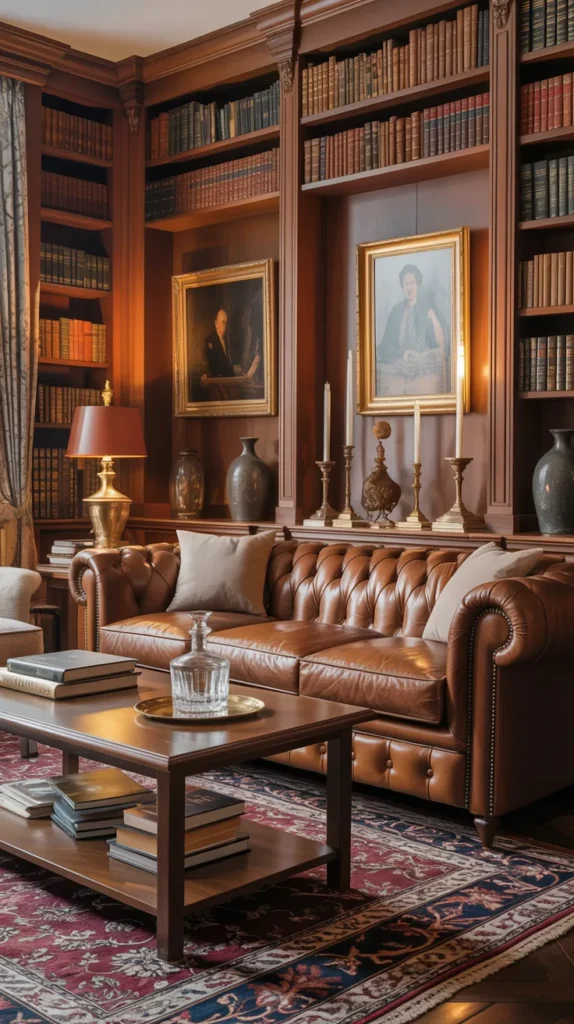
A leather Chesterfield has such a strong personality that the room around it should feel equally intentional. Its tufting, rolled arms, and deeper tone naturally suggest history, so instead of forcing it into a bright casual space, build a setting that supports its heritage presence. Warm woods, framed artwork, stacked books, and layered textiles allow the sofa to feel grounded rather than dramatic. The goal is not to copy an antique study but to recreate the feeling of one — a place that feels thoughtful, calm, and welcoming.
Lighting makes or breaks this look. Overhead brightness flattens the texture, while softer lamps create dimension and highlight the natural depth of the leather. Use table lamps, shaded floor lamps, or sconces so the room develops a gentle glow in the evening. Add a patterned rug and a simple coffee table so the sofa remains the visual anchor while everything else supports it. The final atmosphere should feel collected and comfortable — a timeless environment that looks lived-in rather than staged.
7.Bold Colored Leather Sofa
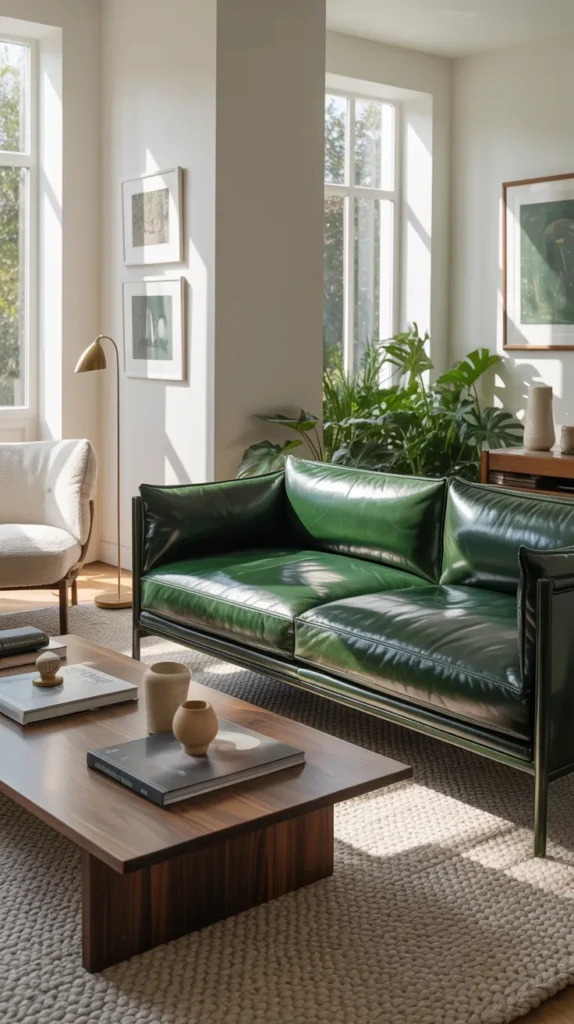
A bold colored leather sofa instantly shifts a living room from safe to memorable because it becomes both the furniture and the statement piece at the same time. Shades like deep green, navy, rust, burgundy, or even mustard bring personality without needing heavy decoration. Instead of trying to tone it down, build the room around it — repeat the color in small details like artwork, pillows, or ceramics so the space feels intentional. The sofa becomes the visual centerpiece, allowing the rest of the room to stay relatively simple while still feeling expressive.
Balance is what keeps the look sophisticated rather than loud. Surround the color with warm woods, textured fabrics, and good lighting so the richness of leather reads elegant instead of overwhelming. Natural light will soften the tone during the day, while warm lamps deepen the color in the evening. When styled thoughtfully, a bold leather sofa makes the room feel confident and curated, proving color can be dramatic yet still comfortable.
8. Large Open Concept Room With Leather Sectional
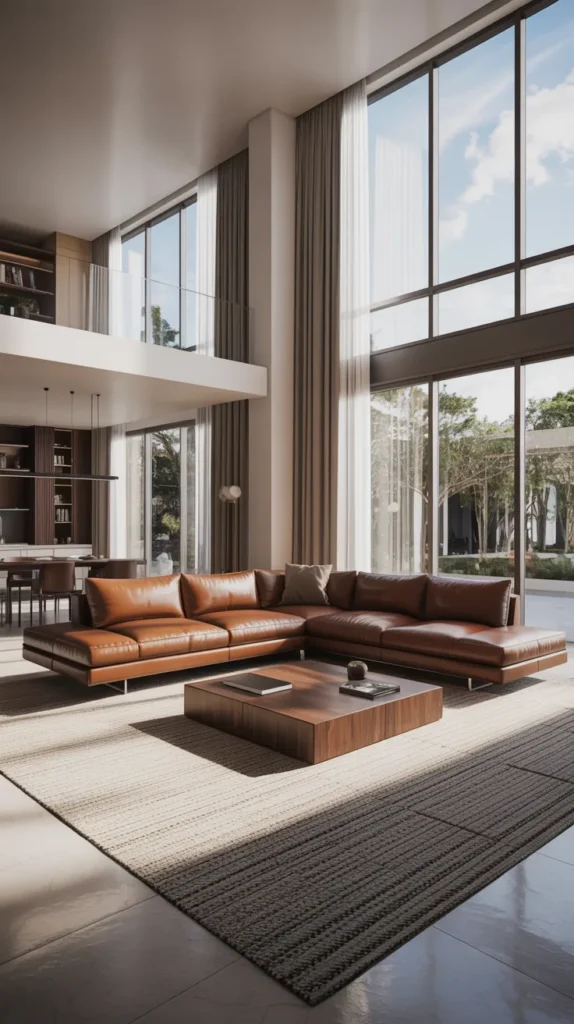
Open floor plans often feel empty because nothing visually organizes them, which is why a leather sectional works so well in these spaces. Instead of pushing it against a wall, float it to define a living zone and naturally separate it from dining or kitchen areas. The seating becomes a spatial boundary, helping the room feel purposeful rather than scattered. Larger rooms actually benefit from larger furniture because scale prevents the layout from looking fragmented.
Balance the sectional with equally substantial pieces — a wide rug, an appropriately sized coffee table, and taller curtains keep everything proportional. Avoid filling the area with many small decorations; fewer larger elements maintain cohesion across the open space. When styled thoughtfully, the living area feels grounded and comfortable, showing that expansive layouts work best when furniture provides structure instead of simply occupying space.
9. Small Apartment Layout With Compact Leather Loveseat
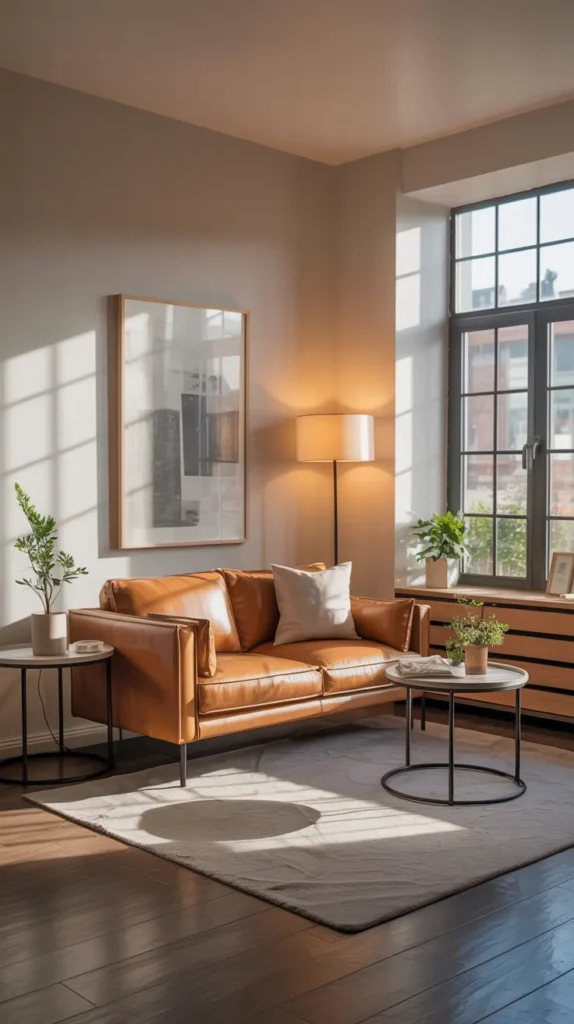
Leather seating can surprisingly improve a small apartment because it reads visually clean and structured, unlike bulky upholstery that absorbs light. A compact loveseat gives the room definition without crowding it, especially when paired with furniture that serves multiple functions. A narrow console table behind the sofa or a slim nesting table nearby adds usefulness while maintaining clear movement paths, which keeps the space feeling open.
Choose elevated furniture with visible legs so light passes underneath and prevents heaviness. Use one larger rug to unify the seating area rather than several smaller ones that divide it visually. Keep accessories minimal but meaningful so the room feels designed instead of cluttered. The result is a small living space that feels organized and complete, proving thoughtful layout matters more than square footage.
10. Earth-Tone Boho Living Room With Leather Couch
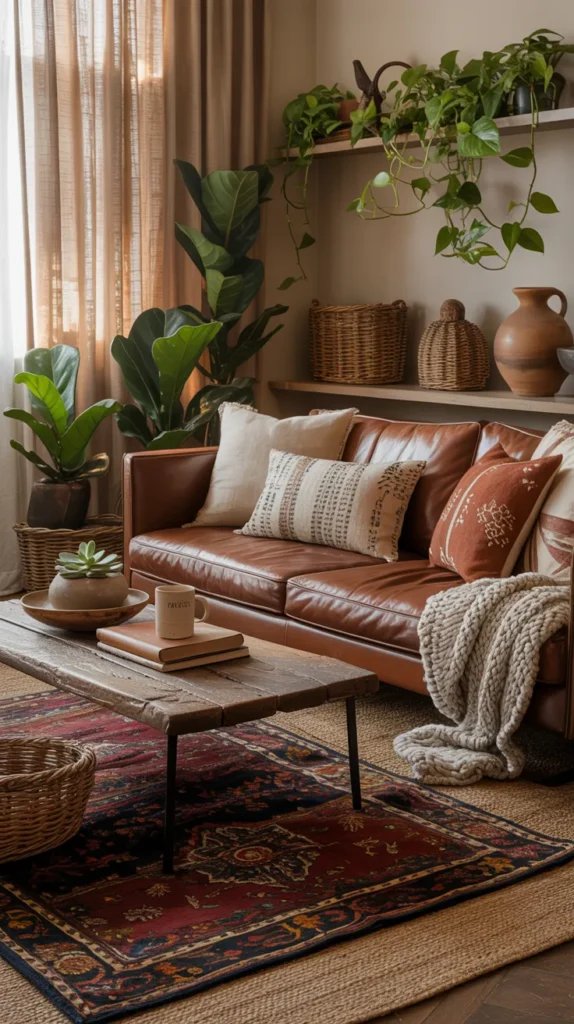
Leather naturally fits into boho interiors because both rely on texture rather than perfection. Instead of coordinating colors exactly, combine woven baskets, soft pillows, plants, and ceramics so the room feels layered and relaxed. The sofa acts as the stable base while surrounding elements add warm movement and softness, preventing the leather from feeling stiff.
Balance is important — too many objects create chaos, but intentional layering creates depth. A patterned rug, varied heights, and warm lighting help the eye move comfortably through the room. The finished space should feel personal and inviting, like it evolved gradually rather than being decorated in one day. The leather becomes part of the story instead of the centerpiece.
11. Gallery-Style White Wall Living Room With Leather Accent
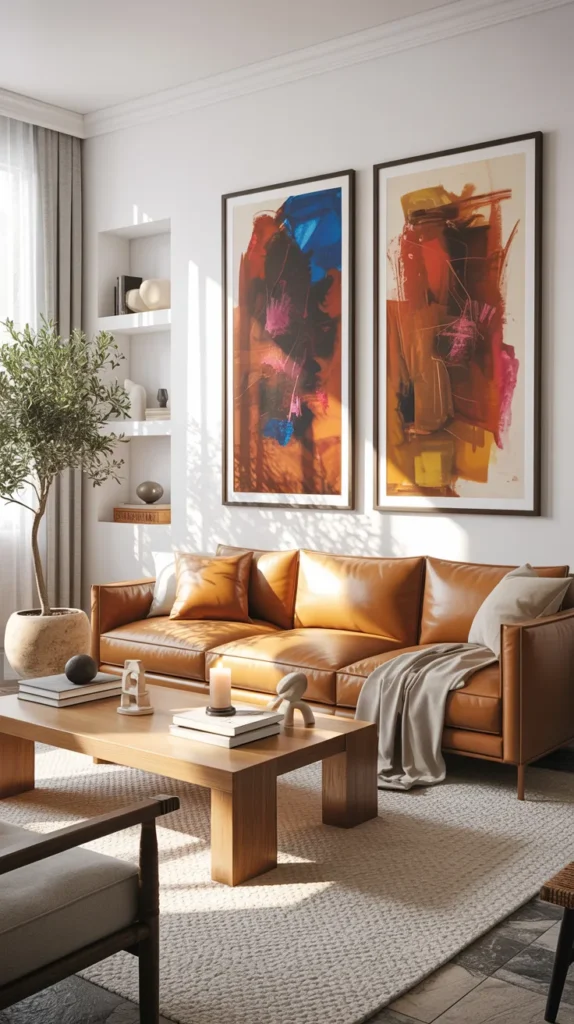
White walls make a leather sofa stand out in a refined way because they highlight contrast without relying on color. Keep surfaces uncluttered so artwork becomes decoration while the couch provides visual grounding. Instead of filling shelves and tables, choose a few larger statement pieces — art, a sculptural lamp, or a bold table — to preserve calm simplicity.
Natural light enhances this look by reflecting off the walls and softening the richness of the leather. A neutral rug and clean-lined furniture maintain focus on form and proportion rather than accessories. The room feels modern yet warm, demonstrating that minimal interiors don’t have to feel cold when texture and material provide depth.
12. Mid-Century Modern Cognac Leather Sofa Setup
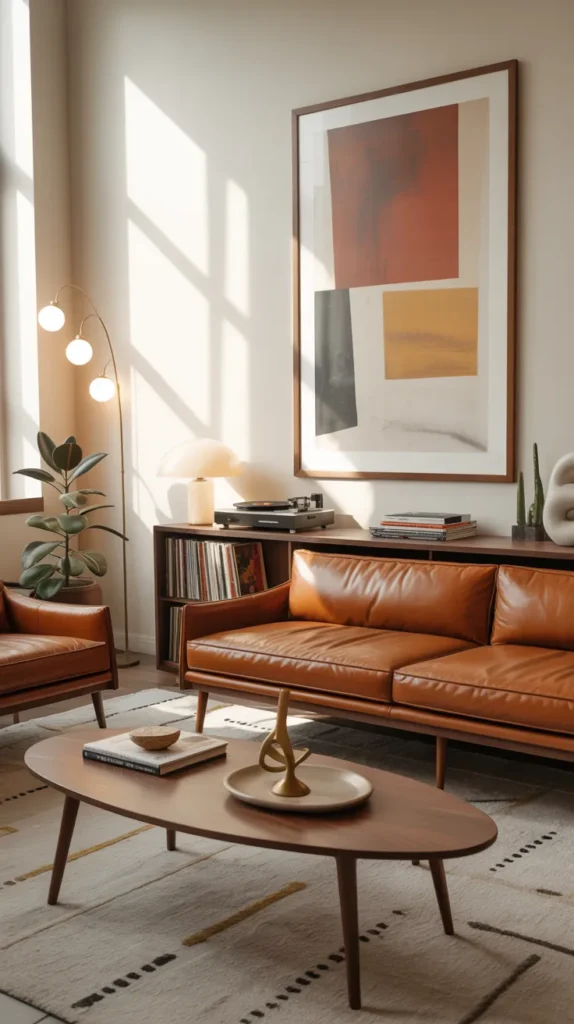
A cognac leather sofa feels almost designed for mid-century interiors because both rely on warmth and proportion instead of decoration. The rich tone of the leather pairs naturally with walnut finishes, tapered legs, and low horizontal furniture, creating a space that looks structured without feeling heavy. Rather than filling the room with accessories, let the shapes do the work — a streamlined media console, a geometric floor lamp, and one large artwork establish the style instantly. This approach keeps the room visually calm while allowing the sofa to act as the central design anchor instead of just another seating piece.
To keep the space inviting, balance structure with softness. A simple rug, a textured pillow, and a ceramic object add just enough comfort without cluttering the layout. Mid-century rooms feel best when they appear intentional but relaxed, as if every item has a purpose. The leather develops warmth against natural light during the day and becomes cozy under warm lamps at night, creating a setting where proportion and material matter more than decoration.
13. Industrial Loft With Dark Leather and Metal Accents
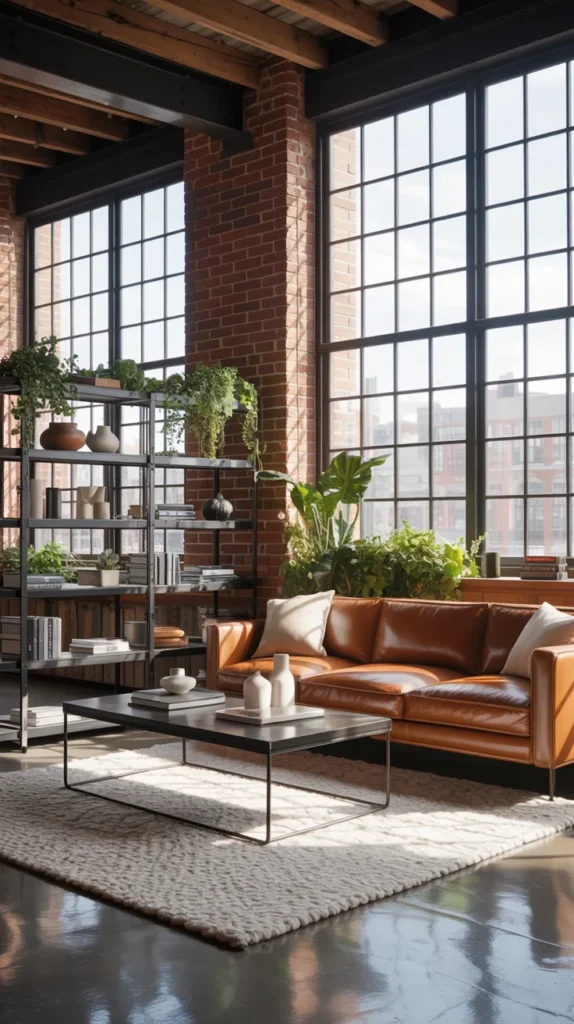
In an industrial space, a dark leather couch feels natural because the architecture already carries weight. Exposed brick, concrete, and metal finishes form a strong backdrop where softer furniture might disappear, but leather holds its presence and complements the environment. Instead of softening every element, allow the contrast between rough surfaces and smooth upholstery to become the feature — this is where texture contrast brings character to the room.
Warmth should come from lighting and a few tactile layers so the room doesn’t feel cold. A substantial rug, warm bulbs, and a couple of pillows soften the space without removing its urban identity. Keep furniture sturdy and simple rather than delicate so it feels cohesive with the architecture. When balanced correctly, the room feels modern and comfortable at the same time, proving that industrial style works best when structure meets comfort.
14. Coastal Inspired Living Room With Sandy Leather Tones
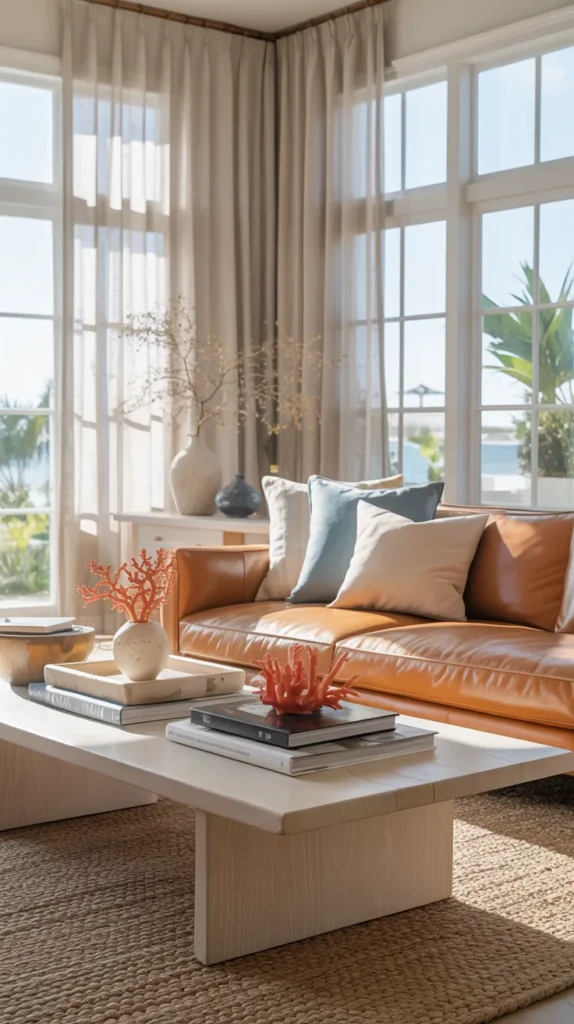
Leather can feel perfectly coastal when its tone mirrors sun-washed materials rather than dark woods. A sandy or light tan sofa blends into pale floors, soft fabrics, and airy curtains so the space feels open instead of heavy. The goal is brightness — letting natural light bounce off surfaces so the leather appears warm and relaxed rather than bold. This approach creates a soft, breathable atmosphere without relying on obvious beach motifs.
Decor should stay simple and natural. Woven textures, subtle ceramics, and organic shapes reinforce the calm mood while avoiding themed decoration. Keep furniture light in profile and allow daylight to remain the main feature. The final result feels effortless and comfortable, showing that coastal style is about feeling rather than literal seaside objects.
15. Parisian Inspired Room With Leather and Ornate Mirror
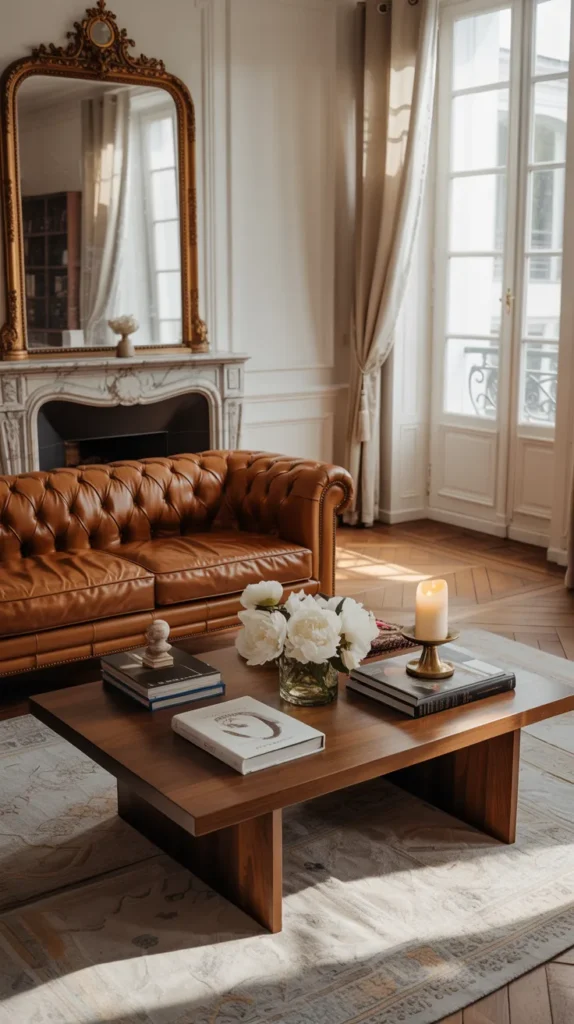
A leather sofa becomes elegant when paired with classic architectural details. In a Parisian-inspired room, a tall ornate mirror or decorative molding adds refinement while the sofa provides grounding structure. Mixing modern seating with traditional elements creates a layered look that feels lived-in rather than staged. The contrast between simple upholstery and decorative detail produces balanced sophistication without overwhelming the space.
Keep the palette warm and understated so the materials connect naturally. A soft rug, a few curated objects, and layered lighting enhance depth while maintaining calm simplicity. The room feels collected over time — comfortable enough for everyday life but polished enough to feel special. Here the leather anchors the room while architectural details supply character, creating harmony through contrast.
16. Japandi Living Room With Low Leather Seating
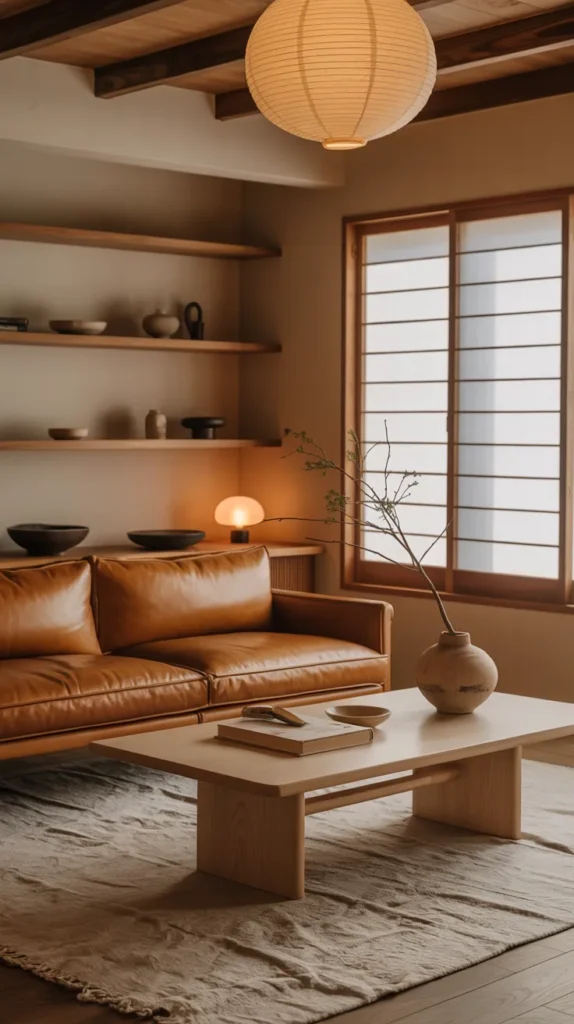
Japandi style combines Scandinavian comfort with Japanese restraint, so leather works best when it remains subtle and grounded. A low-profile sofa surrounded by natural wood and soft textiles allows the room to feel calm without emptiness. Instead of decoration, focus on placement and breathing room so each element contributes quietly. This creates a space built around quiet harmony rather than visual excitement.
Soft lighting and gentle textures prevent the interior from feeling stark while preserving clarity. Keep accessories minimal but meaningful — a ceramic piece, a woven textile, or a single branch arrangement. The leather adds warmth while the layout encourages relaxation, resulting in a living room designed for peace and focus rather than display.
17. Fireplace-Centered Layout Around a Leather Sofa
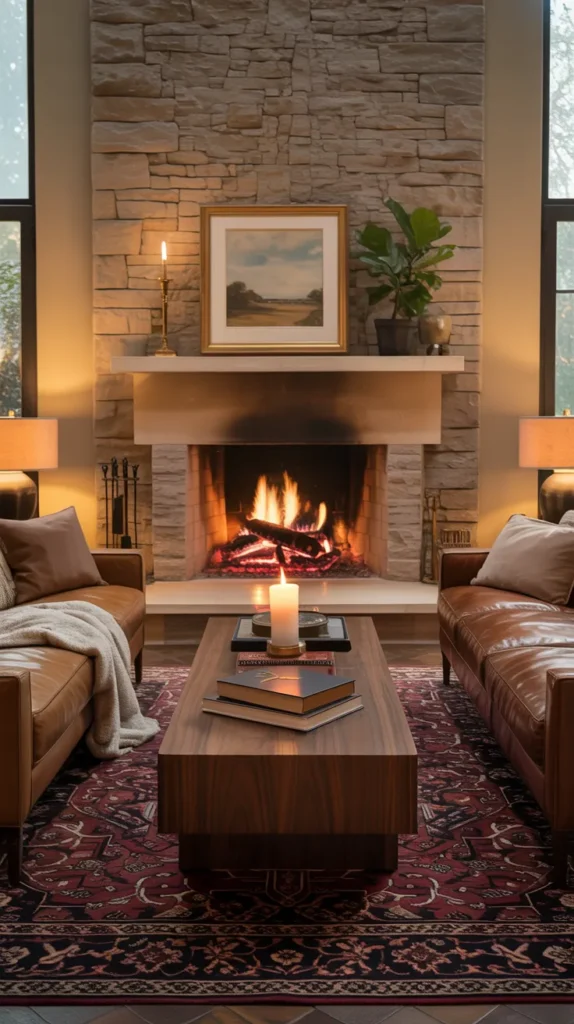
A fireplace has a natural gravitational pull in a living room, and placing a leather sofa to face it immediately shifts the space from decorative to lived-in. Instead of pushing seating against the walls, pull the sofa forward so the room forms a conversation zone rather than a hallway of furniture. Add one or two chairs angled toward the center and anchor everything with a substantial rug so the arrangement feels connected. The leather becomes a grounding element while the fireplace provides warmth, creating a true gathering atmosphere that encourages people to linger instead of pass through.
The styling around this layout should reinforce comfort rather than compete for attention. A wood or stone coffee table adds texture while soft pillows and throws prevent the leather from feeling formal. Warm lamps in the evening deepen the atmosphere so the room works equally well day or night. When balanced correctly, the living room feels welcoming and intimate — a place designed for conversation and rest rather than simply displaying furniture.
18. Family TV Room With Practical Leather Sectional
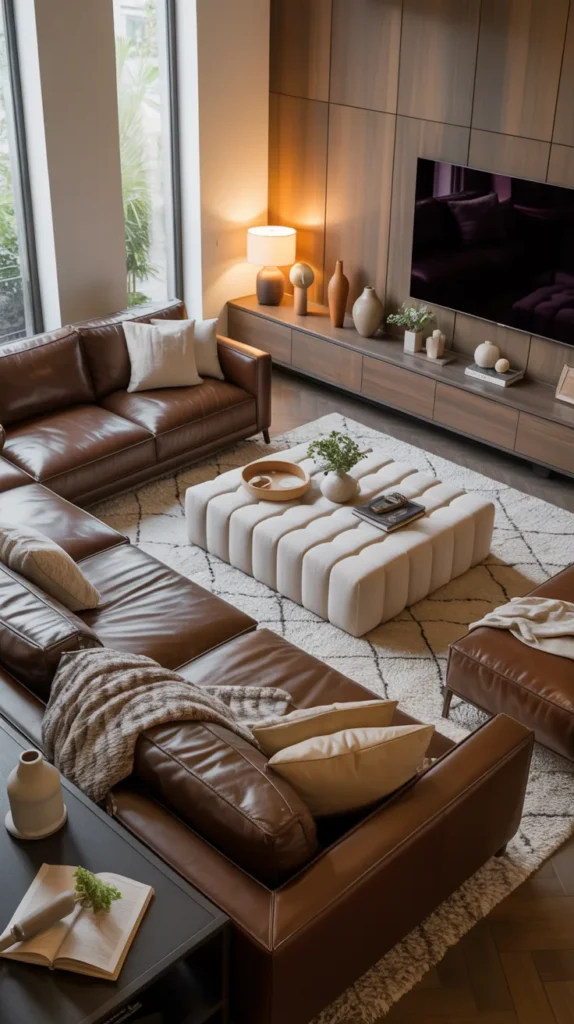
A leather sectional works especially well in family rooms because it handles daily use while maintaining a polished appearance. Arrange it around the television with enough space to move comfortably so the room doesn’t feel crowded. A large rug unifies the seating and prevents the layout from appearing fragmented, creating a space built for everyday usability rather than occasional use. The sectional defines the area while still allowing flexibility for real life.
Soft elements keep the room inviting — blankets, pillows, and warm lighting counterbalance the durability of leather. Nearby storage helps maintain order so the space remains calm even when active. The finished room supports both relaxation and activity, proving practicality and comfort can exist without sacrificing style.
19.Artistic Eclectic Living Room With Leather Anchor
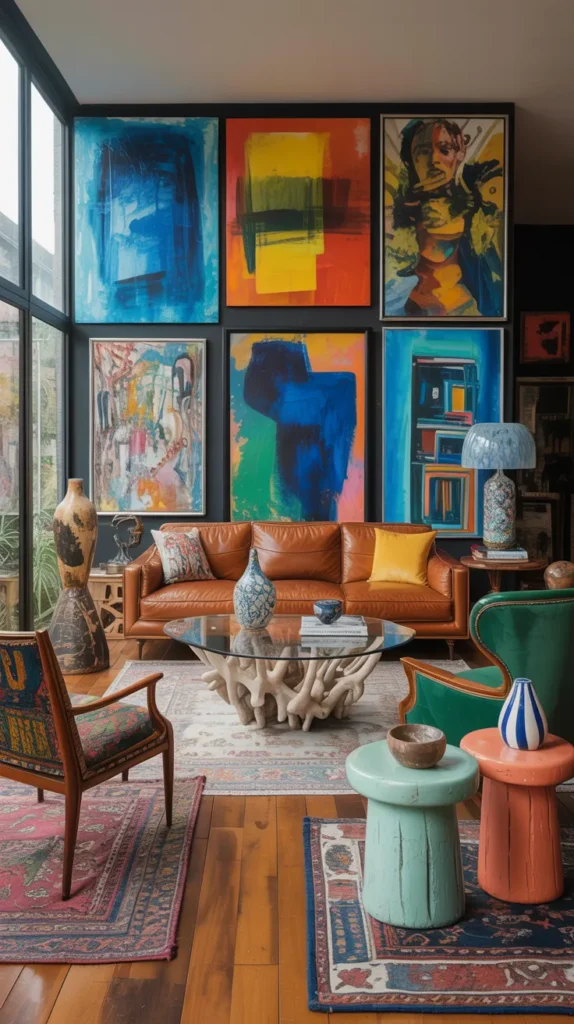
In an eclectic space, the leather couch becomes the stabilizing element among artistic expression. Surround it with mixed artwork, handmade ceramics, colorful throws, and unexpected objects so the room feels collected over time. Instead of matching styles, focus on shared undertones and repeated shapes so variety feels harmonious.
Allow negative space around key pieces so the eye can rest between details. A sculptural coffee table and layered rugs keep the layout grounded while preserving creativity. The final atmosphere feels personal and vibrant — not curated for trends but shaped by taste — proving maximalism works best when guided by intention rather than randomness.
20. Green Accent Wall Paired With Brown Leather Sofa
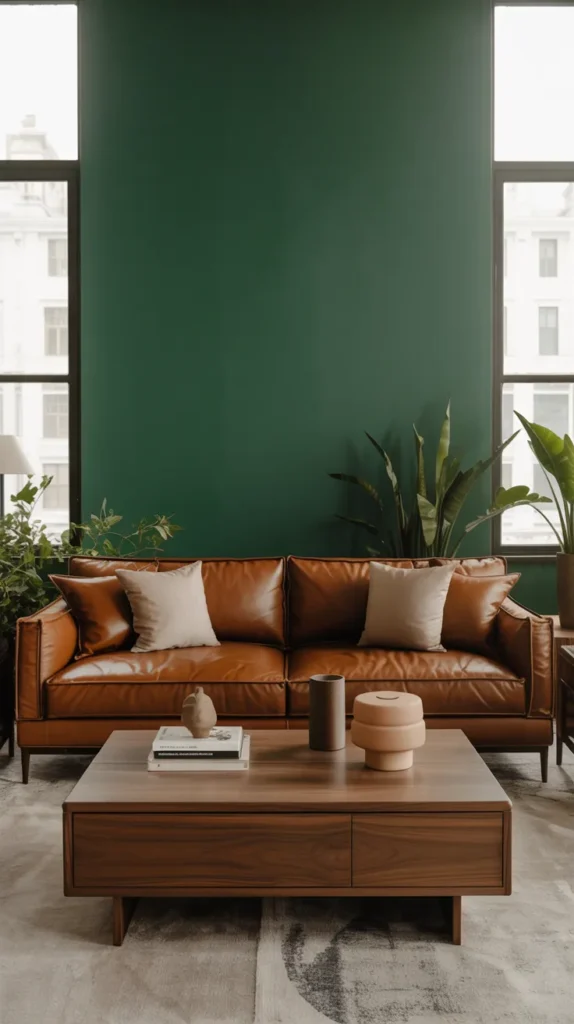
Green and brown naturally complement each other because both belong to the same earthy palette. A green accent wall highlights the warmth of leather and creates gentle contrast without sharpness. Choose a muted or deep shade so the combination feels grounded and calm — the pairing produces natural harmony rather than bold contrast.
Keep surrounding decor restrained so the color relationship remains the focus. Warm woods and soft textiles reinforce the palette while layered lighting allows the room to transition smoothly from day to night. The finished space feels balanced and relaxing, demonstrating how thoughtful color pairing can elevate even simple furniture arrangements.