15 Beautiful Brick Walkway Ideas That Make Any Home Look Expensive
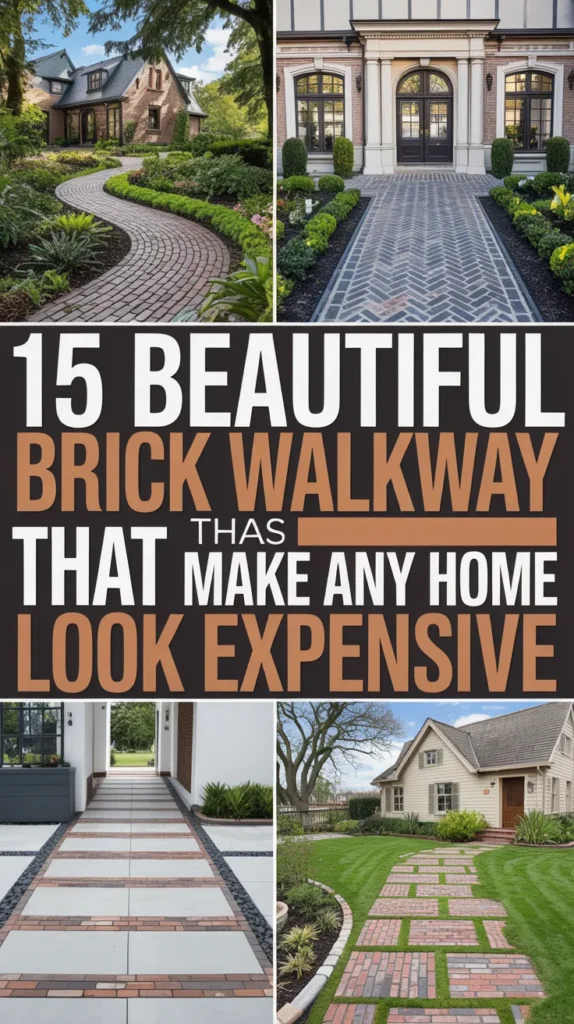
There’s something about a brick walkway that instantly makes a home feel established. Even a newer house suddenly gains character — like it’s been welcoming guests for decades. The warm tones, subtle texture, and slight imperfections soften the exterior in a way concrete never quite can. Instead of looking installed, a brick path looks placed, almost as if it naturally belongs to the property.
But the real magic isn’t just the brick — it’s the layout and surrounding details that define the mood. A straight path feels formal and traditional, a curved one feels romantic, and a patterned design reads architectural and high-end. The right walkway doesn’t just connect the driveway to the door — it quietly sets expectations for the entire home before anyone even steps inside.
1. Curved Cottage Garden Path
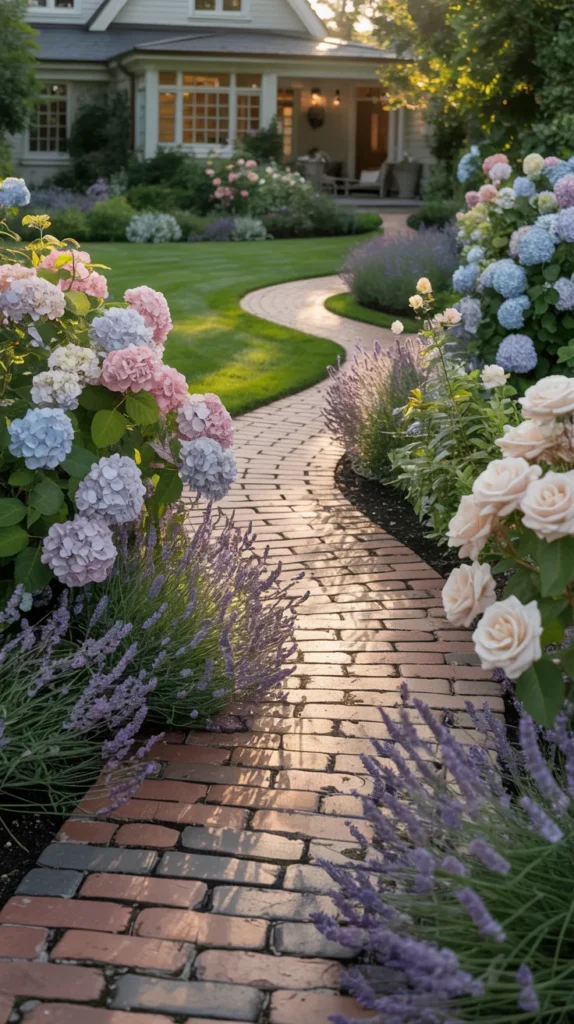
A curved brick walkway instantly changes how a home feels before anyone even reaches the door. Instead of guiding visitors directly forward, the gentle bend slows the approach and creates a sense of anticipation. You don’t see everything at once — the entry reveals itself gradually, which feels far more welcoming than a straight, utilitarian path. This is why curved walkways show up so often in older neighborhoods and storybook-style homes.
To make this work, the landscaping matters just as much as the brick. Layered plantings like hydrangeas, roses, or ornamental grasses soften the edges and make the walkway feel woven into the garden rather than dropped on top of it. The goal isn’t perfection — slight irregular spacing and softened borders create that relaxed charm people associate with established homes. When done right, the path feels less like construction and more like the house has simply grown around it over time.
2. Brick Walkway With Stone Border
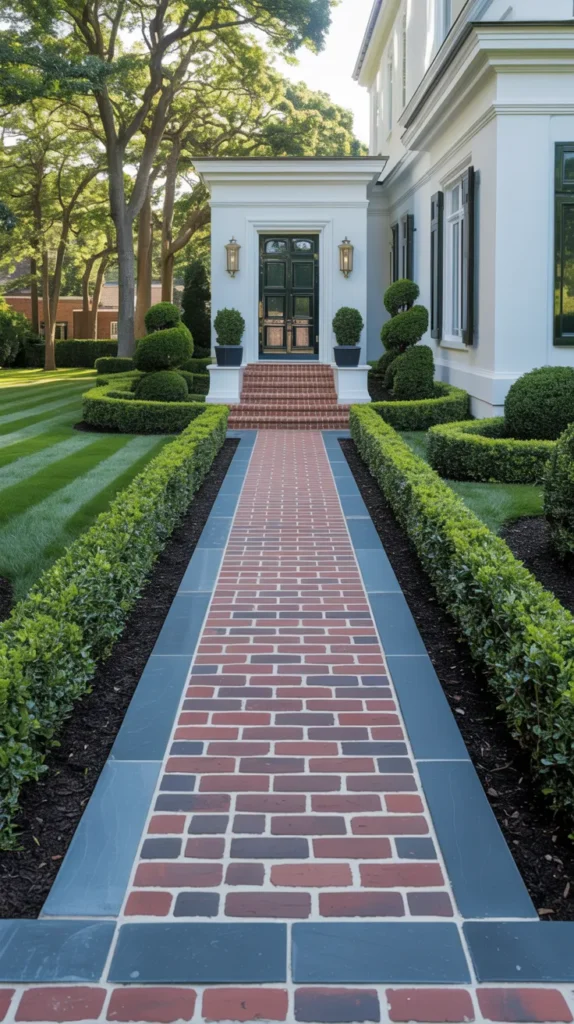
Adding a stone border transforms a basic brick path into something noticeably architectural. Without edging, brick can visually blend into the yard, especially in busy landscaping. A border — whether bluestone, granite, or limestone — frames the walkway and tells the eye exactly where to look. Suddenly the path reads as a designed feature, not just paving. It’s one of the simplest upgrades that makes a home feel professionally landscaped.
This style works especially well for homes that already have structure in the exterior — columns, shutters, symmetrical windows — because the edging reinforces that sense of order. The contrast between the smoother stone and textured brick creates visual clarity, making the entry appear cleaner and more expensive. Even in smaller front yards, this detail makes the approach feel intentional, like every element has a purpose instead of being placed out of convenience.
3. Herringbone Brick Path
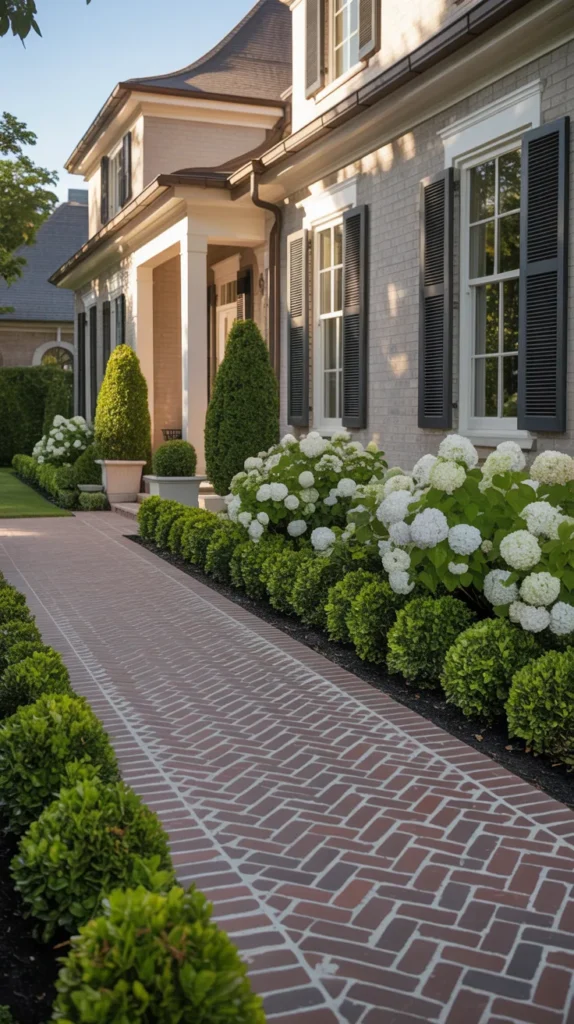
Herringbone is where a walkway stops looking standard and starts looking curated. The angled pattern naturally catches light differently throughout the day, giving the ground subtle movement and depth. Instead of seeing rows, your eye sees texture and rhythm, which elevates even modest homes. It’s the same reason interior designers use patterned floors — they create interest without needing extra decoration.
Beyond aesthetics, herringbone also has a practical advantage: the interlocking pattern is structurally stronger and handles foot traffic better over time. That durability contributes to its high-end reputation because the walkway ages evenly instead of shifting in sections. Paired with simple landscaping and minimal décor, the pattern alone provides enough visual richness to make the entrance feel finished and thoughtfully designed.
4. Stepping Brick Path in Grass
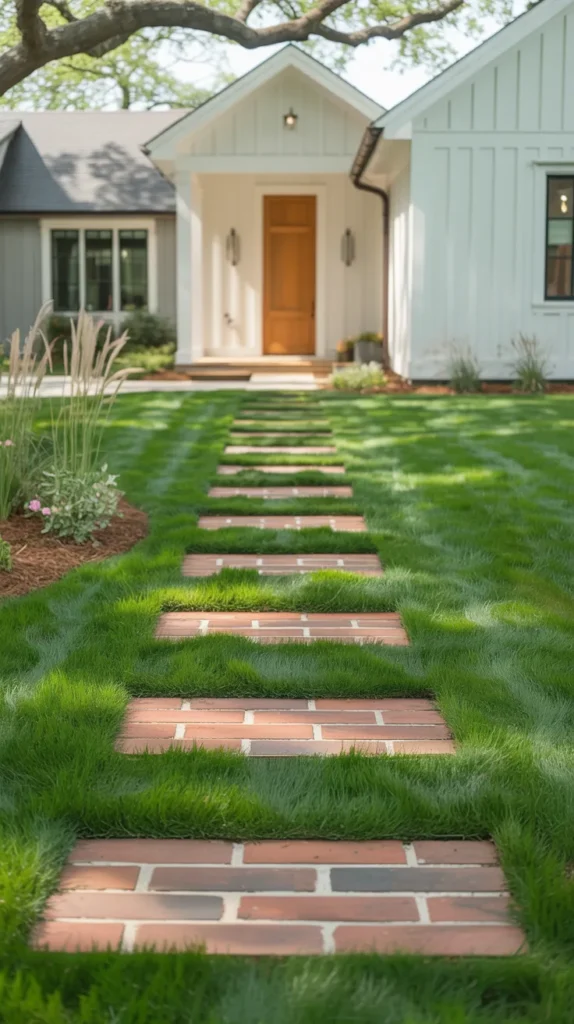
A stepping brick path feels relaxed and modern while still keeping warmth that concrete pavers often lack. Instead of one continuous surface, spaced bricks allow grass to grow between them, breaking up the hardscape and letting the yard breathe. This makes the entry feel less formal and more integrated with nature — almost like the path was discovered rather than installed.
This style works particularly well in smaller yards because it prevents the walkway from visually dominating the space. The lawn stays the main feature, while the bricks provide gentle direction. Over time, the slight irregularity becomes part of the charm, creating a casual but intentional look that suits cottages, bungalows, and modern homes trying to soften clean architecture.
5.Brick and Tile Inlay
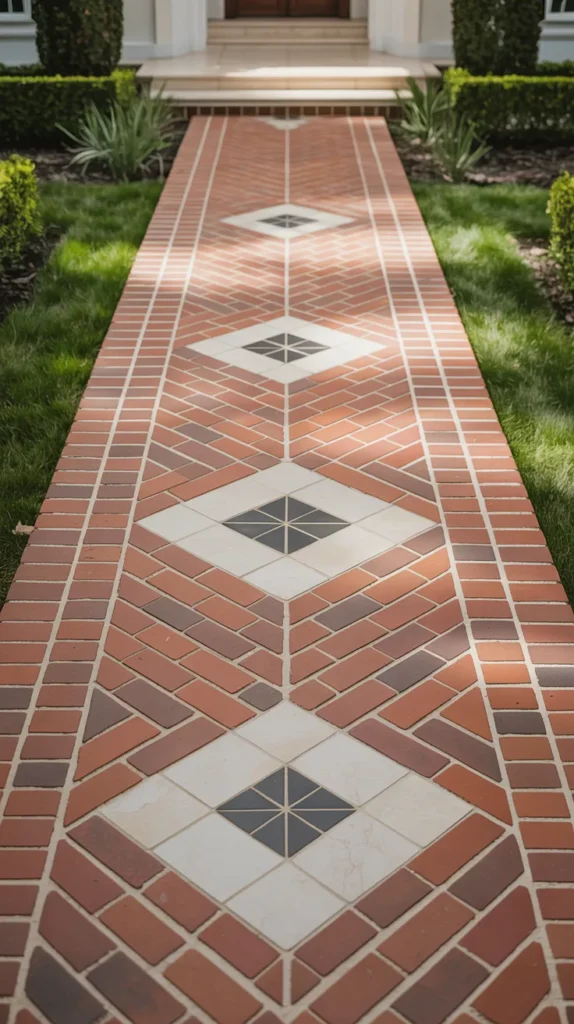
Adding tile within a brick walkway introduces a handcrafted detail you normally only see in older or high-end homes. The small accent areas — whether geometric or subtle borders — break the repetition and create points of visual interestalong the path. Because tile reflects light differently than brick, the surface gains dimension throughout the day, shifting from soft matte to gentle sheen.
The key is restraint. A little contrast goes further than a fully patterned surface. When used sparingly near the entry or as a central motif, the tile feels curated instead of decorative. This combination brings personality without overwhelming the architecture, turning a standard path into something artistic yet timeless.
6. Basket Weave Pattern Walkway
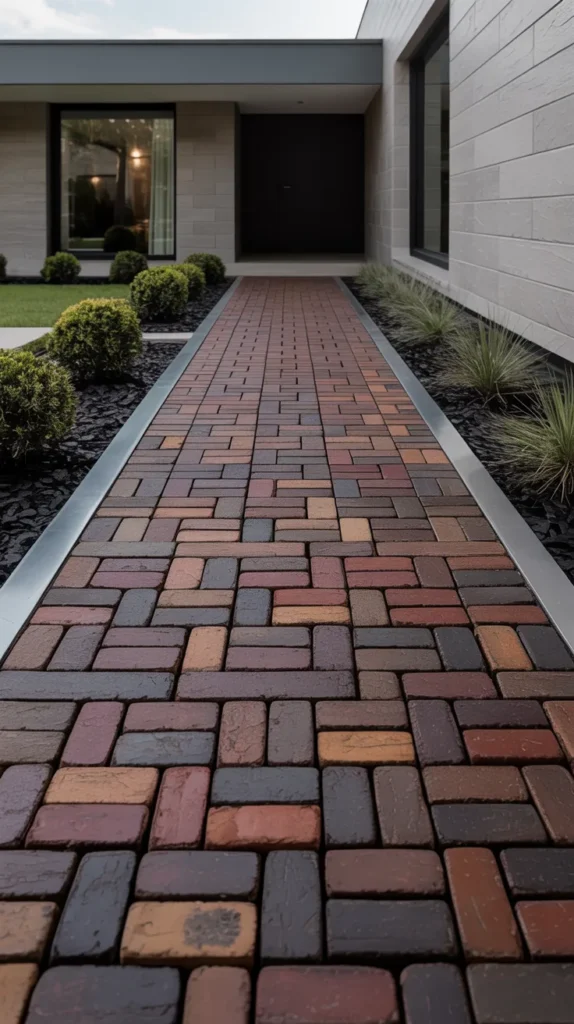
Basket weave brick patterns immediately signal craftsmanship. Unlike simple rows, this layout creates visual texture that reads historic and detailed without feeling busy. It’s a pattern commonly seen in early 20th-century neighborhoods, which is why it naturally pairs with bungalows, craftsman homes, and traditional architecture. The effect is subtle — people won’t always notice the pattern consciously, but they’ll sense the character it adds.
Because the pattern already carries visual interest, the surrounding landscaping can stay calm and structured. Low hedges, brick edging, or evenly spaced shrubs keep the focus on the ground. The walkway becomes a quiet design feature rather than decoration. This is what makes it so appealing: it feels thoughtful without trying too hard, giving the exterior a handcrafted permanence modern paving rarely achieves.
7. Brick + Gravel Combination Walkway
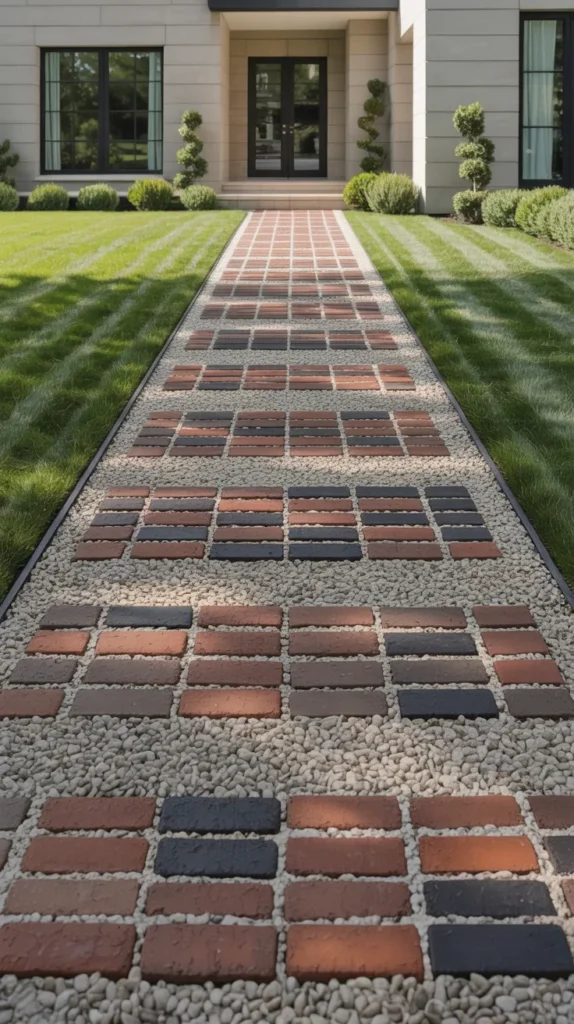
Mixing brick with gravel creates contrast that feels instantly designer-approved. Instead of a single continuous surface, the bricks provide structure while gravel softens the space visually and acoustically. You hear a gentle crunch underfoot and see variation in texture, which makes the approach feel intentional and layered rather than flat. Landscape designers love this method because it drains well and looks curated even in simple yards.
This style shines in transitional homes — not fully traditional, not fully modern. Clean planting beds, ornamental grasses, and restrained greenery complement the relaxed geometry. The bricks guide movement while the gravel fills the negative space, creating breathing room around the hardscape. The result feels casual but elevated, like the exterior was carefully composed instead of simply paved over.
8. Formal Symmetrical Entry Path
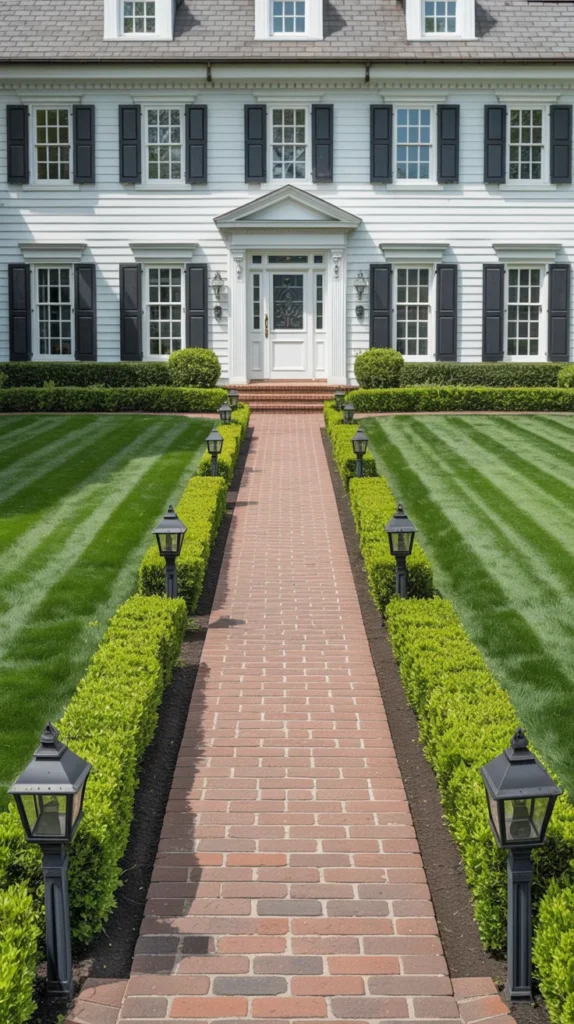
A symmetrical brick walkway communicates order the moment you see it. Matching hedges, evenly spaced lighting, and centered alignment all reinforce a sense of structure and calm. Humans naturally respond to symmetry — it makes spaces feel safe, clean, and well-maintained. That’s why so many classic homes rely on this layout to create strong curb appeal without needing elaborate decoration.
To keep it from feeling rigid, small organic elements help soften the formality. Slightly varied plant textures or warm lighting add warmth while preserving the clean lines. When balanced correctly, the entrance feels polished but still welcoming. The walkway doesn’t just lead to the door — it frames the entire façade and gives the home a composed, architectural presence.
9.Circular Brick Landing
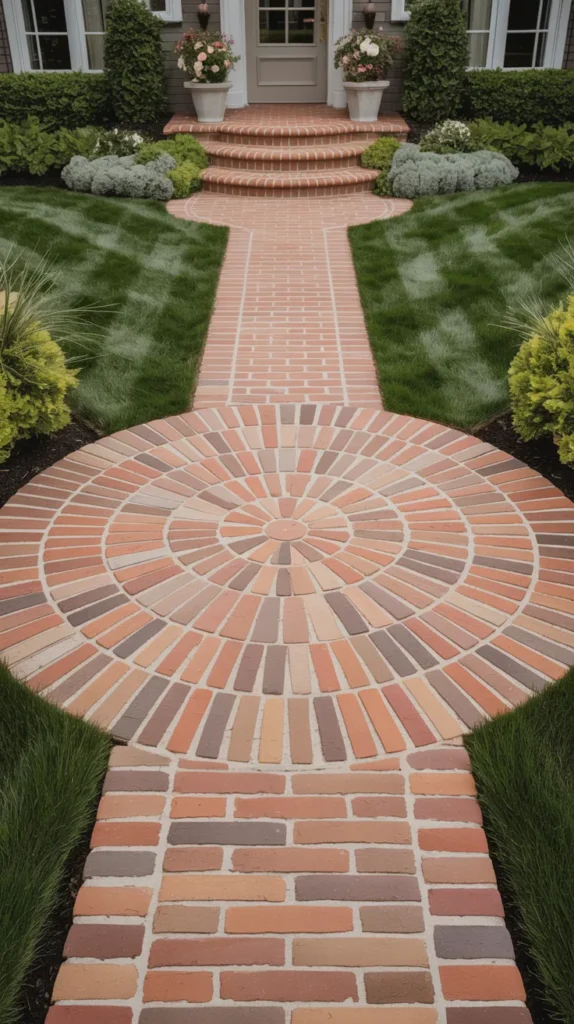
A circular brick landing breaks the expectation of a straight path and creates a subtle moment of arrival. Instead of walking directly to the door, visitors step into a small gathering space that feels designed for pause. This is especially effective near front doors because it softens the transition between public sidewalk and private interior. The home suddenly feels more welcoming simply because the layout encourages people to slow down.
Visually, the radial pattern draws attention without overpowering the exterior. Even simple homes gain architectural interest because curves contrast naturally with straight walls and windows. Add planters or lighting around the circle and it becomes a quiet focal point — not flashy, but memorable. The entrance reads as thoughtful and composed, giving the property a custom built presence.
10.Brick Pathway With Moss-Filled Gaps
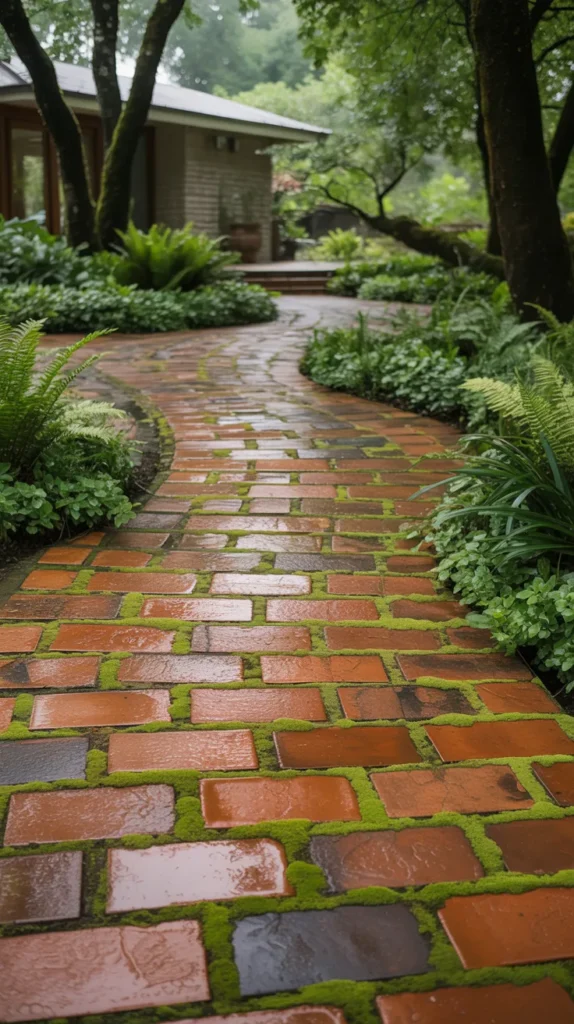
A brick walkway with moss growing between the joints feels less like construction and more like a living part of the garden. The greenery softens every line, turning what could be a rigid surface into something organic and calm. Over time, the path blends into the landscape so naturally that it looks as though it has always existed there. This is why older cottages feel peaceful — the hardscape isn’t separate from nature, it slowly merges with it.
Maintenance is surprisingly minimal because moss thrives in shade and moisture where grass struggles. Instead of constantly trimming edges, the walkway becomes self-softening, developing a gentle patina year after year. The contrast between the structured brick and the velvety green joints creates a quiet luxury effect — understated, relaxed, and deeply welcoming rather than polished and formal.
11.Black Brick Walkway With White Border
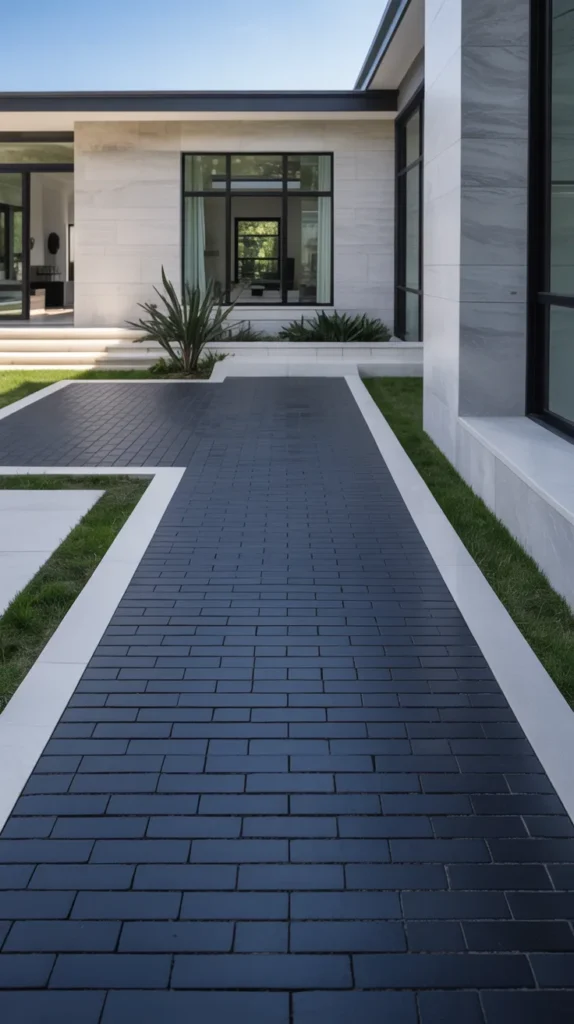
A dark brick walkway framed with a white border creates instant contrast that reads crisp and architectural. The black bricks ground the entry visually while the pale edging defines the shape, making the path appear sharper and more intentional. Even simple homes suddenly feel tailored because the eye clearly understands the design boundaries. It’s the same principle used in interior trim — contrast creates structure.
This style works especially well with modern or transitional homes where clean lines matter. The border prevents the dark material from feeling heavy and instead turns it into a focal feature. Add minimal landscaping and the walkway becomes a graphic element that elevates the entire façade, giving the entrance a designed, high-end presence without needing elaborate decoration.
12.Brick Walkway With Pebble Borders
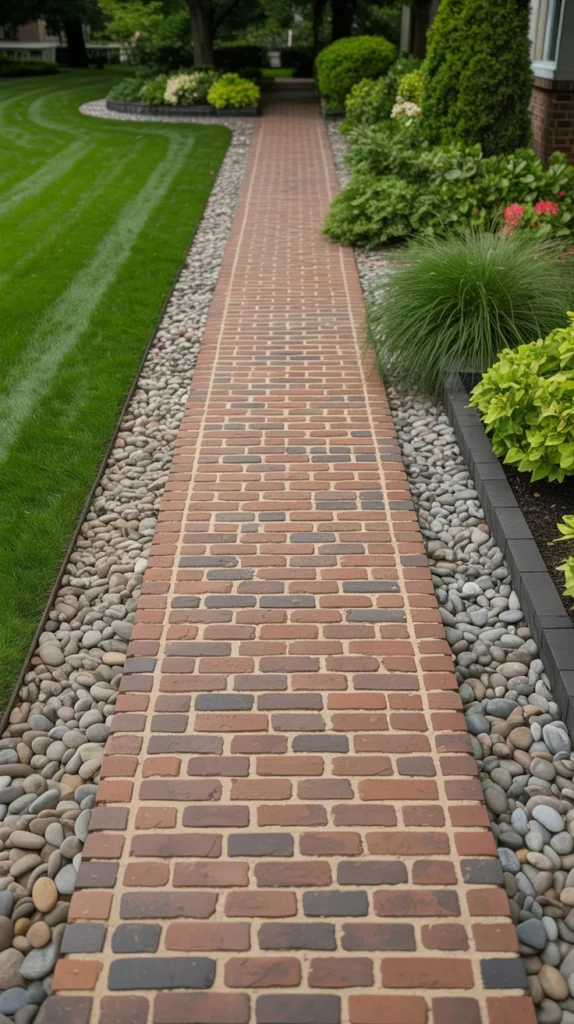
Adding pebbles along the sides of a brick walkway introduces texture without adding clutter. The smooth stones create a gentle transition between lawn and hardscape, preventing the path from feeling abruptly cut into the yard. You get structure from the brick and softness from the stones, which makes the approach feel balanced and intentional rather than overly manicured.
The sound and visual variation also enhance the experience — the subtle crunch underfoot and color variation make the space feel layered. This detail is often seen in professionally landscaped homes because it keeps the walkway defined while still relaxed. The result is casual elegance: neat but never stiff, creating an entry that feels carefully composed yet natural.
13.Brick and Concrete Modern Walkway
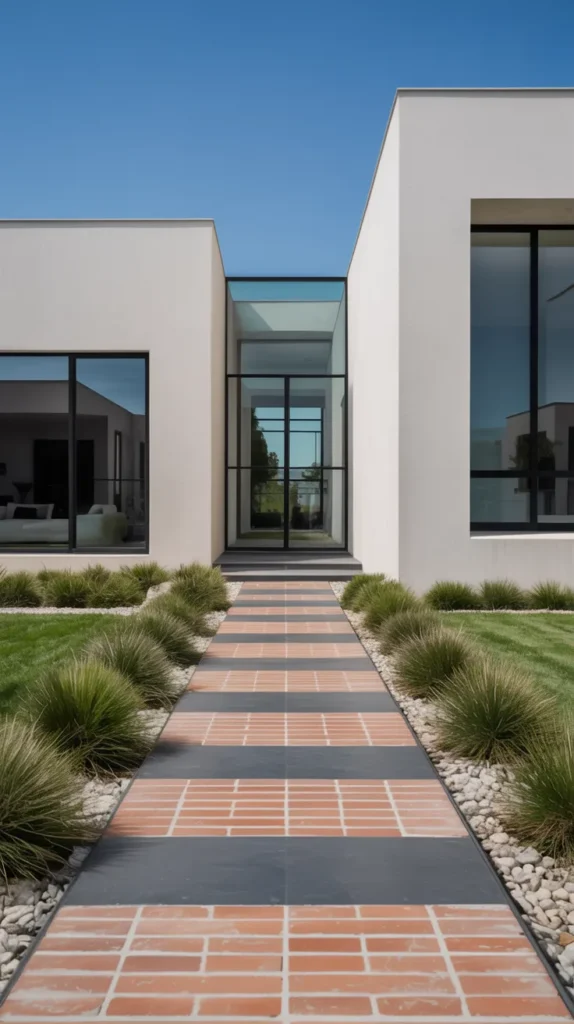
A brick and concrete walkway feels modern because it balances warmth and structure at the same time. Brick alone leans traditional, and concrete alone can feel cold — but together they create contrast that feels intentional and architectural. The concrete provides clean lines and definition, while the brick adds texture and familiarity so the exterior doesn’t feel sterile. This combination works especially well with contemporary homes where the architecture is simple and the materials carry the personality.
The secret is in proportion. Wide concrete bands framing brick sections create rhythm and guide the eye toward the entry, almost like the ground is directing movement. When paired with restrained landscaping — gravel beds, sculptural grasses, and minimal planting — the walkway becomes part of the design rather than decoration. The overall effect is calm, tailored, and high-end, giving the home a composed presence without relying on ornament.
14.Brick Walkway With Flowering Archways
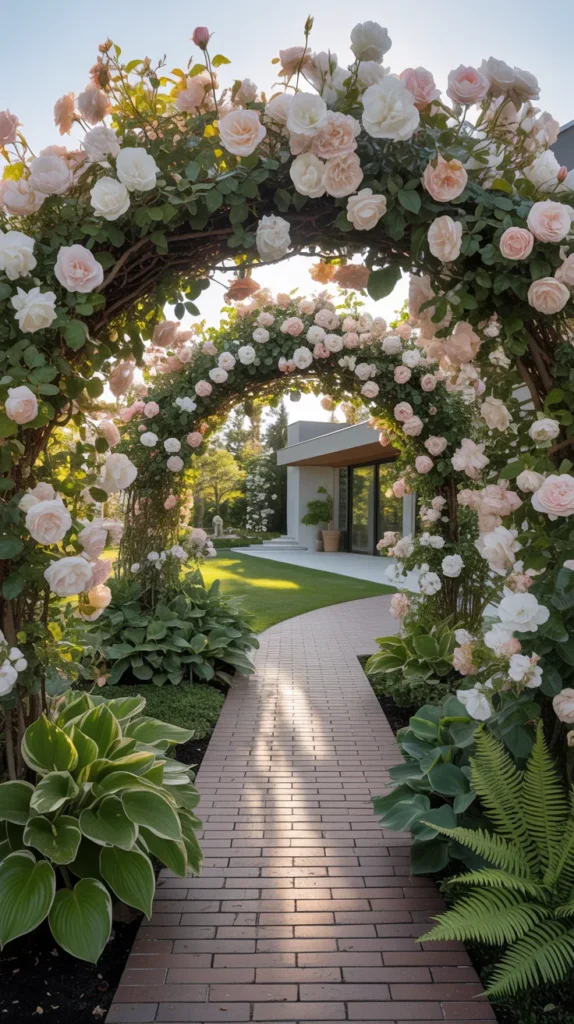
A flowering archway over a brick path transforms the walk to the door into an experience rather than a transition. As you pass beneath climbing roses or vines, the entrance feels enclosed and intimate, creating a gentle moment before arriving. The path becomes part of the garden rather than just access, turning the approach into a sensory journey.
This works beautifully because the brick provides structure while the plants add softness and movement. Seasonal blooms change the mood throughout the year, keeping the entry dynamic and memorable. Instead of simply guiding guests, the walkway welcomes them — giving the home a romantic and curated atmosphere that people remember long after they leave.
15.Monochrome Brick Walkway Designs
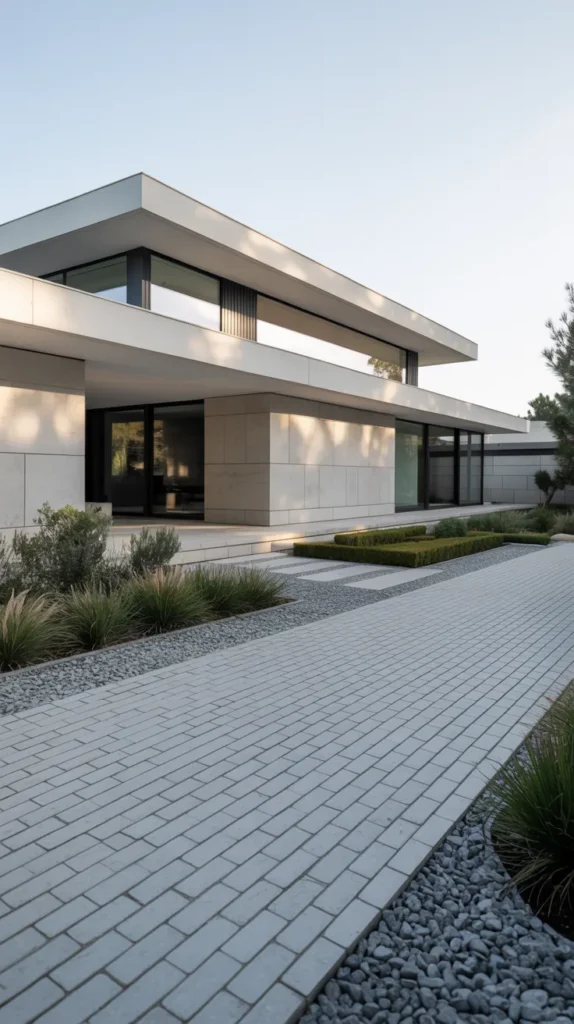
Monochrome walkways focus less on color and more on contrast, shadow, and texture. Instead of warm rustic charm, the appeal comes from precision and simplicity. By limiting the palette to blacks, charcoals, greys, or whites, the eye notices pattern, spacing, and layout more clearly. The walkway stops being just a path and becomes a visual composition.
This style works especially well with modern architecture because clean exteriors need structured ground elements to feel complete. Landscaping becomes sculptural rather than lush — clipped hedges, gravel beds, and strong lines support the walkway rather than soften it. The result is a space that feels intentional, calm, and architectural rather than decorative.