20 Bathroom Wall Ideas That Instantly Make Any Bathroom Look Expensive
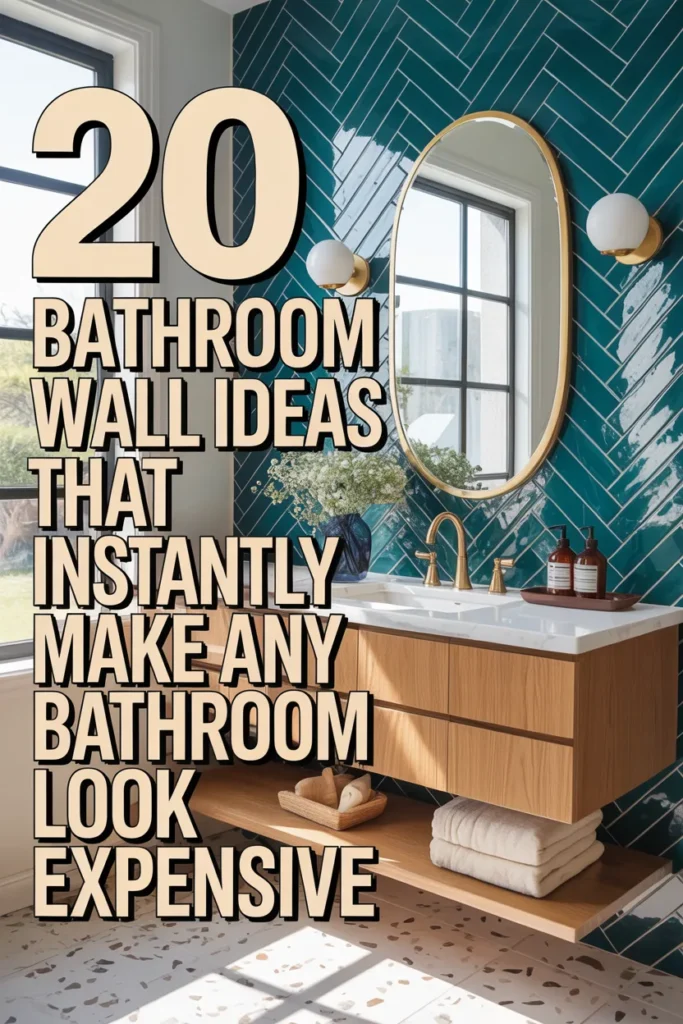
Most bathrooms don’t actually lack space — they lack intention. A plain painted wall and a mirror hung at eye level might be functional, but it rarely feels finished. That’s why even a clean bathroom can still feel temporary, like it hasn’t been fully designed yet. The walls are what determine whether the room feels flat or thoughtfully styled.
The good news is you don’t need a renovation to change that. A single wall treatment can completely shift how the entire space reads — taller, cozier, brighter, or dramatically high-end. These ideas focus on visual transformation rather than demolition, so you can create a bathroom that feels designed instead of default.
1. Vertical Shiplap Accent Wall
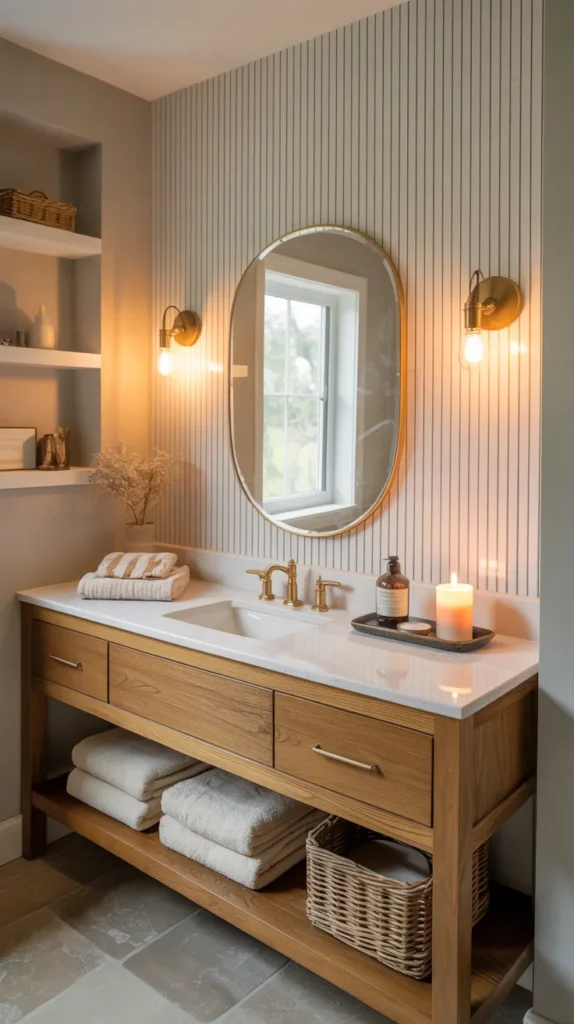
If you want a bathroom to feel taller and more intentional without changing the layout, vertical shiplap is one of the most reliable tricks. Unlike horizontal boards that widen a room, vertical lines draw the eye upward and subtly stretch the height of the space. This is especially powerful behind a vanity because the mirror reflects the lines, doubling the visual effect. Even a very small powder room suddenly feels architectural instead of flat.
The key is keeping it clean and tailored rather than rustic. Narrow boards, minimal gaps, and a painted finish create a polished look instead of farmhouse overload. Soft whites feel spa-like, while deep colors like navy, forest green, or charcoal turn the wall into a focal point. Add a simple mirror and warm lighting and the bathroom immediately feels styled rather than decorated.
2. Floor-to-Ceiling Zellige Tile Wall
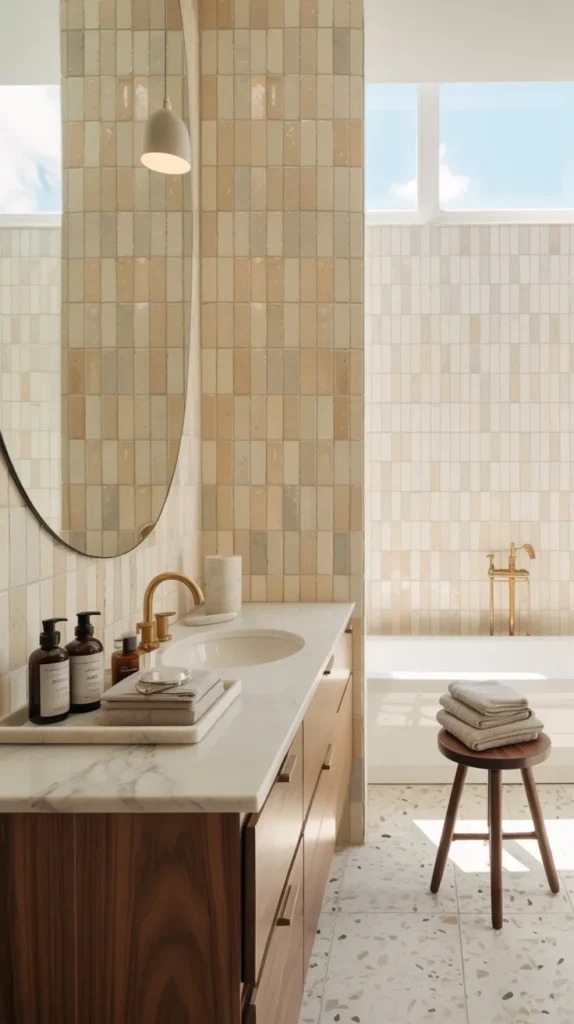
Nothing elevates a bathroom faster than tile that continues all the way up the wall. When tile stops halfway, the eye reads it as practical. When it reaches the ceiling, it becomes design. Handmade-style zellige tiles are especially impactful because their uneven surface reflects light differently throughout the day. The wall quietly shifts in tone depending on lighting, which makes the room feel layered and expensive.
This works beautifully behind a vanity or inside a shower, but the real magic happens when it’s treated as a feature wall instead of just a wet-zone material. Soft cream tones create a calming spa environment, while darker shades feel dramatic and moody. Because the texture already carries visual interest, the rest of the bathroom can stay simple and still look finished.
3.Floral Wallpaper Bathroom
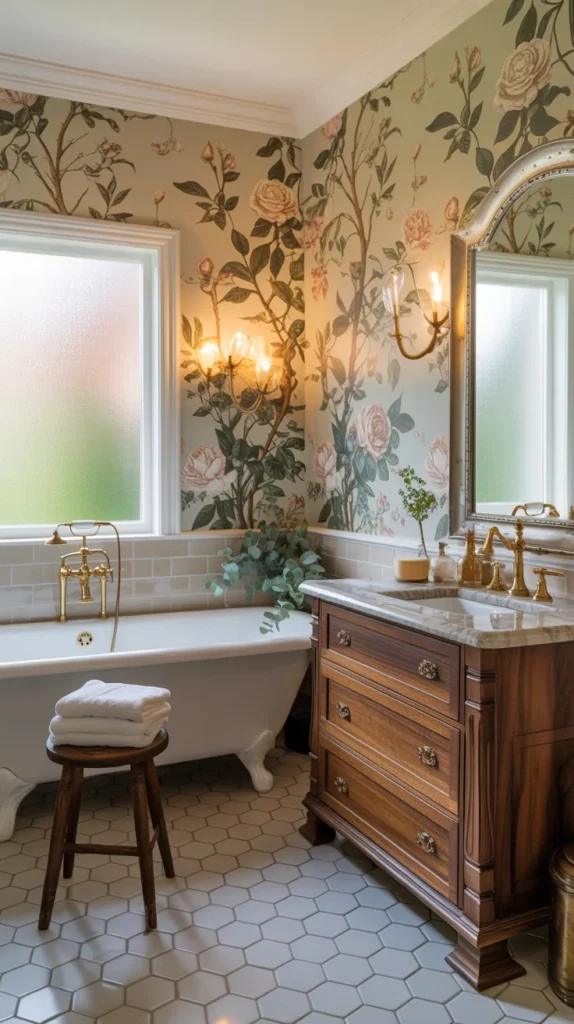
Floral wallpaper can completely redefine a bathroom because it turns the space into a visual experience rather than just a functional room. In a full bathroom, the pattern adds softness that hard surfaces usually lack. Tile, porcelain, mirrors, and stone all reflect light sharply — florals balance that with movement and warmth. Instead of the room feeling sterile, it feels layered and lived in.
The most successful floral bathrooms don’t fight the pattern — they support it. Keeping the vanity simple and the accessories minimal allows the walls to carry the personality. When the scale of the print matches the size of the room, the bathroom feels cohesive instead of busy. The result is a space that feels styled every day, not just when cleaned — calm but expressive at the same time.
4. Painted Arch Behind the Vanity
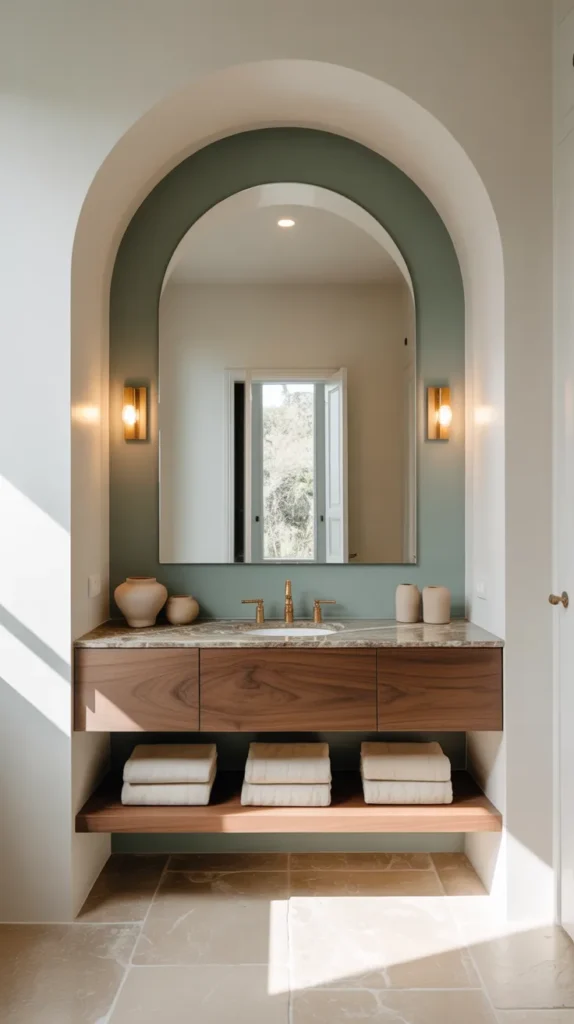
A painted arch is one of the easiest ways to fake built-in architecture. It frames the mirror, anchors the vanity, and creates a natural focal point — all with just paint. Because bathrooms tend to have many hard edges (tile lines, mirror rectangles, cabinets), the curved shape softens the entire room and makes it feel designed.
Choosing a slightly deeper tone than the surrounding walls works best. The arch should look intentional but not separate from the space. When done well, it feels like the vanity was always meant to sit there. Add wall sconces inside the arch and the bathroom instantly looks custom.
5. Picture Frame Molding Panels
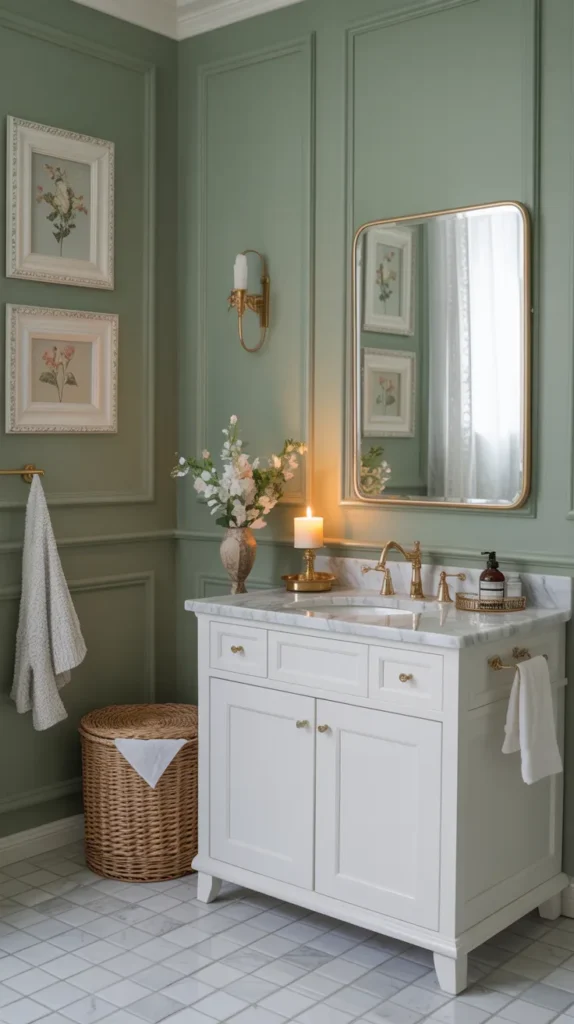
Wall molding instantly shifts a bathroom into a more finished, upscale category. Flat drywall often makes bathrooms feel temporary or builder-grade, but adding picture frame molding introduces structure and rhythm. The walls start to look architectural rather than just painted surfaces.
The effect depends on paint choice. Painting the molding the same color as the wall feels modern and subtle, while contrast colors feel classic and traditional. Either way, the bathroom gains depth. Even without changing fixtures, the room feels like it belongs in a thoughtfully designed home instead of a default one.
6.Wood Slat Spa Wall
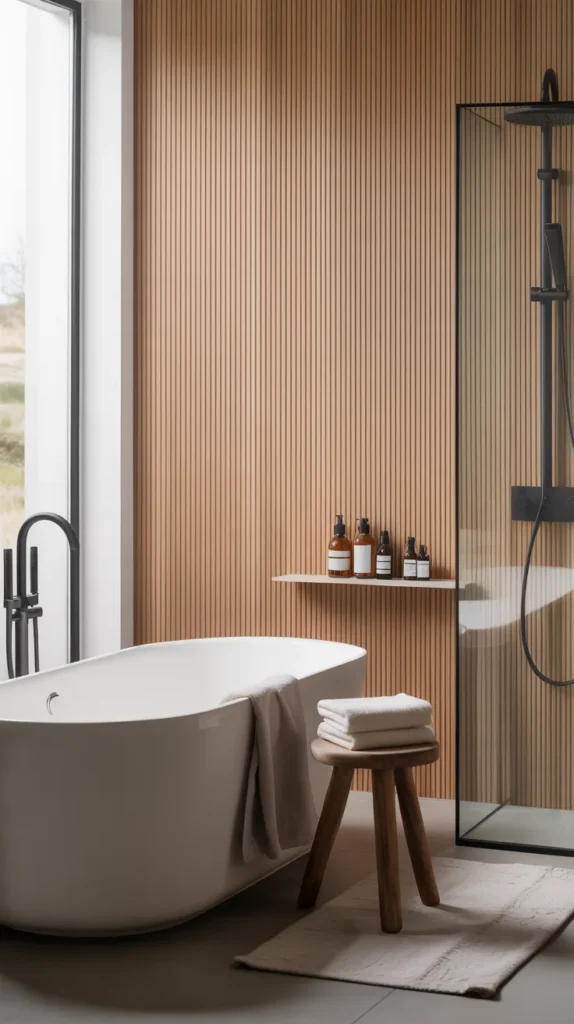
Wood slats instantly soften the hard materials found in bathrooms. Tile, porcelain, and glass all reflect sound and light sharply, which can make a space feel cold even when styled nicely. Adding vertical wood slats introduces warmth and rhythm, turning the room into something closer to a spa environment than a standard bathroom.
Placed behind a bathtub or vanity, the slats act as both texture and architecture. Thin spacing keeps it modern while wider spacing feels organic and relaxed. When combined with soft lighting and simple accessories, the bathroom becomes calming instead of clinical — the kind of space people linger in instead of rushing out of.
7.Half Tile, Half Paint Wall
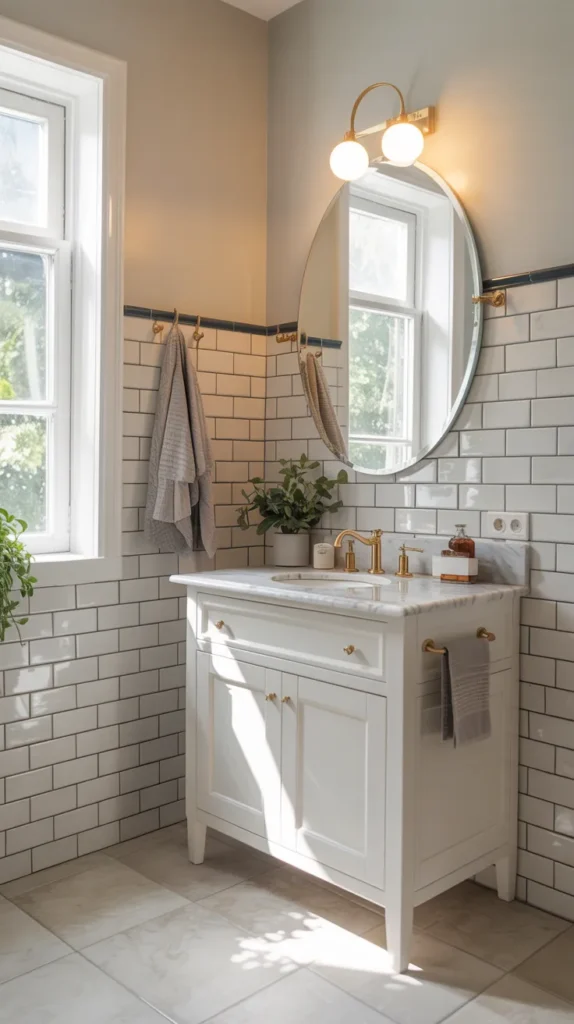
One of the easiest ways to make a bathroom feel custom is to break the wall into two materials. Full tile can feel cold, and full paint can feel flat — but combining them creates balance. Tile handles the functional lower half while paint softens the upper portion, giving the room both practicality and warmth.
The visual line where they meet becomes a design element. A horizontal transition subtly widens the room, which is especially useful in narrow bathrooms. This technique works with almost any style, from classic to modern, and instantly looks intentional even if the materials themselves are simple.
8.Stone Veneer Feature Wall
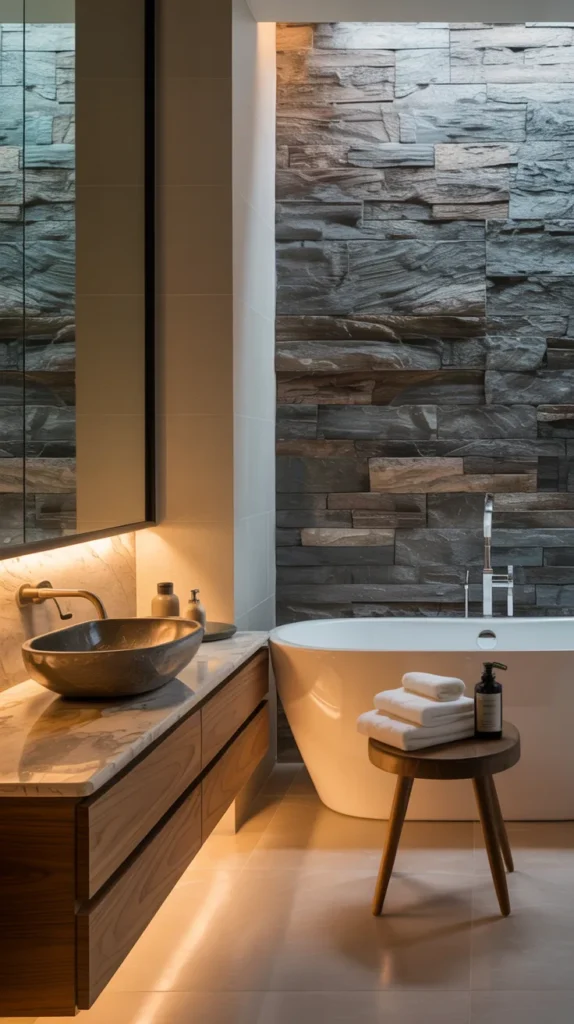
A stone wall instantly changes the emotional tone of a bathroom. Instead of feeling purely functional, the room begins to feel grounded and architectural. Natural-looking stone introduces irregularity — something bathrooms rarely have — and that imperfection is exactly what makes the space calming. The eye stops focusing on fixtures and instead notices texture and depth.
Used behind a tub or vanity, the wall becomes a natural focal point without needing decoration. Because the material already has variation, accessories can stay minimal. The bathroom ends up feeling more like a retreat than a routine space — warm, substantial, and intentionally designed rather than assembled.
9.Marble Slab Backsplash Wall
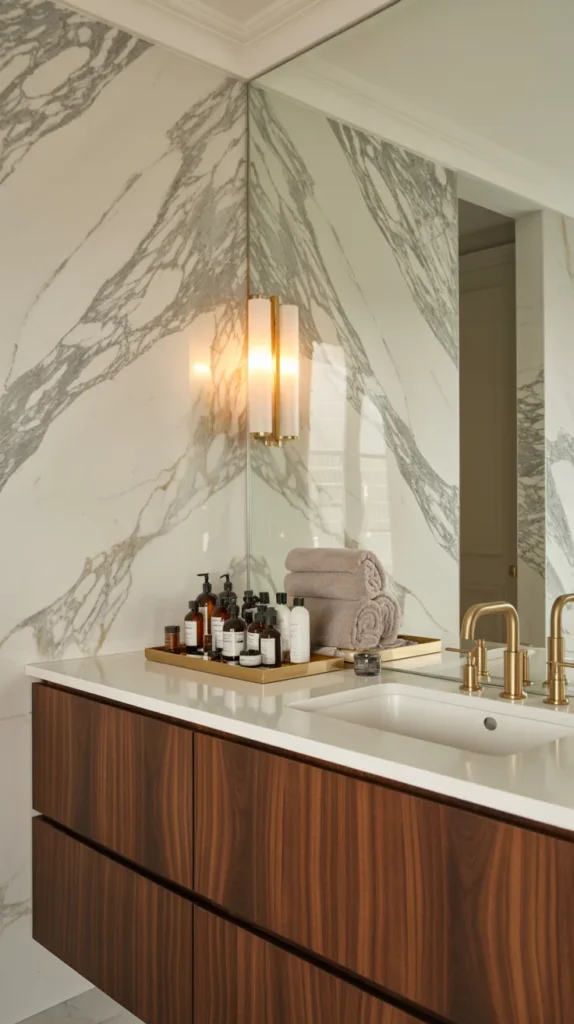
A full marble slab behind a vanity changes the hierarchy of the bathroom. Normally the mirror is the focal point — but with a slab, the wall itself becomes the statement. The natural veining works like artwork, meaning you don’t need additional decor to make the space feel complete.
What makes this idea effective is restraint. Keeping accessories minimal allows the stone to stand out. Even simple fixtures suddenly feel elevated because they’re placed against something inherently luxurious. The bathroom stops looking styled and starts looking intentionally designed, which is the difference between a nice room and a memorable one.
10. Beadboard Cottage Wall
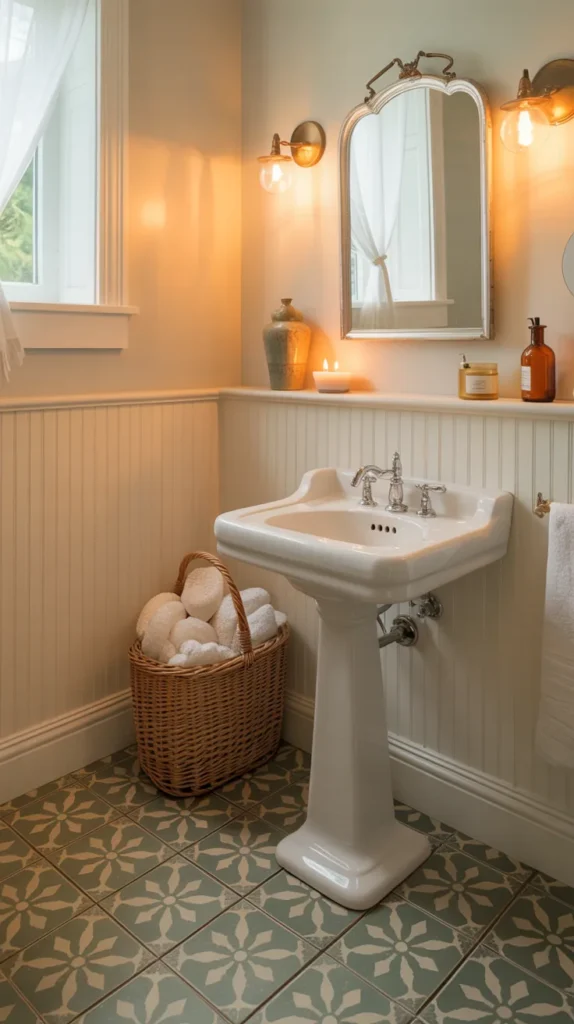
Beadboard adds character in a way plain drywall never can. The repeating grooves introduce texture while still staying simple enough to feel calm. It gives the bathroom a finished look without relying on bold color or expensive materials.
What makes beadboard effective is how adaptable it is. Painted light it feels airy, painted dark it feels classic. Either way, it breaks up blank wall space and creates a gentle rhythm that makes the room feel cared for. Even in modern homes, beadboard adds warmth and approachability — something bathrooms often lack.
11.Abstract Art Panels
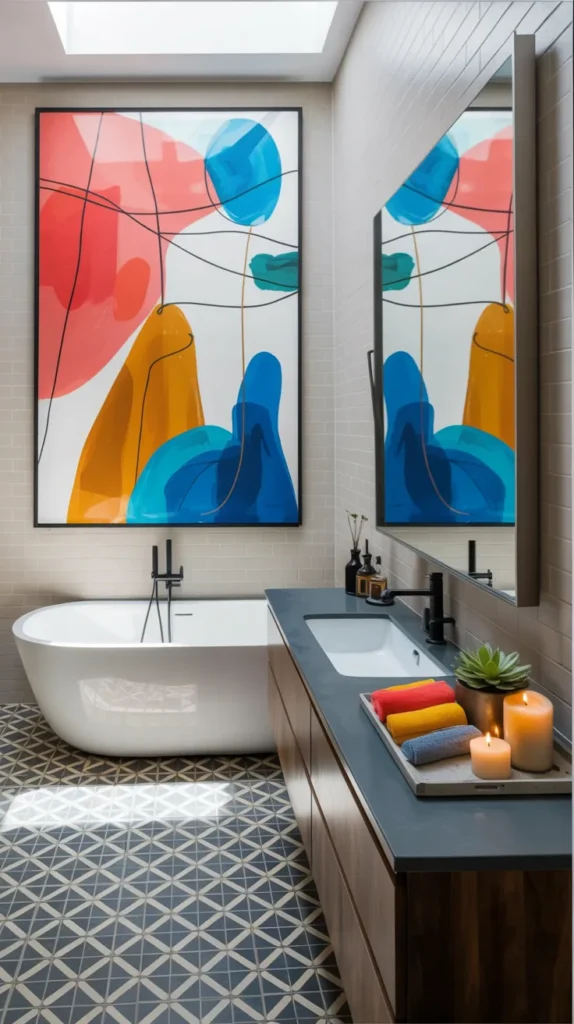
Abstract art panels are one of the easiest ways to make a bathroom feel intentional without changing any materials. Bathrooms already have hard surfaces — tile, mirrors, stone — so adding artwork introduces softness and personality. Large abstract panels work especially well because they create a focal point immediately, anchoring the space so it feels designed instead of simply furnished.
The key is scale and simplicity. One or two larger pieces feel calmer than many small frames, and the open shapes allow the eye to rest while still adding interest. When colors in the artwork subtly repeat tones found in the room, the entire space becomes cohesive. The bathroom gains character without clutter, which is exactly what makes it feel elevated rather than busy.
12.Textured 3D Wall Panels
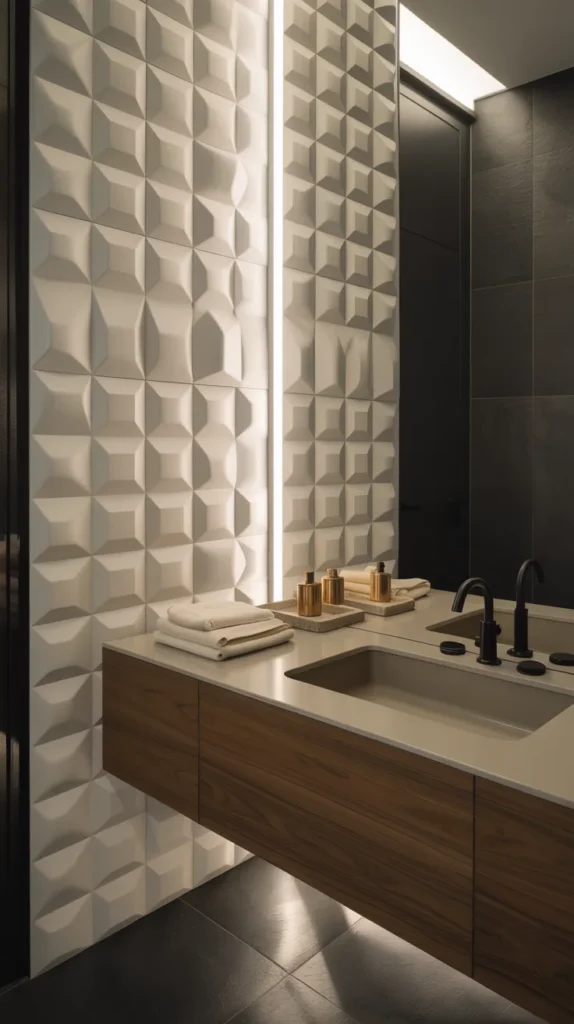
Three-dimensional wall panels immediately shift a bathroom from flat to architectural. Instead of relying on color or decor to create interest, the wall itself produces movement through shadow and form. As natural and artificial light move across the surface throughout the day, the pattern subtly changes, which keeps the room visually engaging without ever feeling busy. This is what gives the space a designed presence rather than a decorated look.
Because the texture carries the visual weight, everything else can stay restrained. Clean fixtures, minimal accessories, and simple materials allow the panels to remain the focal point. The room ends up feeling modern yet warm — structured but not cold. It’s a way to add personality while maintaining calm, creating depth without clutter.
13.Tile Laid in Herringbone Pattern
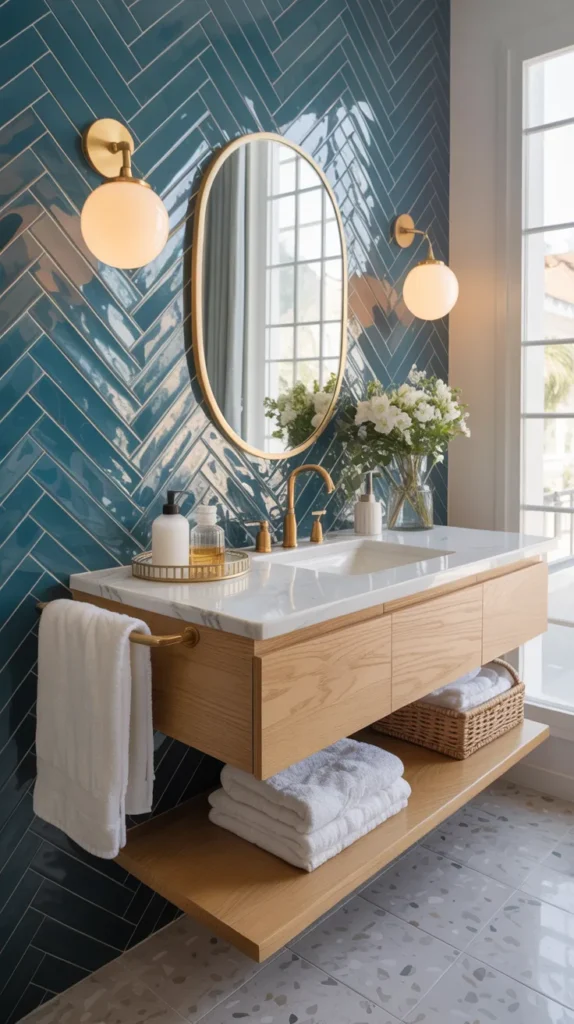
Herringbone tile proves that layout can matter more than material. The angled placement naturally draws attention and guides the eye across the wall, creating movement that plain stacked tile never achieves. It adds sophistication without needing bold color, making the surface feel tailored instead of basic.
Because the pattern already provides detail, the rest of the bathroom can stay quiet. Mirrors, fixtures, and accessories appear more refined against it, almost as if the room was custom built around them. The space becomes interesting without becoming overwhelming — visual movement with controlled order.
14.Reclaimed Wood Installation
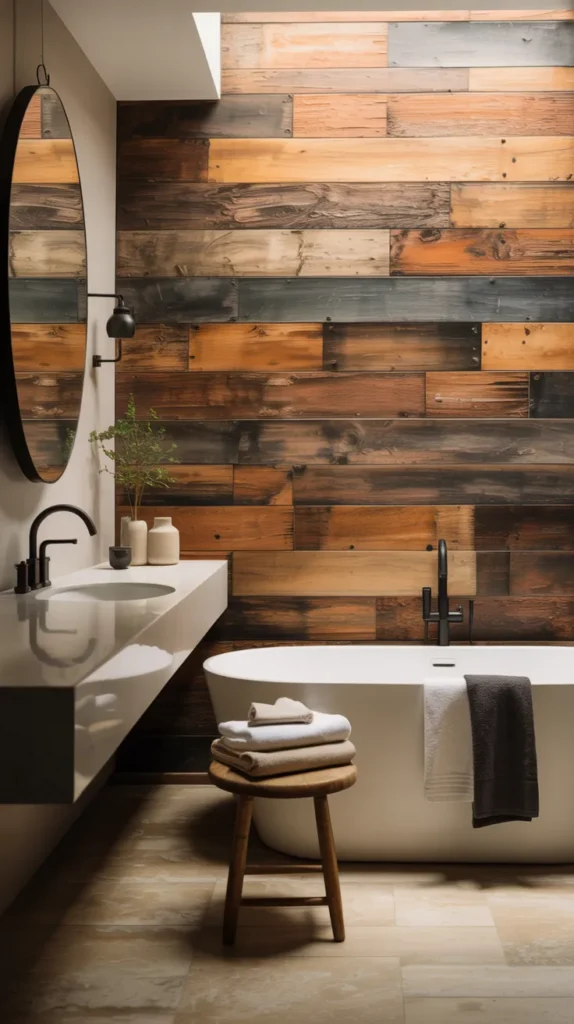
Reclaimed wood introduces something bathrooms rarely have: softness through imperfection. The variation in tone, grain, and subtle wear prevents the room from feeling sterile or overly polished. Against tile and porcelain, the wood creates contrast that immediately makes the space feel warmer and more human.
Using it on a single wall keeps the effect balanced so the bathroom still feels fresh and modern. When paired with contemporary fixtures, the mix of old and new reads intentional rather than rustic. The room shifts from purely functional to inviting — a clean environment grounded by natural texture and authenticity.
15.Floating Shelves Styling
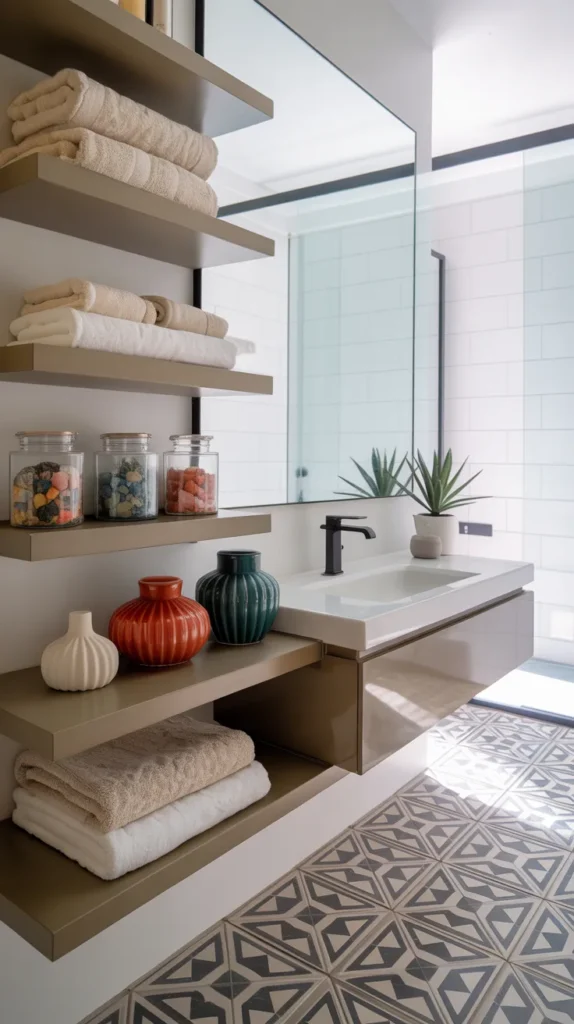
Floating shelves don’t have to feel neutral or minimal — they can be the most expressive wall in the bathroom. When styled with color, they turn everyday items into part of the design. Bright towels, glass containers, ceramics, and small objects add personality while still staying functional. Instead of hiding storage, the wall becomes a curated display that gives the room life.
The trick is repeating color intentionally. When tones appear more than once, the space feels cohesive rather than cluttered. A simple shelf layout suddenly feels styled because the eye recognizes a pattern. The bathroom gains energy without losing order — storage that doubles as visual design.
16.Mixed Metal Mirror Wall
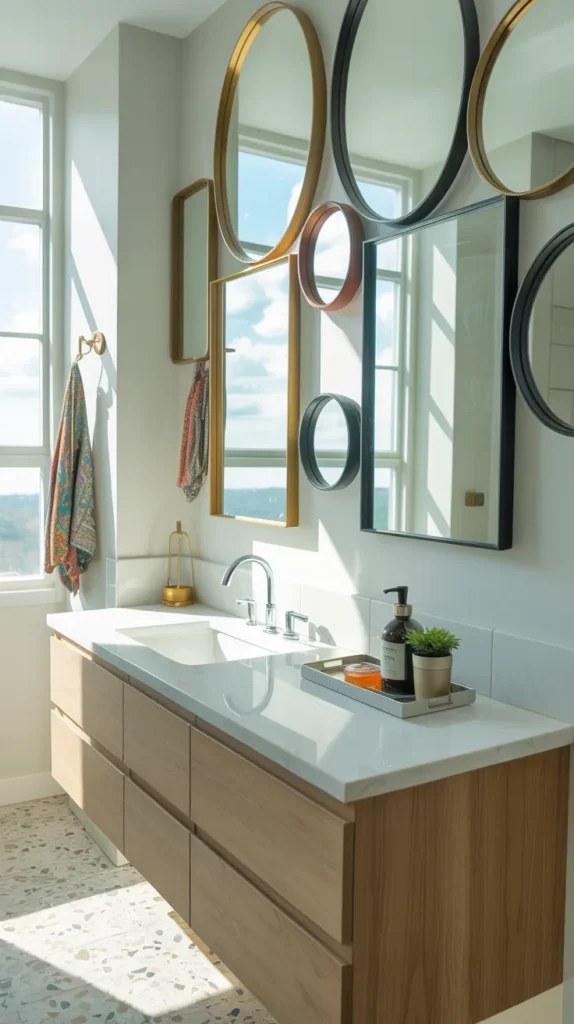
A mixed metal mirror wall instantly makes a bathroom feel layered and thoughtfully styled. Instead of one predictable finish, combining metals — like brass, black, chrome, or brushed nickel — adds depth the same way mixed materials do in furniture. The mirrors reflect light differently depending on their frames, which gives the wall subtle movement throughout the day. Rather than looking perfectly matched, the space feels curated and collected.
The key is balance, not randomness. Repeating each metal at least once keeps the design cohesive so it feels intentional instead of accidental. When the finishes echo fixtures or accessories elsewhere in the room, everything ties together naturally. The result is a wall that acts as both decoration and function — a structured contrast that still feels harmonious.
17. Two-Tone Color Drench Bathroom
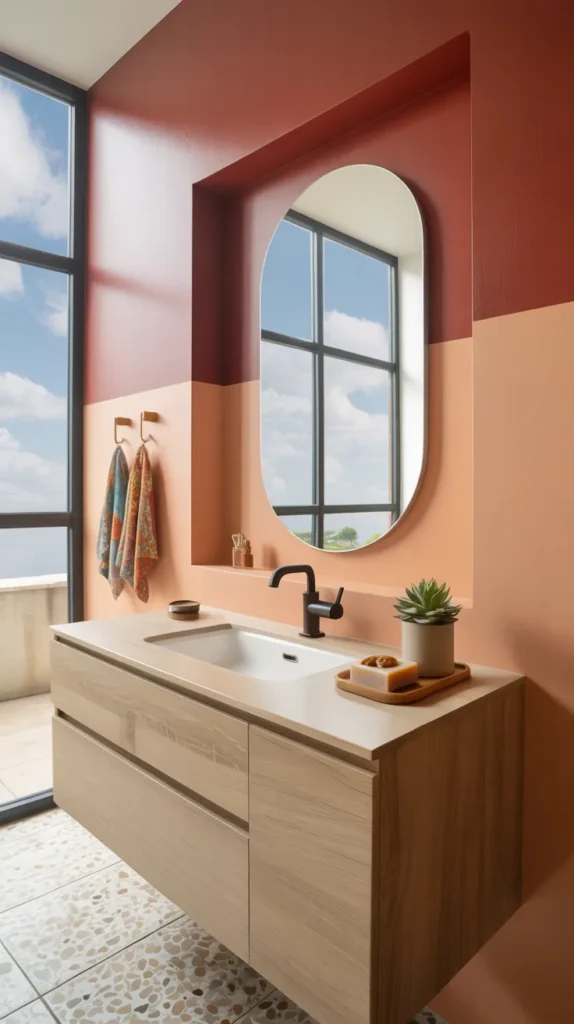
Two-tone walls instantly give a bathroom architectural depth without adding materials. Instead of a single paint color fading into the background, dividing the wall horizontally creates structure the same way paneling would. The upper shade draws the eye upward while the lower tone grounds the room, making the space feel taller and more intentional. Even simple fixtures look designed because the color placement defines their zone.
This approach works best when the tones feel related rather than contrasting harshly. Warm shades — like terracotta, clay, peach, or rose — create a soft envelope that feels inviting instead of busy. The mirror and vanity naturally become part of the composition because they sit inside a framed color field. The result feels modern yet calm — color acting as architecture instead of decoration.
18.Mosaic Accent Panel
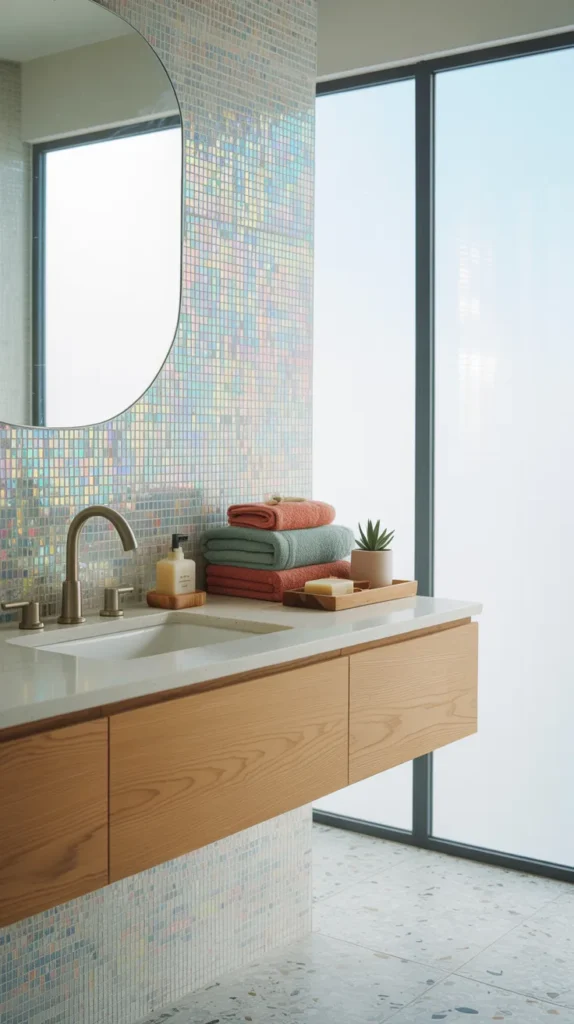
A mosaic accent panel works like built-in artwork. Instead of hanging decor on the wall, the wall itself becomes the detail. Small tiles catch light from different angles, creating shimmer and movement throughout the day. Even neutral bathrooms suddenly feel layered because the surface has variation and depth.
Because mosaic naturally draws attention, it works best when the surrounding materials stay simple. Placing it behind a vanity or inside a shower area creates a focal point without overwhelming the room. The effect feels intentional and crafted — decoration integrated into architecture rather than added afterward.
19.Mirrored Walls
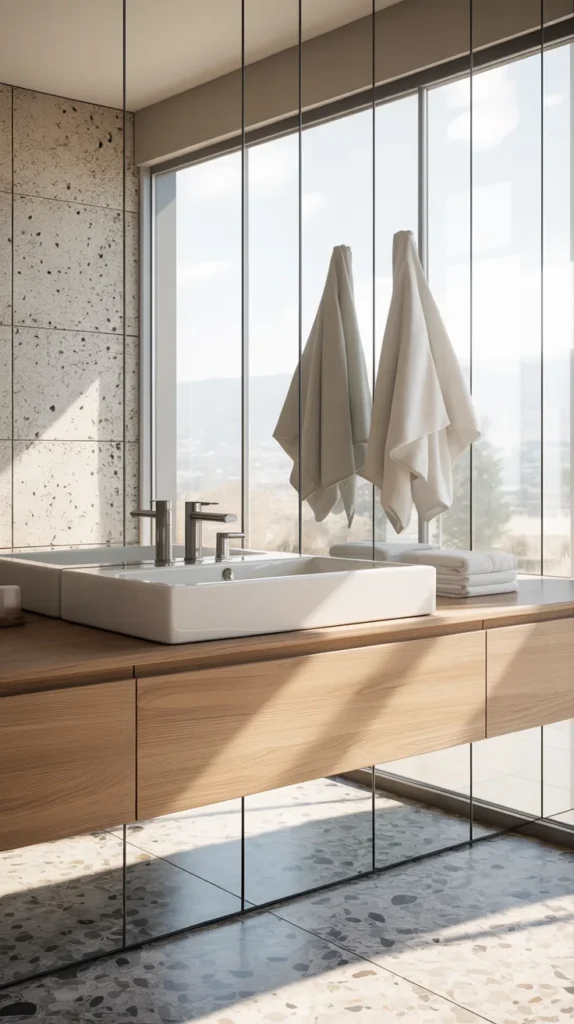
Mirrored walls dramatically change how a bathroom feels because they remove visual boundaries. Instead of seeing where the room ends, reflections extend the space beyond its actual size. Light bounces across every surface, brightening corners that would normally stay shadowed. Even a small bathroom suddenly feels open and airy — space created through reflection rather than renovation.
The key is placement and proportion. Covering an entire wall makes the biggest impact, but breaking mirrors into panels can add structure while keeping the effect softer. When balanced with warm materials like wood, stone, or textured tile, the reflection feels inviting instead of stark. The result is a room that looks brighter, larger, and intentionally designed without adding clutter.
20.Picture Ledge Art Display
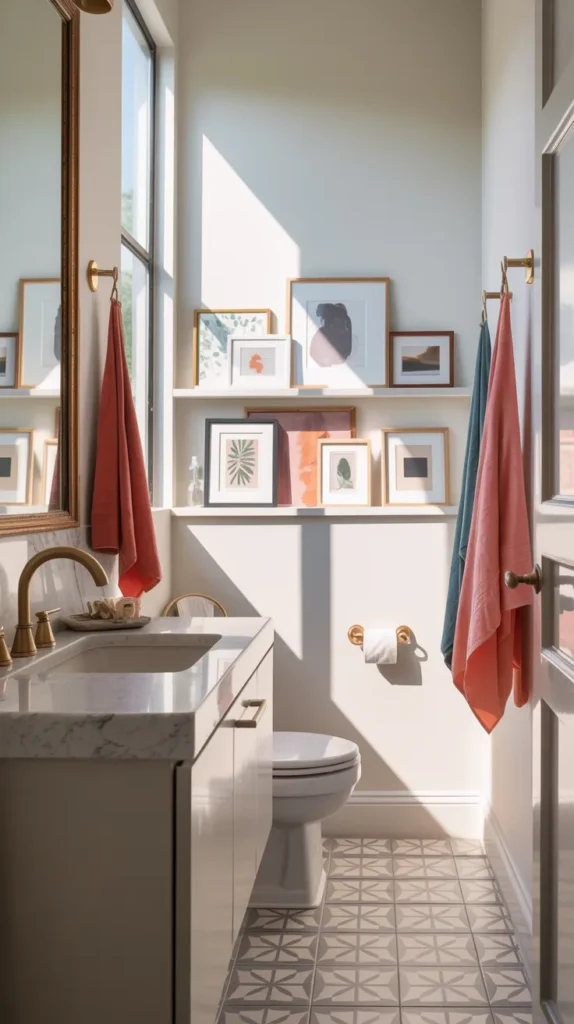
A picture ledge changes the way artwork lives in a bathroom. Rather than committing to fixed frames, art can be layered and swapped easily. The wall evolves over time, which keeps the space personal instead of static.
The overlapping frames add depth without clutter because everything sits on a single clean line. Leaning art softens the room and balances the hard surfaces around it. The bathroom feels curated yet relaxed — styled without permanence.