20 Staircase Makeover Ideas That Instantly Elevate Your Home
Your staircase is one of the first architectural features people notice — but it’s often the most overlooked. While we obsess over kitchens and living rooms, the stairs quietly sit in the background… usually builder-grade, plain, and full of untapped potential. The truth? A staircase makeover can completely transform the feel of your home. With the right paint color, paneling detail, lighting upgrade, or runner, your stairs can go from basic to beautifully intentional.
The best part is that you don’t need a full renovation to make a dramatic impact. Simple upgrades like bold risers, custom molding, modern railings, or layered lighting can make your home feel custom-built and elevated. Whether your style leans modern, classic, moody, or light and airy, these staircase makeover ideas will help you turn a functional feature into a true design moment.
1. Paint the Stair Risers a Bold, Designer Color
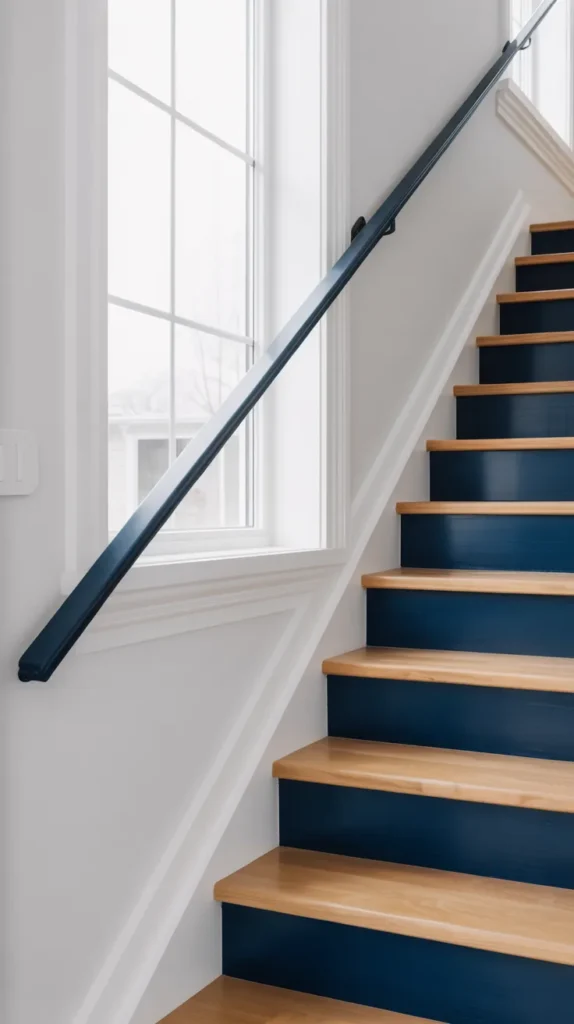
If your staircase feels basic or builder-grade, painting the risers might be the fastest way to completely change the energy of the space. Instead of leaving everything one flat neutral tone, consider adding a bold, intentional color just to the vertical portion of each step. Deep navy, moody charcoal, muted forest green, or even a warm clay tone can instantly add contrast without overwhelming the entire stairwell. The beauty of this upgrade is that it keeps the architectural structure intact while introducing a layer of visual depth and personality.
What makes this idea feel elevated rather than trendy is pairing the bold risers with natural wood treads or crisp white trim. That contrast creates a high-end custom look instead of a DIY experiment. In bright homes, darker risers ground the space and add sophistication. In moodier homes, soft muted tones create subtle drama. It’s a small change that reads as intentional — and that’s exactly what separates a decorated home from a designed one.
2. Add Wall Paneling for Instant Architectural Character
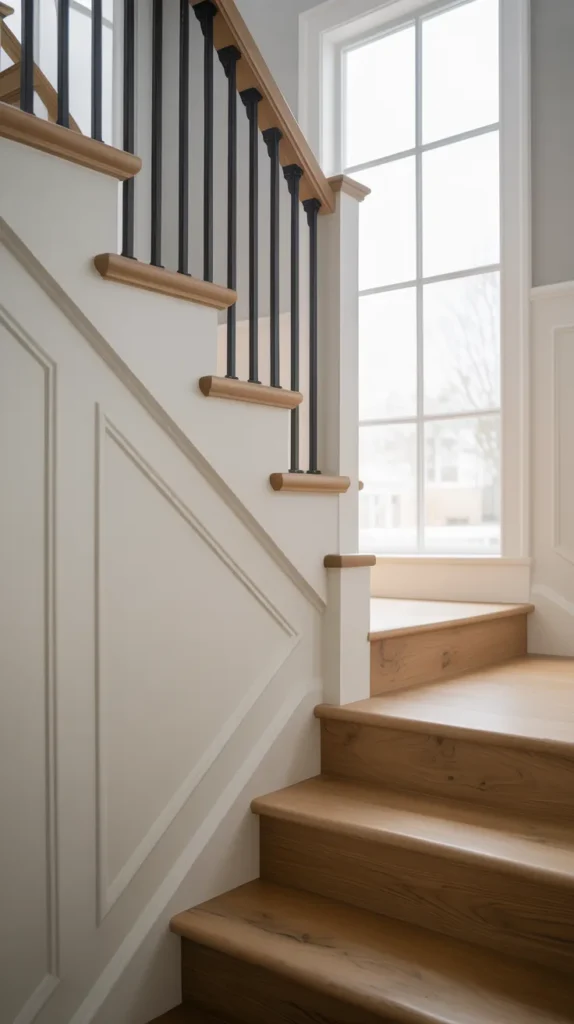
Flat staircase walls are a missed opportunity. Adding wall paneling like board-and-batten, picture frame molding, or vertical slats instantly introduces architectural interest that makes the entire entryway feel custom-built. This is one of those upgrades that doesn’t scream for attention but quietly makes everything look more expensive. Even simple rectangular molding grids painted the same color as the wall create shadow lines that feel refined and timeless.
The real magic happens when you lean into scale and proportion. Taller paneling can make ceilings feel higher, while wider spacing gives a modern edge. Painting the paneling in a soft neutral keeps it classic, while going bold with a deep olive, navy, or charcoal transforms the staircase into a dramatic design feature. The result is layered, textured, and architectural — not flat and forgettable.
3. Install a Statement Stair Runner
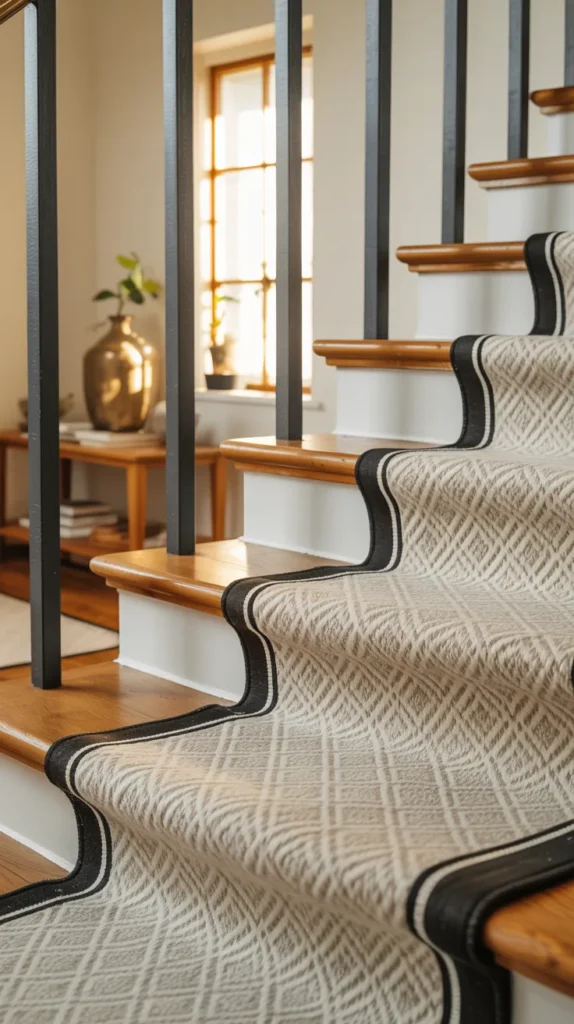
A staircase without a runner can sometimes feel cold or unfinished. Adding a textured or patterned stair runnerinstantly softens the space while introducing movement and warmth. Think muted vintage-inspired patterns, subtle geometric designs, or even a classic stripe for a timeless feel. Beyond aesthetics, runners also provide practical comfort and safety, especially in homes with kids or pets.
To keep it elevated, choose materials that feel substantial — wool blends, flatweaves, or tightly woven textures. Avoid overly busy prints unless the rest of the space is minimal. The goal is balance. When properly installed with visible wood edges framing each step, a runner creates that beautiful layered look you see in high-end homes. It makes the staircase feel intentional, cozy, and thoughtfully finished.
4. Create a Staircase Gallery Wall That Feels Curated
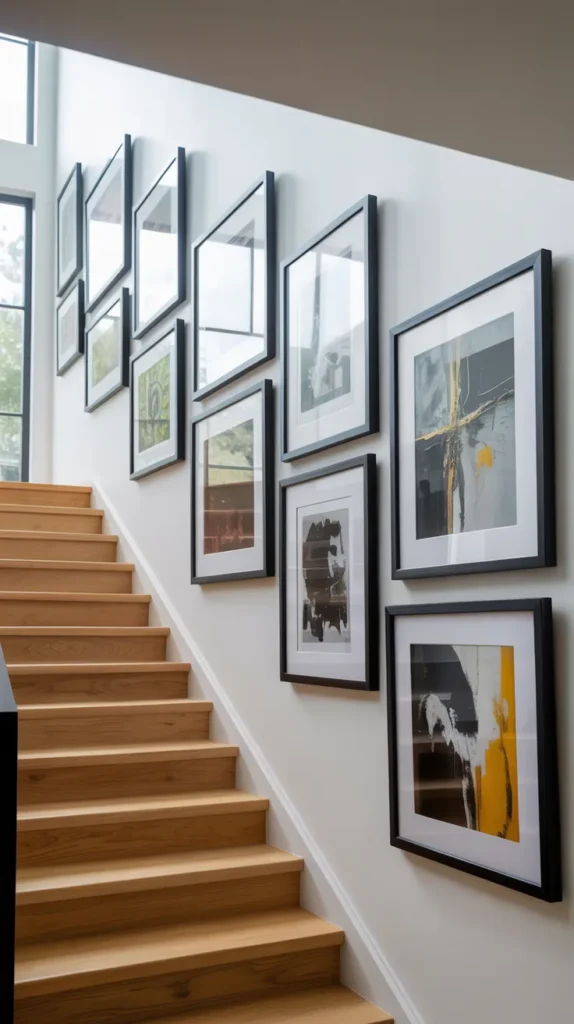
The vertical stretch alongside a staircase is prime real estate for art. But instead of randomly hanging frames, aim for a curated gallery wall that feels cohesive and balanced. Choose a consistent frame finish — matte black, brushed brass, or natural oak — and mix art prints, photography, and meaningful pieces. When done correctly, a staircase gallery wall feels layered and personal without looking cluttered.
Spacing matters here. Because the wall angles upward, the arrangement should follow the slope of the stairs while maintaining even gaps. This creates rhythm and flow as your eye moves upward. The result is a space that feels collected over time, not rushed. A well-executed gallery wall transforms a transitional area into a focal point and makes your home feel lived-in and elevated at the same time.
5. Upgrade the Handrail and Balusters for a Modern Edge
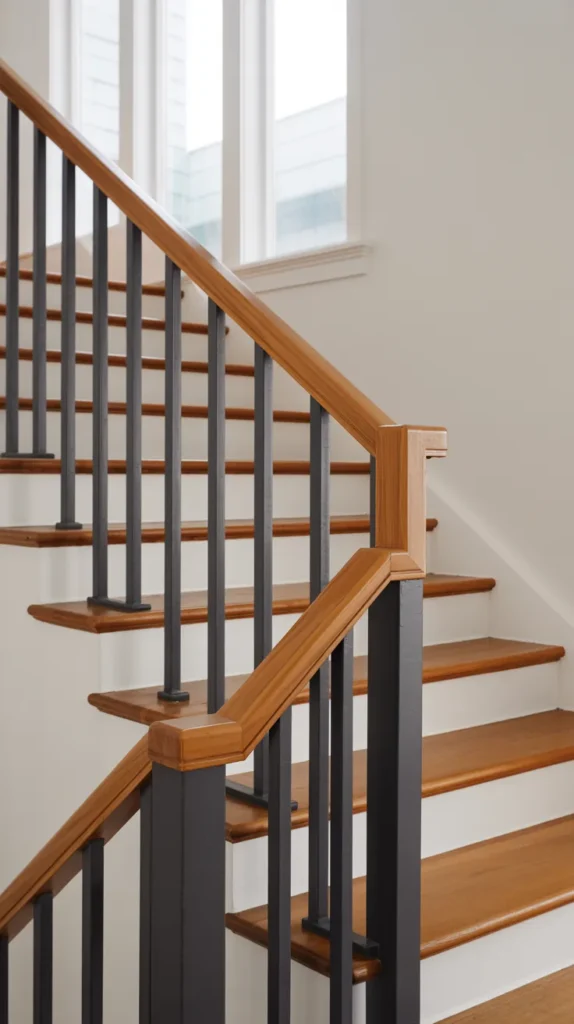
Sometimes the biggest transformation comes from replacing what’s already there. Builder-grade railings often feel bulky or outdated, and upgrading to sleek matte black metal balusters, warm stained wood handrails, or vertical wood slatscan instantly modernize the entire silhouette of your staircase. It’s amazing how much visual weight traditional spindles carry — and how light and refined the space feels once they’re updated.
Mixing materials adds depth. For example, pairing black balusters with a natural oak rail creates contrast that feels current but timeless. Or painting the balusters white while staining the handrail darker introduces subtle dimension. This is one of those changes that shifts the entire architectural presence of your home. Instead of blending into the background, your staircase becomes a strong, structured design feature that elevates everything around it.
6. Install Wall Sconces for Soft, Layered Lighting
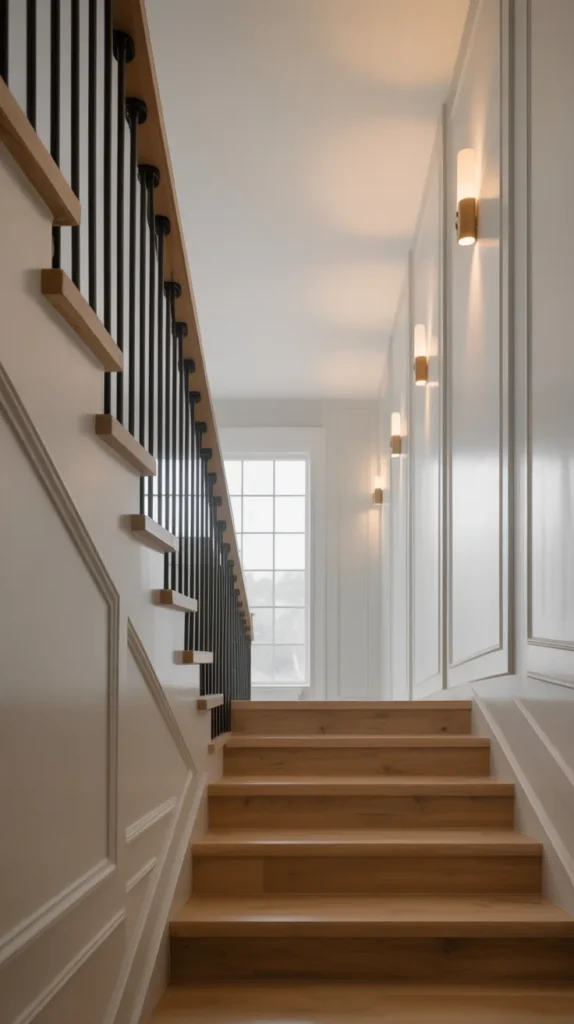
Lighting along a staircase is often harsh or nonexistent — and that’s a missed opportunity. Installing wall sconces along the stair wall instantly adds warmth, dimension, and that subtle boutique-hotel glow that makes a home feel elevated. Instead of relying on a single overhead fixture, layered lighting creates shadows and depth that highlight the architecture of your staircase. Even simple, modern sconces in brushed brass, matte black, or aged bronze can completely transform how the space feels at night.
Placement matters more than people realize. Evenly spaced sconces following the angle of the stairs create a sense of rhythm and intentional design. If your home leans modern, go sleek and minimal. If it’s traditional, choose something with soft curves and fabric shades. The goal is soft ambient lighting that feels intentional, not clinical. When the sun goes down, your staircase should feel inviting — not like a dim hallway you rush through.
7. Add LED Step Lighting for a Floating Effect
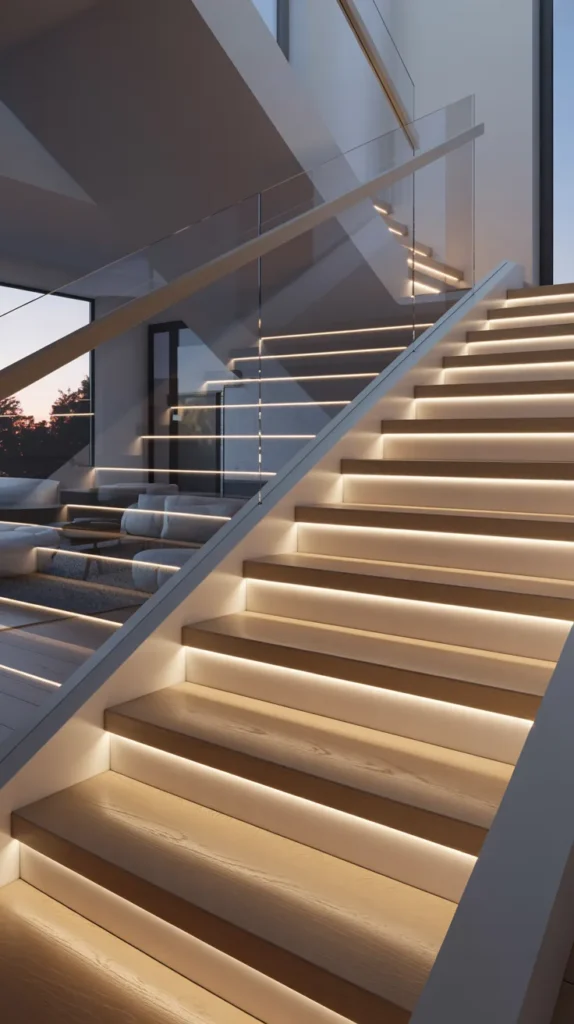
If you love clean, modern design, LED step lighting is one of the most impactful upgrades you can make. Installing subtle lighting under each stair nosing creates a soft glow that makes the staircase appear almost suspended. It’s understated but powerful. Instead of shouting for attention, it quietly signals that your home was thoughtfully designed.
This type of lighting works beautifully in contemporary or minimalist homes where clean lines are key. Warm white LEDs feel cozy, while cooler tones feel ultra-modern. The effect at night is especially dramatic — your staircase becomes a glowing architectural feature rather than just a functional structure. Beyond aesthetics, it also adds safety, making this a perfect example of beauty meeting practicality in one upgrade.
8. Wallpaper the Staircase Wall for Bold Personality
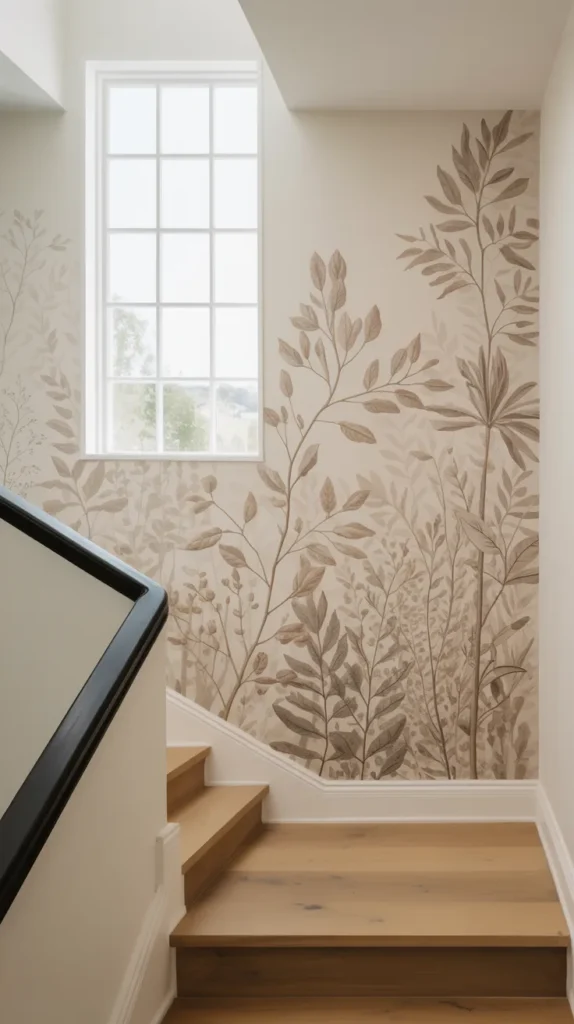
If painting feels too safe, wallpapering the staircase wall adds instant personality. Because staircases often run vertically, wallpaper introduces movement and visual energy in a way flat paint simply can’t. Subtle textured wallpaper adds depth, while soft murals or botanical patterns create a statement without overwhelming the space.
The key is choosing something that complements the rest of your home. A muted, tone-on-tone pattern feels elevated and timeless, while bold prints create a strong focal point. Since the staircase is a transitional area, it’s the perfect place to take a design risk without committing to a full room. Done right, wallpaper turns your staircase into a feature wall that feels curated and intentional, not random.
9. Paint the Staircase Wall a Moody, Dramatic Color
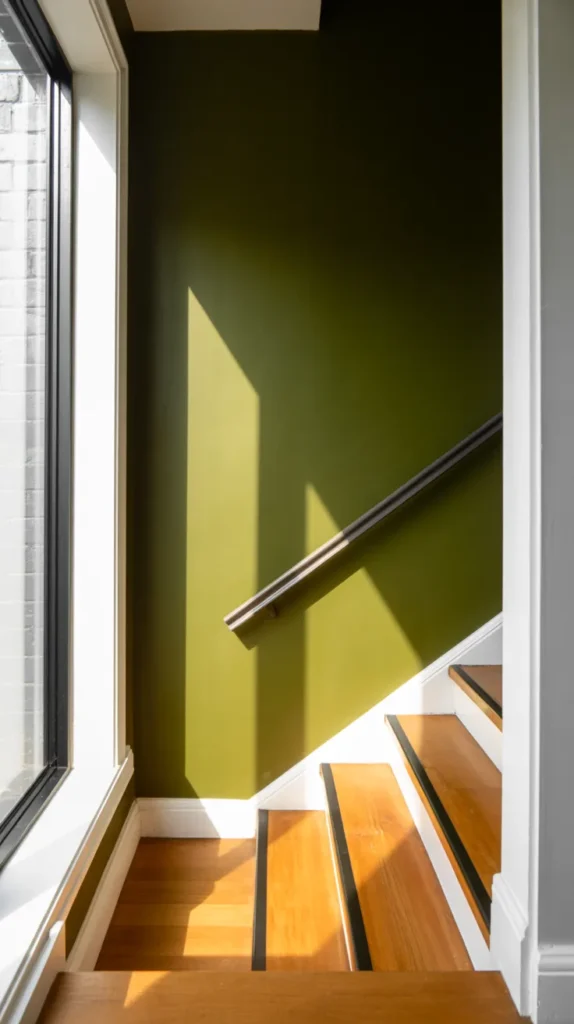
There’s something incredibly powerful about a moody staircase wall. Deep olive, navy, charcoal, or even a warm espresso brown instantly adds contrast and drama. Against light wood treads or crisp white trim, darker walls create that designer-approved tension that makes a space feel layered and refined.
This works especially well if your staircase sits near the entryway. A dramatic wall sets the tone the moment someone walks in. And surprisingly, darker colors can actually make a space feel more sophisticated rather than smaller — especially when balanced with natural light. The trick is commitment. Instead of stopping halfway, carry the color fully up the wall for a bold, cohesive look that feels confident and architectural.
10. Upgrade the Stair Skirt Board with Decorative Trim
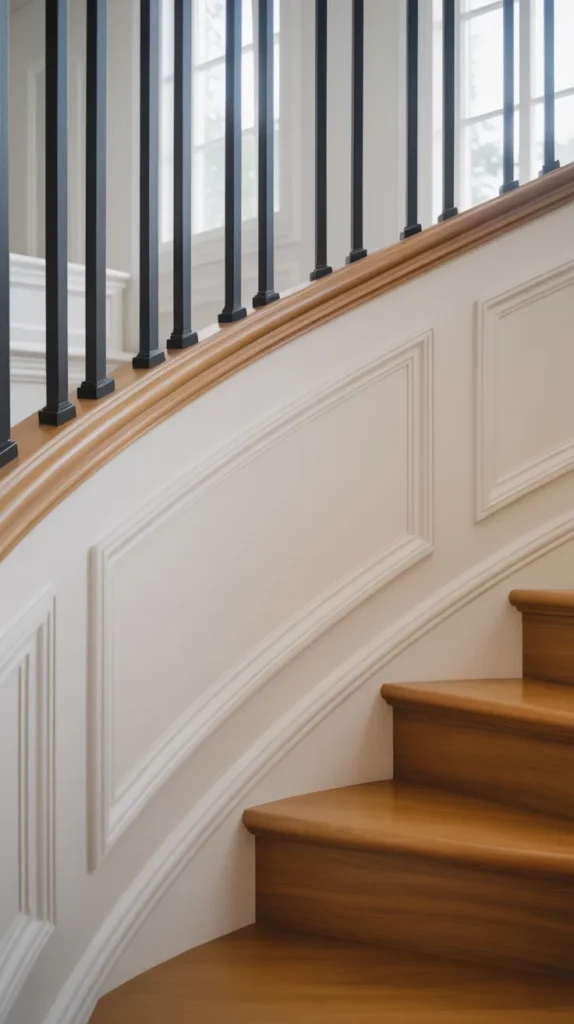
The stair skirt board — the long board that runs along the side of your stairs — is often plain and ignored. But adding decorative trim or molding to the stair skirt creates subtle detail that elevates the entire structure. It’s one of those quiet upgrades that most people won’t immediately identify, but they’ll feel the difference.
By adding layered trim lines or extending wall molding into the skirt board, you create continuity that feels custom-built. This works beautifully in traditional and transitional homes, but it can also be adapted for modern spaces with cleaner trim profiles. The goal isn’t excess decoration — it’s intentional architectural detailing. Small refinements like this are what separate basic construction from thoughtful design.
11.Install Glass Panels for an Open, Airy Feel
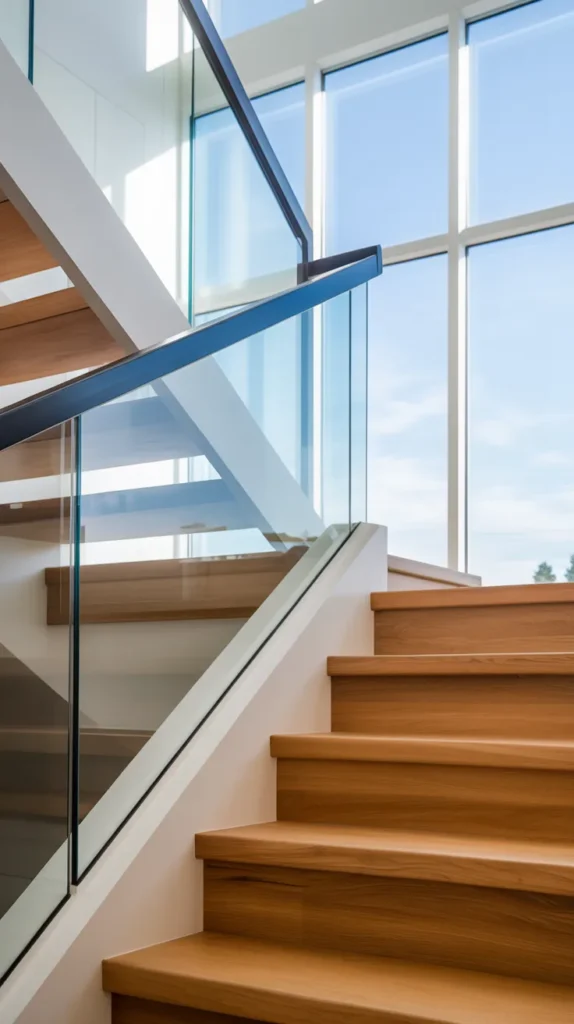
If your staircase feels closed off or heavy, replacing solid railings with glass panels can dramatically open up the space. Glass allows light to move freely through the stairwell, making even small entryways feel bigger. It’s especially effective in homes with large windows where you want to preserve the natural brightness.
To keep it refined, pair glass panels with a slim wood or black metal handrail for contrast. The transparency keeps the architecture clean while still feeling safe and structured. This is a particularly strong option in modern or contemporary homes where simplicity is key. The result feels sleek, expansive, and effortlessly high-end without needing excessive decoration.
12.Create a Cozy Reading Nook Beneath the Stairs
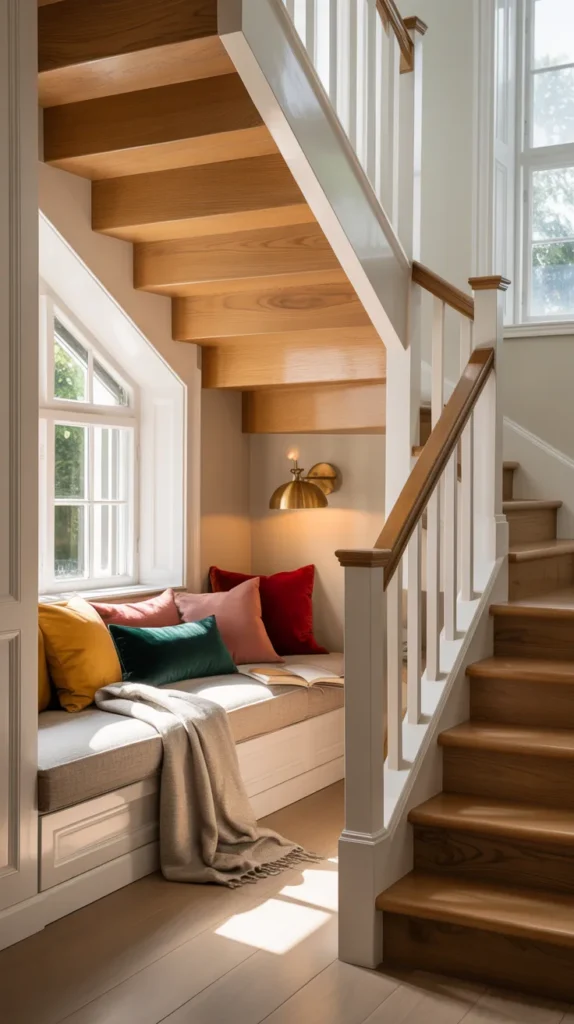
If storage isn’t your priority, turning the space under your stairs into a reading nook adds charm and personality. Adding a built-in bench with cushions, soft throw pillows, and a small wall-mounted light creates a cozy architectural momentthat feels both functional and beautiful. It makes the staircase area feel lived-in rather than purely transitional.
To elevate the look, keep the styling minimal and layered. Soft textiles, a small stack of books, and warm lighting create that inviting atmosphere without clutter. This idea works especially well in family homes or townhouses where every square foot matters. A thoughtfully designed nook brings warmth and softness, making the staircase feel like part of the home’s story instead of just a passageway.
13. Paint the Entire Staircase White for a Clean Reset
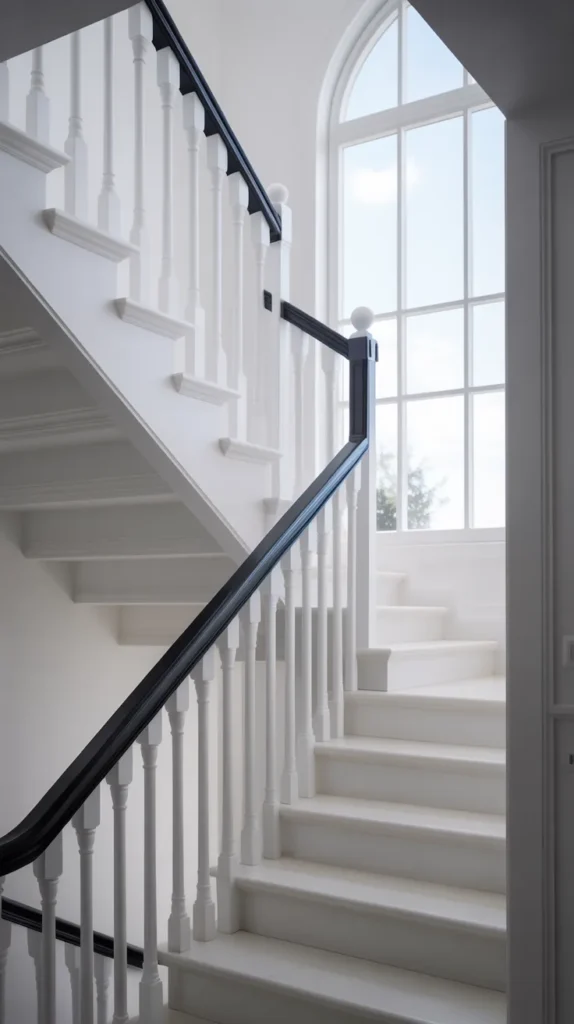
If your staircase feels heavy, dated, or visually cluttered, painting the entire structure white can completely reset the space. That means the risers, treads (if appropriate), balusters, and railings — all unified in one crisp tone. A full white staircase instantly creates a clean architectural backdrop that makes everything feel brighter and more cohesive. It’s especially powerful in smaller entryways where darker wood can visually shrink the space.
The key is choosing the right finish. A durable satin or semi-gloss keeps things practical while maintaining that smooth, polished look. When paired with natural light and neutral flooring, a white staircase feels airy and timeless — not sterile. Add contrast through artwork, a runner, or a darker handrail if you want dimension. The result is a fresh, modern foundation that makes the rest of your decor stand out beautifully.
14. Add a Wood Slat Accent Wall for Modern Texture
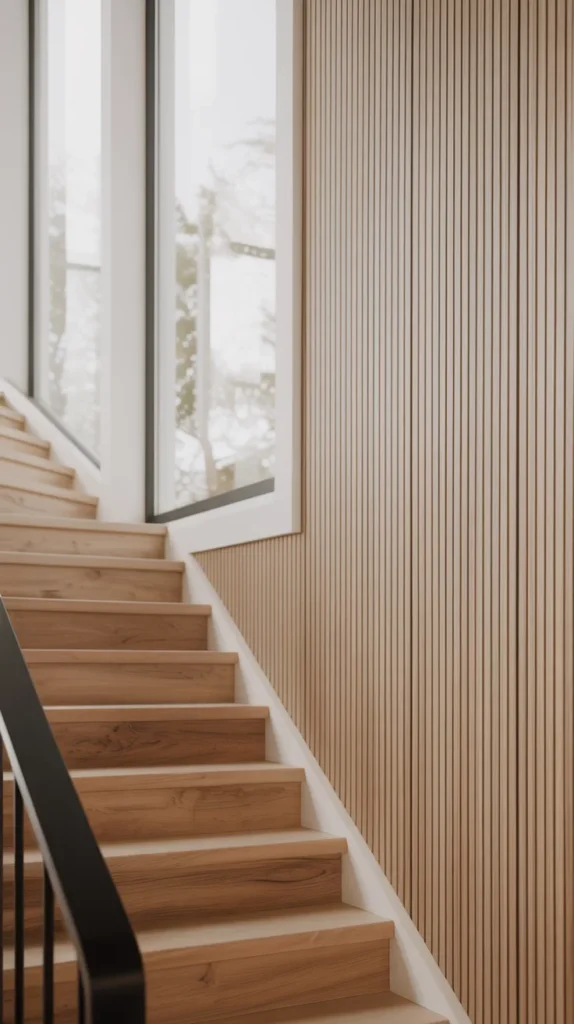
If you want your staircase to feel contemporary without going bold on color, vertical wood slats are a game-changer. Installing a wood slat accent wall along the stairwell introduces warmth, rhythm, and architectural texture in a subtle but impactful way. The vertical lines naturally draw the eye upward, which can make ceilings feel taller and the space feel more dynamic.
Light oak keeps it Scandinavian and airy, while darker walnut tones create mood and drama. The beauty of slats is that they feel structured and intentional — never random. When paired with minimal decor and clean railings, this upgrade gives your staircase that modern designer look you see in high-end new builds. It’s simple, but incredibly effective.
15. Install a Statement Pendant or Chandelier Above the Stairs
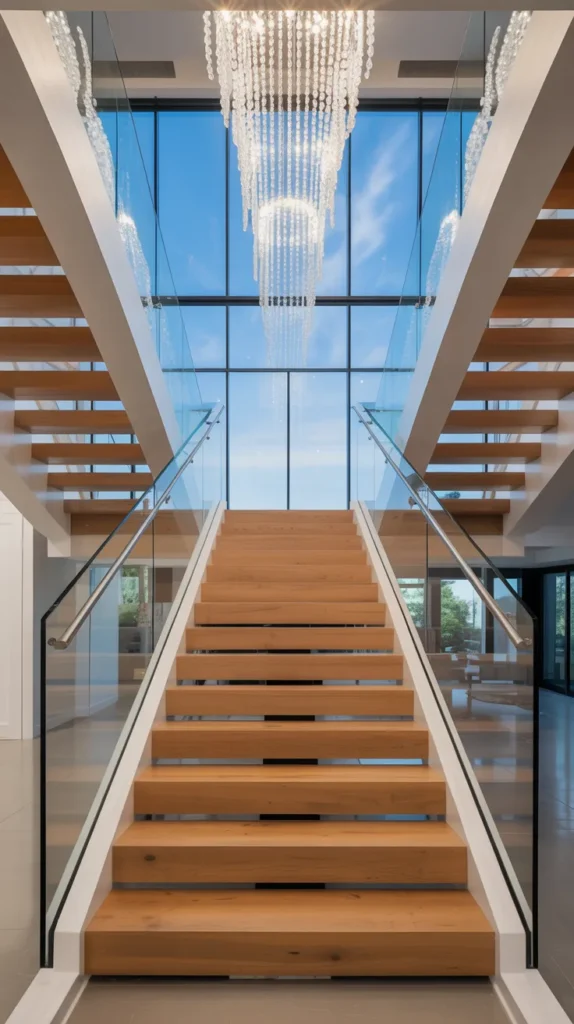
If your staircase has height, use it. Installing a statement pendant or cascading chandelier instantly transforms the vertical space into a dramatic focal point. Instead of leaving the upper stairwell empty, a sculptural light fixture fills the airspace and adds movement. It’s one of the most impactful upgrades you can make because lighting at that height naturally commands attention.
The style you choose sets the tone. A modern globe chandelier feels sleek and refined, while a multi-tiered fixture feels glamorous and bold. Make sure the scale matches the stairwell — too small and it disappears, too large and it overwhelms. When done right, a statement light adds that wow factor moment guests notice immediately when they walk in.
16. Use Decorative Stair Decals for a Budget-Friendly Upgrade
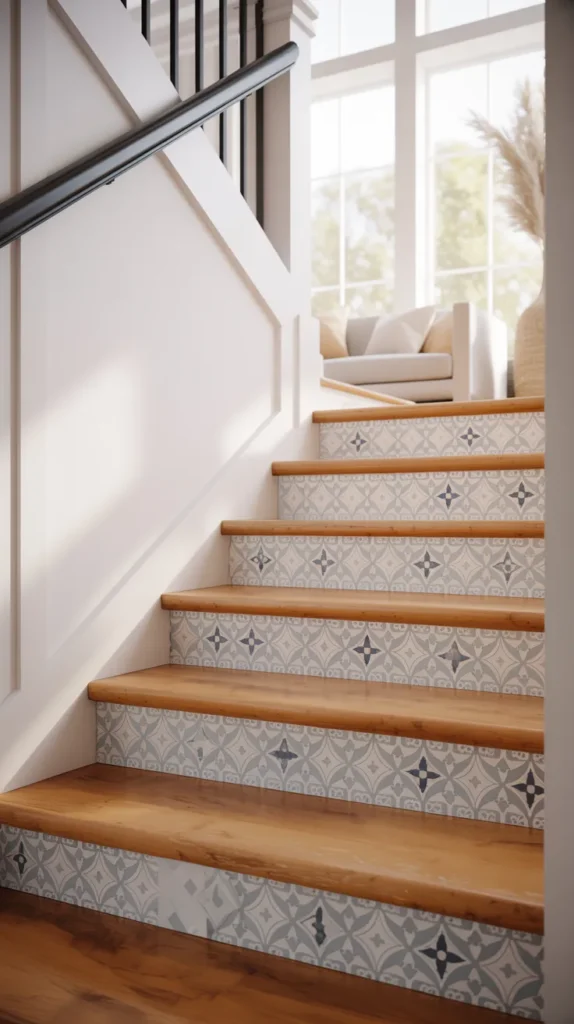
If you’re renting or working with a smaller budget, decorative stair decals are an easy way to add personality without permanent commitment. Applying patterned decals to the risers creates instant charm and visual interest. From subtle Mediterranean-inspired tiles to soft geometric prints, decals allow you to experiment with pattern and texture without committing to paint or renovation.
The trick is keeping the rest of the staircase simple so the decals feel intentional rather than busy. Pair them with neutral treads and minimal decor for balance. This option works beautifully in eclectic or playful homes where personality is part of the design language. It’s proof that even small, removable changes can create a big visual impact.
17. Embrace an Open Cable Railing Staircase for a Light-Filled Look
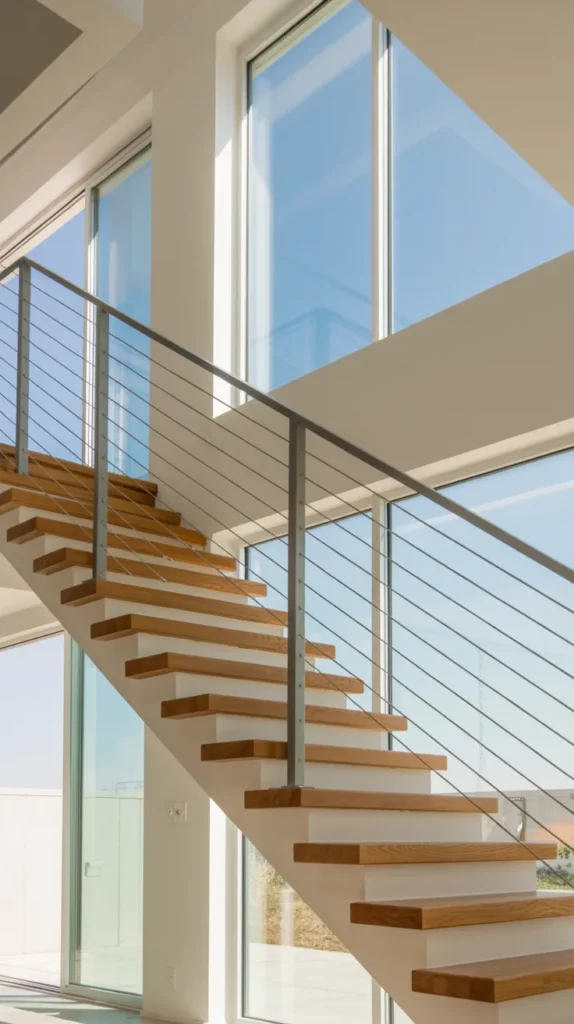
If your goal is to make your home feel bigger, brighter, and more architectural, an open cable railing staircase is one of the strongest upgrades you can make. Unlike traditional bulky spindles, horizontal stainless steel cables create visual transparency, allowing natural light to move freely through the space. In homes with large windows like this, that openness completely transforms how sunlight interacts with the architecture.
Pairing warm wood treads with sleek metal railings creates a beautiful balance between warmth and modern structure. The wood keeps the space inviting, while the cable system adds a clean contemporary edge. This style works especially well in double-height entryways where the staircase becomes part of the overall design statement rather than just a functional element. The result feels airy, upscale, and intentionally modern.
28. Maximize Function with Custom Built-In Storage Under the Stairs
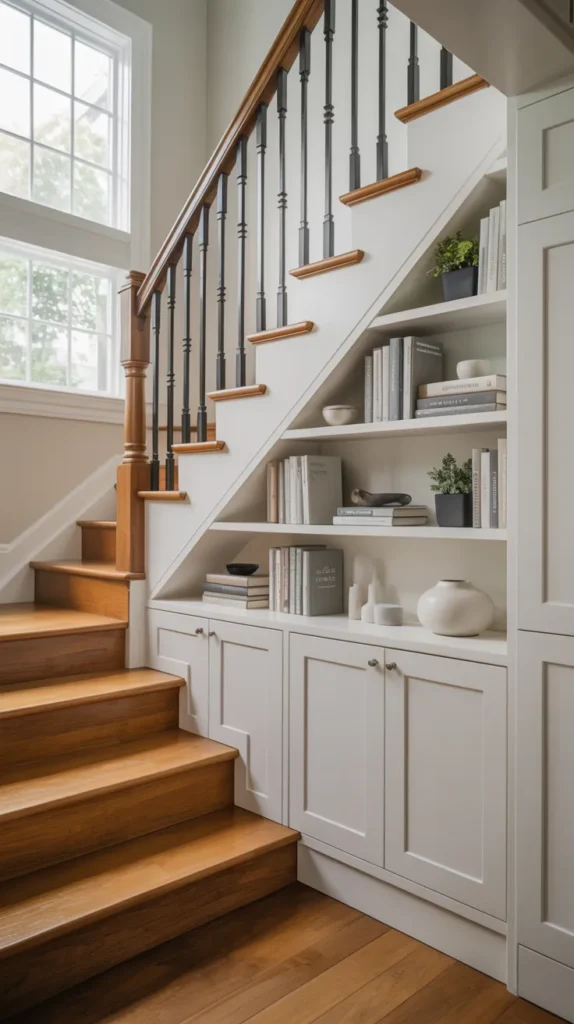
The space beneath your staircase is one of the most underutilized areas in a home — but when done right, it can completely change how organized your space feels. Installing custom cabinetry and shelving under the stairs turns an awkward void into a built-in storage feature that looks architectural, not added on. The clean white panel doors and open shelving create a seamless extension of the staircase rather than a separate piece of furniture.
What makes this idea powerful is the combination of beauty and practicality. Closed cabinets hide clutter, while open shelves allow you to style books, decorative bowls, or vases in a curated way. Instead of the staircase being just a transition zone, it becomes a functional design focal point that adds value and visual polish to the entire room. It’s smart design disguised as decor.
19.Use Rich Wood Stain for a Timeless, Natural Staircase
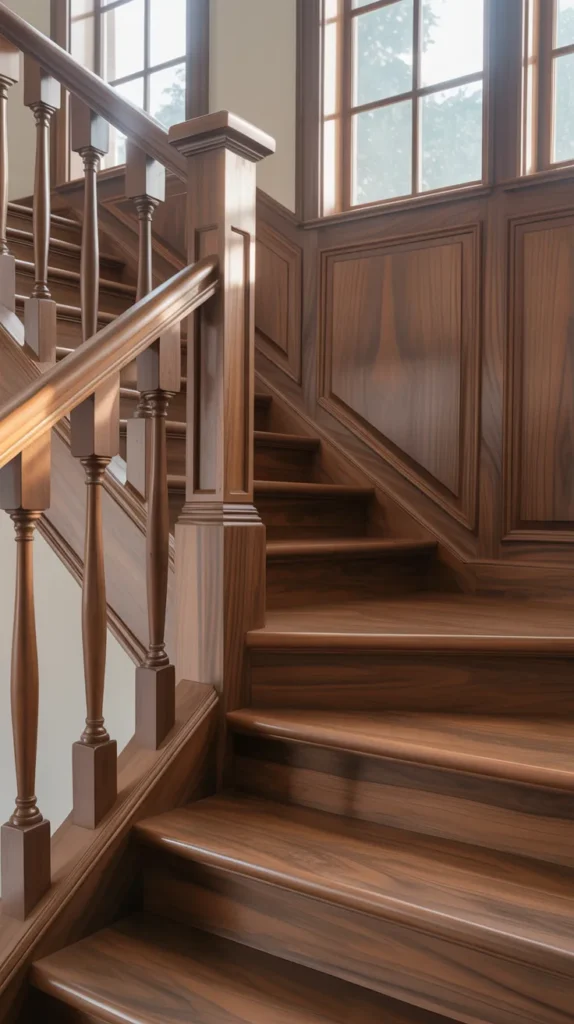
If you prefer warmth and tradition over contrast and color, staining your staircase in a rich wood tone creates instant depth. A fully stained staircase highlights the natural grain and gives the entire space a timeless architectural presence. Unlike painted stairs, stained wood feels grounded and substantial — especially when paired with classic spindles and paneled walls.
The key is choosing the right tone. Warm honey stains feel inviting, while deeper walnut tones add drama and elegance. When natural light hits stained wood, it enhances the grain and adds movement across each step. This approach works beautifully in traditional, transitional, and classic homes that value natural material richness over trend-driven contrast. It’s understated — but undeniably refined.
20.Add a Coastal-Inspired Rope Handrail for Texture and Charm
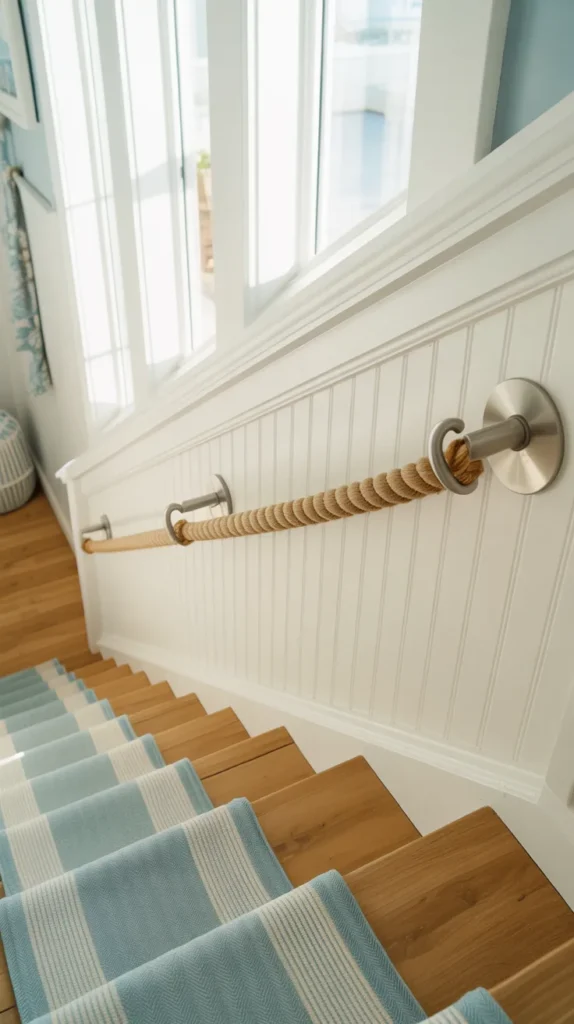
If you want your staircase to feel relaxed, playful, and full of personality, a rope handrail is an unexpected but incredibly charming upgrade. Instead of a traditional wood or metal rail, thick nautical rope mounted with metal brackets instantly adds texture, warmth, and coastal character. It softens the staircase visually while introducing a handcrafted detail that feels intentional rather than standard.
What makes this idea work is balance. Pairing a rope handrail with white shiplap walls, light wood stairs, and natural sunlight keeps the space bright and breezy instead of themed. The rope becomes a design accent rather than a gimmick. This style works beautifully in coastal homes, beach houses, lake homes, or even light modern spaces that need organic texture. It’s simple — but surprisingly impactful